
Our Products
Comprehensive industrial automation solutions for global industries
Contact us
If you are interested in our products and want to know more details,please Contact us,we will reply you as soon as we can.
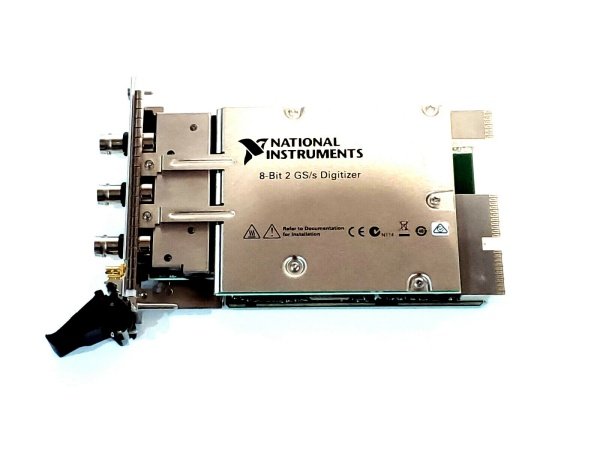
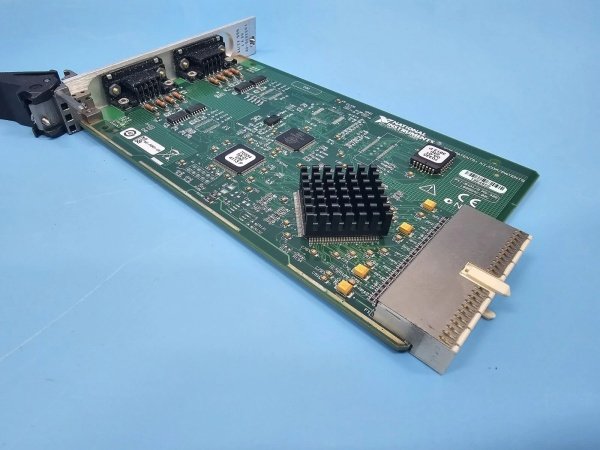
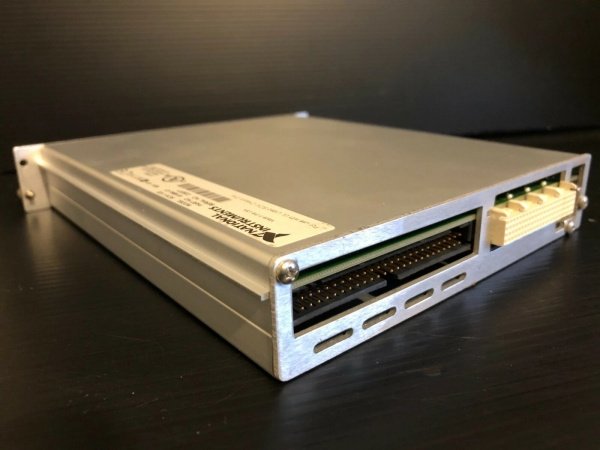
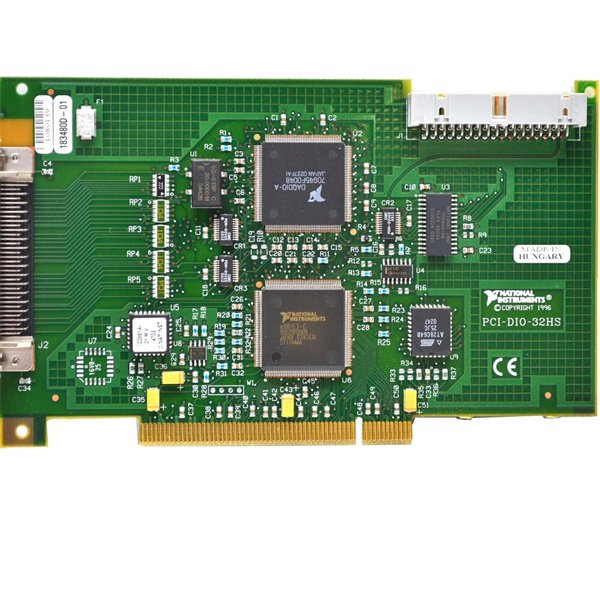
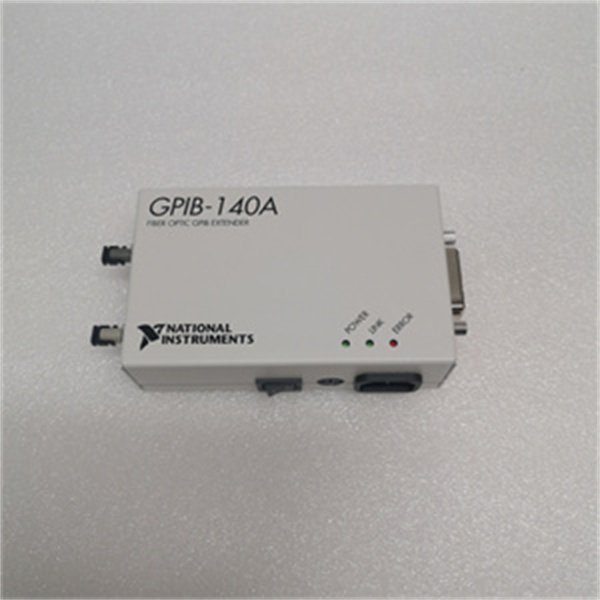
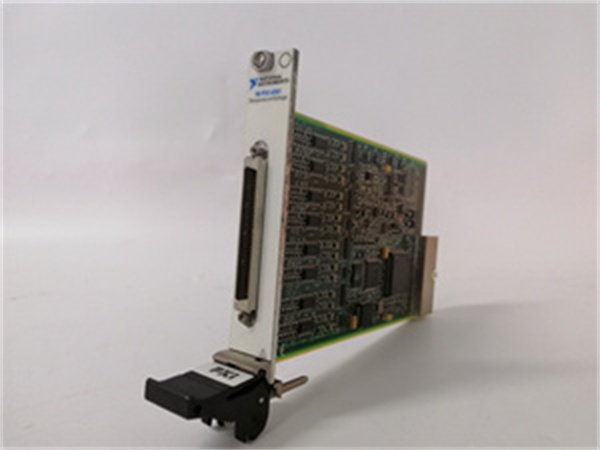
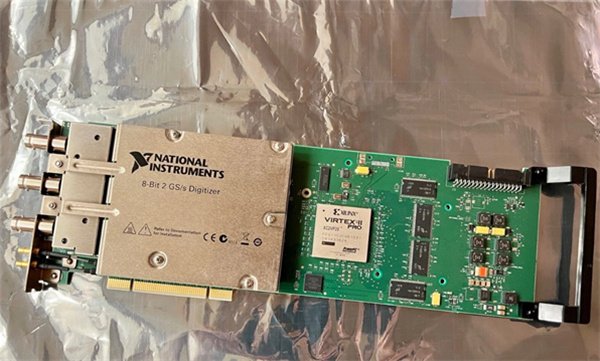
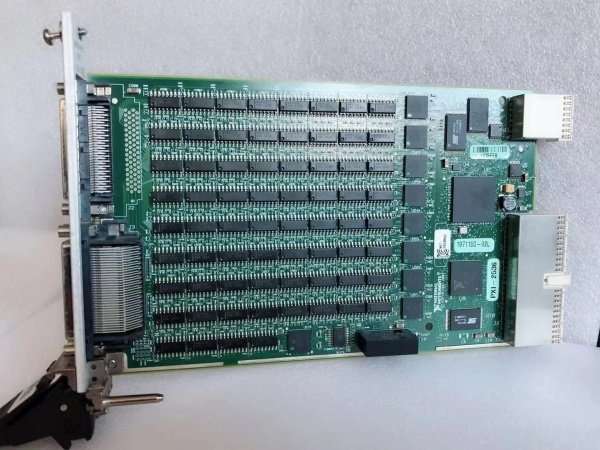
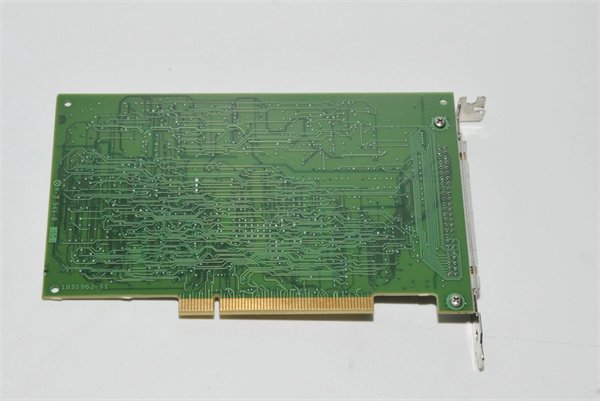
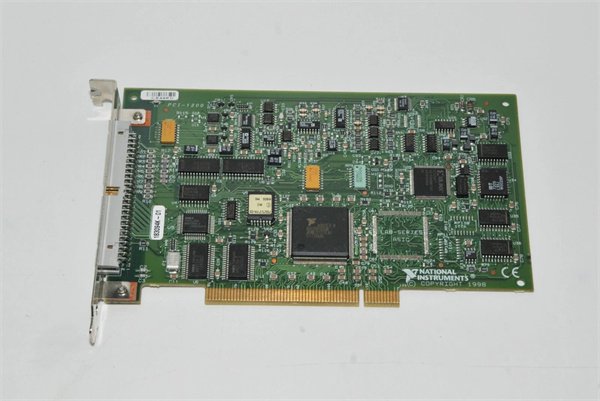
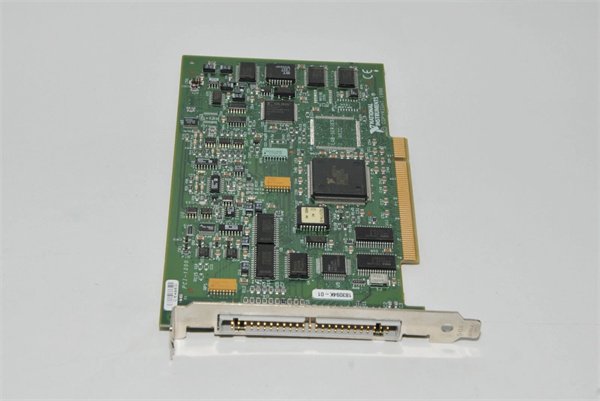
NI PCI-1200 Multifunction Data Acquisition Card
Manufacturer: National Instruments (NI)
Product Number: PCI-1200
Category: Multifunction Data Acquisition Card
Bus Interface: PCI
Application: Labs and small-scale industrial applications requiring data acquisition
Function: Versatile multifunction DAQ for test and measurement
Product Description
The NI PCI-1200 is a versatile multifunction DAQ card developed by National Instruments (NI), a pioneer in test and measurement technology. As a foundational product in NI’s legacy DAQ lineup—trusted for decades in labs and small-scale industrial setups—the NI PCI-1200 is engineered to deliver cost-effective, all-in-one data acquisition for analog, digital, and counter/timer tasks.
Designed for engineers, researchers, and educators, the NI PCI-1200 combines 16-channel analog input, 2-channel analog output, and 16 digital I/O lines in a single PCI card—eliminating the need for multiple specialized modules. Unlike basic DAQ devices, its 12-bit resolution and 100 kS/s sampling rate balance precision and speed, making it ideal for applications like laboratory experimentation, small-scale process monitoring, and educational projects.
At its core, the NI PCI-1200 merges simplicity with flexibility. Powered by NI’s NI-DAQmx driver, it integrates seamlessly with LabVIEW for visual programming—letting users build custom data logging or control systems in hours, not days. It also supports legacy software (e.g., Traditional DAQ) to protect investments in older test setups. Whether used to measure temperature in a chemistry lab, control a small motor in a robotics project, or log sensor data in a research experiment, the NI PCI-1200 delivers reliable performance in a compact, easy-to-use package.
Detailed parameter table
| Parameter name | Parameter value |
| Product model | NI PCI-1200 |
| Manufacturer | National Instruments (NI) |
| Product category | Multifunction Data Acquisition (DAQ) Card (PCI Interface) |
| Electrical performance | Analog input: 16 single-ended / 8 differential channels; Input range: ±5 V, ±10 V (software-selectable); Sampling rate: Up to 100 kS/s (single-channel), 50 kS/s (multichannel); Vertical resolution: 12 bitsAnalog output: 2 channels; Output range: 0–5 V, 0–10 V, ±5 V (selectable); Resolution: 12 bitsDigital I/O: 16 lines (8 input/8 output, configurable); Counter/timer: 2 × 16-bit up/down counters |
| Physical size | Dimensions (L×W×H): 175 mm × 106 mm × 20 mm (standard PCI form factor); Weight: Approximately 170 g |
| Interface type | PCI 2.2 compliant (32-bit, 33 MHz); Screw-terminal connector for analog/digital signals; DB-9 connector for counter/timer signals |
| Communication protocol | PCI bus for data transfer; Compatible with NI-DAQmx driver software; Supports register-level programming for custom control |
| Environmental requirements | Operating temperature: 0 °C to 55 °C; Storage temperature: -20 °C to 70 °C; Relative humidity: 10% to 90% (non-condensing); Operating altitude: Up to 2000 m; Vibration resistance: 2 g (10 Hz to 500 Hz) |
| Installation method | Standard PCI slot mounting (compatible with PCI 2.1/2.2 chassis); Designed for integration into desktop/lab PCs and industrial control systems |
| Performance indicators | Analog input accuracy: ±0.05% full scale (FS) at 25 °C; Analog output accuracy: ±0.1% FS; Digital I/O voltage levels: 5 V TTL/CMOS; Counter frequency: Up to 1 MHz; FIFO buffer: 4 kB for analog input |
| Power requirements | Powered by PCI bus (no external power supply needed); Typical power consumption: 3 W |
| Compatibility | Works with Windows XP/Vista/7/10 (32-bit/64-bit); Compatible with NI LabVIEW, LabWindows/CVI, Python, C/C++, and Visual Basic; Supports legacy NI-DAQ (Traditional DAQ) for backward compatibility |
| Special features | Software-selectable input ranges; Programmable gain amplifier (PGA); Digital debouncing for noise reduction; Hot-swappable terminal blocks (with compatible accessories); Support for trigger-based data acquisition |
Core advantages and technical highlights
All-in-one functionality for cost savings
The NI PCI-1200’s multifunction design is a key advantage: it combines analog input, analog output, digital I/O, and counter/timer capabilities in one card. For example, in a university electronics lab, students can use a single NI PCI-1200 to measure sensor voltages (analog input), generate test signals (analog output), control LED indicators (digital output), and count motor rotations (counter/timer)—no need to purchase four separate devices. This integration cuts hardware costs by up to 40% and simplifies system setup, as users only need to install one card and one driver.
Balanced precision and speed for diverse tasks
With 12-bit resolution and 100 kS/s sampling rate, the NI PCI-1200 strikes a perfect balance for mid-speed, high-accuracy applications. Its analog input accuracy (±0.05% FS) ensures reliable measurements of slow-changing signals like temperature (from thermocouples) or pressure (from strain gauges), while the 100 kS/s rate handles faster signals such as audio or vibration data. For instance, in a small manufacturing line monitoring conveyor belt speed, the NI PCI-1200 can sample a proximity sensor’s output at 50 kS/s to track speed variations, then use its analog output to adjust a motor’s voltage—all in real time.
Flexible software integration for easy customization
The NI PCI-1200 works seamlessly with NI’s software ecosystem, making it accessible to users of all skill levels. Beginners can use LabVIEW’s drag-and-drop VIs to build data acquisition systems without coding—for example, creating a dashboard to plot analog input data in real time. Advanced users can leverage C/C++ or Python to program the card at the register level, customizing triggers or data processing for unique tasks (e.g., filtering noise from a sensor signal). It also supports legacy Traditional DAQ, ensuring compatibility with older LabVIEW projects—critical for labs that rely on established test procedures.
Rugged design for long-term reliability
Built to NI’s industrial standards, the NI PCI-1200 features a rugged PCB design and components rated for extended use. Its programmable gain amplifier (PGA) reduces noise by amplifying weak signals (e.g., 10 mV from a strain gauge) before digitization, while digital debouncing filters out electrical noise from industrial environments. The card’s screw-terminal connectors ensure secure signal connections—preventing loose wires that cause data glitches—and compatible hot-swappable terminals let users reconfigure signals without powering down the PC. This durability ensures the NI PCI-1200 operates reliably for years, even in daily lab or light industrial use.
Typical application scenarios
Educational laboratories
In university engineering and science labs, the NI PCI-1200 is a staple tool for teaching data acquisition fundamentals. For example, in an electrical engineering course, students use the card to measure the output of a function generator (analog input), analyze signal frequency with LabVIEW, and generate a matching signal (analog output) to test a filter circuit. In a mechanical engineering lab, it connects to load cells to measure force during material stress tests, with digital I/O lines triggering a camera to capture test images. The NI PCI-1200’s all-in-one design lets students experiment with multiple DAQ functions, building practical skills for future careers.
Small-scale industrial monitoring
In small manufacturing facilities or workshops, the NI PCI-1200 is used for localized process monitoring. A bakery, for instance, can connect the card to temperature sensors in ovens (analog input) to log heat distribution during baking—ensuring consistent bread quality. The digital I/O lines can detect if an oven door is open (input) and trigger an alarm (output), while the analog output adjusts a cooling fan’s speed post-baking. The NI PCI-1200’s low cost and easy setup make it ideal for small businesses that need reliable monitoring without investing in large-scale DCS systems.
Research and development (R&D)
In academic or industrial R&D labs, the NI PCI-1200 supports prototype testing and data logging. For a team developing a portable air quality sensor, the card measures the sensor’s analog output (VOC levels) at 10 kS/s, uses digital I/O to control a pump, and logs data to a PC for analysis. In robotics R&D, it counts encoder pulses (counter/timer) to track a robot arm’s position and sends voltage signals (analog output) to motor drivers for precise movement control. The NI PCI-1200’s flexibility lets researchers adapt it to diverse projects, from environmental sensing to mechatronics testing.
Installation preparation
Before installing the NI PCI-1200, power off the PC and confirm it has an empty PCI slot (PCI 2.1/2.2 compliant). Wear an ESD wristband to prevent electrostatic damage. Insert the card firmly into the PCI slot and secure it with the chassis screw. Connect sensors/devices to the screw-terminal block: match analog signals to the correct input channels, set digital I/O lines as input/output via software, and connect counter signals to the DB-9 port. Download and install the latest NI-DAQmx driver (or Traditional DAQ for legacy systems) from NI’s website. Use NI’s Measurement & Automation Explorer (MAX) to verify the card is detected, run a self-test, and calibrate analog channels if needed (follow NI’s calibration wizard for accuracy).
Maintenance suggestions
To maintain the NI PCI-1200’s performance, inspect the terminal block quarterly for loose wires or corrosion—tighten screws gently and clean contacts with isopropyl alcohol and a lint-free cloth. Avoid exposing the PC (and card) to extreme temperatures or moisture (stick to the 0 °C–55 °C range) to prevent component degradation. If analog measurements drift, recalibrate the card using MAX’s calibration tool (recommended annually for precision applications). For digital I/O issues, check for damaged cables (replace if frayed) and verify TTL voltage levels (5 V) with a multimeter. Update NI-DAQmx periodically to access bug fixes for newer operating systems. Use only NI-compatible terminal blocks (e.g., NI TB-2707) for repairs—third-party blocks may cause signal interference or damage the card.
 Loading comments...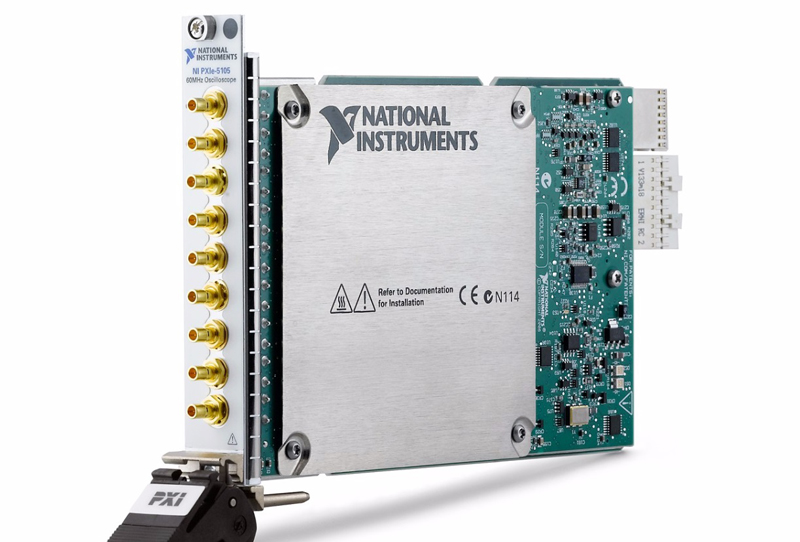
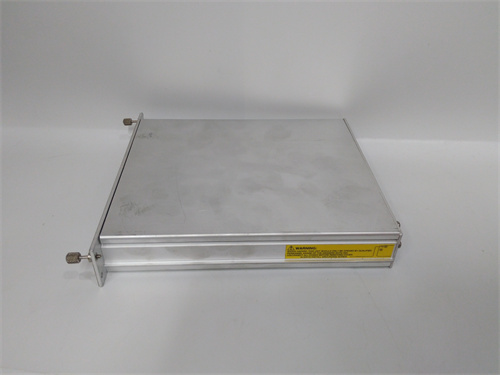
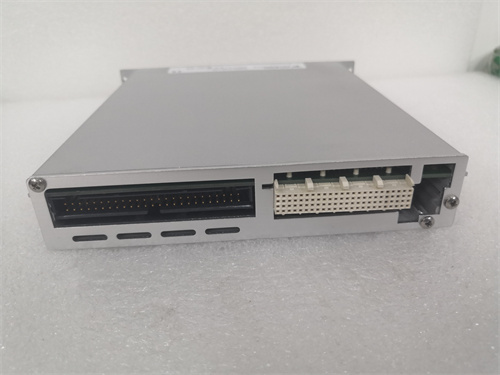
NI PCI-1200 Multifunction Data Acquisition Card
Manufacturer: National Instruments (NI)
Product Number: PCI-1200
Category: Multifunction Data Acquisition Card
Bus Interface: PCI
Application: Labs and small-scale industrial applications requiring data acquisition
Function: Versatile multifunction DAQ for test and measurement
Product Description
The NI PCI-1200 is a versatile multifunction DAQ card developed by National Instruments (NI), a pioneer in test and measurement technology. As a foundational product in NI’s legacy DAQ lineup—trusted for decades in labs and small-scale industrial setups—the NI PCI-1200 is engineered to deliver cost-effective, all-in-one data acquisition for analog, digital, and counter/timer tasks.
Designed for engineers, researchers, and educators, the NI PCI-1200 combines 16-channel analog input, 2-channel analog output, and 16 digital I/O lines in a single PCI card—eliminating the need for multiple specialized modules. Unlike basic DAQ devices, its 12-bit resolution and 100 kS/s sampling rate balance precision and speed, making it ideal for applications like laboratory experimentation, small-scale process monitoring, and educational projects.
At its core, the NI PCI-1200 merges simplicity with flexibility. Powered by NI’s NI-DAQmx driver, it integrates seamlessly with LabVIEW for visual programming—letting users build custom data logging or control systems in hours, not days. It also supports legacy software (e.g., Traditional DAQ) to protect investments in older test setups. Whether used to measure temperature in a chemistry lab, control a small motor in a robotics project, or log sensor data in a research experiment, the NI PCI-1200 delivers reliable performance in a compact, easy-to-use package.
Detailed parameter table
| Parameter name | Parameter value |
| Product model | NI PCI-1200 |
| Manufacturer | National Instruments (NI) |
| Product category | Multifunction Data Acquisition (DAQ) Card (PCI Interface) |
| Electrical performance | Analog input: 16 single-ended / 8 differential channels; Input range: ±5 V, ±10 V (software-selectable); Sampling rate: Up to 100 kS/s (single-channel), 50 kS/s (multichannel); Vertical resolution: 12 bitsAnalog output: 2 channels; Output range: 0–5 V, 0–10 V, ±5 V (selectable); Resolution: 12 bitsDigital I/O: 16 lines (8 input/8 output, configurable); Counter/timer: 2 × 16-bit up/down counters |
| Physical size | Dimensions (L×W×H): 175 mm × 106 mm × 20 mm (standard PCI form factor); Weight: Approximately 170 g |
| Interface type | PCI 2.2 compliant (32-bit, 33 MHz); Screw-terminal connector for analog/digital signals; DB-9 connector for counter/timer signals |
| Communication protocol | PCI bus for data transfer; Compatible with NI-DAQmx driver software; Supports register-level programming for custom control |
| Environmental requirements | Operating temperature: 0 °C to 55 °C; Storage temperature: -20 °C to 70 °C; Relative humidity: 10% to 90% (non-condensing); Operating altitude: Up to 2000 m; Vibration resistance: 2 g (10 Hz to 500 Hz) |
| Installation method | Standard PCI slot mounting (compatible with PCI 2.1/2.2 chassis); Designed for integration into desktop/lab PCs and industrial control systems |
| Performance indicators | Analog input accuracy: ±0.05% full scale (FS) at 25 °C; Analog output accuracy: ±0.1% FS; Digital I/O voltage levels: 5 V TTL/CMOS; Counter frequency: Up to 1 MHz; FIFO buffer: 4 kB for analog input |
| Power requirements | Powered by PCI bus (no external power supply needed); Typical power consumption: 3 W |
| Compatibility | Works with Windows XP/Vista/7/10 (32-bit/64-bit); Compatible with NI LabVIEW, LabWindows/CVI, Python, C/C++, and Visual Basic; Supports legacy NI-DAQ (Traditional DAQ) for backward compatibility |
| Special features | Software-selectable input ranges; Programmable gain amplifier (PGA); Digital debouncing for noise reduction; Hot-swappable terminal blocks (with compatible accessories); Support for trigger-based data acquisition |
Core advantages and technical highlights
All-in-one functionality for cost savings
The NI PCI-1200’s multifunction design is a key advantage: it combines analog input, analog output, digital I/O, and counter/timer capabilities in one card. For example, in a university electronics lab, students can use a single NI PCI-1200 to measure sensor voltages (analog input), generate test signals (analog output), control LED indicators (digital output), and count motor rotations (counter/timer)—no need to purchase four separate devices. This integration cuts hardware costs by up to 40% and simplifies system setup, as users only need to install one card and one driver.
Balanced precision and speed for diverse tasks
With 12-bit resolution and 100 kS/s sampling rate, the NI PCI-1200 strikes a perfect balance for mid-speed, high-accuracy applications. Its analog input accuracy (±0.05% FS) ensures reliable measurements of slow-changing signals like temperature (from thermocouples) or pressure (from strain gauges), while the 100 kS/s rate handles faster signals such as audio or vibration data. For instance, in a small manufacturing line monitoring conveyor belt speed, the NI PCI-1200 can sample a proximity sensor’s output at 50 kS/s to track speed variations, then use its analog output to adjust a motor’s voltage—all in real time.
Flexible software integration for easy customization
The NI PCI-1200 works seamlessly with NI’s software ecosystem, making it accessible to users of all skill levels. Beginners can use LabVIEW’s drag-and-drop VIs to build data acquisition systems without coding—for example, creating a dashboard to plot analog input data in real time. Advanced users can leverage C/C++ or Python to program the card at the register level, customizing triggers or data processing for unique tasks (e.g., filtering noise from a sensor signal). It also supports legacy Traditional DAQ, ensuring compatibility with older LabVIEW projects—critical for labs that rely on established test procedures.
Rugged design for long-term reliability
Built to NI’s industrial standards, the NI PCI-1200 features a rugged PCB design and components rated for extended use. Its programmable gain amplifier (PGA) reduces noise by amplifying weak signals (e.g., 10 mV from a strain gauge) before digitization, while digital debouncing filters out electrical noise from industrial environments. The card’s screw-terminal connectors ensure secure signal connections—preventing loose wires that cause data glitches—and compatible hot-swappable terminals let users reconfigure signals without powering down the PC. This durability ensures the NI PCI-1200 operates reliably for years, even in daily lab or light industrial use.
Typical application scenarios
Educational laboratories
In university engineering and science labs, the NI PCI-1200 is a staple tool for teaching data acquisition fundamentals. For example, in an electrical engineering course, students use the card to measure the output of a function generator (analog input), analyze signal frequency with LabVIEW, and generate a matching signal (analog output) to test a filter circuit. In a mechanical engineering lab, it connects to load cells to measure force during material stress tests, with digital I/O lines triggering a camera to capture test images. The NI PCI-1200’s all-in-one design lets students experiment with multiple DAQ functions, building practical skills for future careers.
Small-scale industrial monitoring
In small manufacturing facilities or workshops, the NI PCI-1200 is used for localized process monitoring. A bakery, for instance, can connect the card to temperature sensors in ovens (analog input) to log heat distribution during baking—ensuring consistent bread quality. The digital I/O lines can detect if an oven door is open (input) and trigger an alarm (output), while the analog output adjusts a cooling fan’s speed post-baking. The NI PCI-1200’s low cost and easy setup make it ideal for small businesses that need reliable monitoring without investing in large-scale DCS systems.
Research and development (R&D)
In academic or industrial R&D labs, the NI PCI-1200 supports prototype testing and data logging. For a team developing a portable air quality sensor, the card measures the sensor’s analog output (VOC levels) at 10 kS/s, uses digital I/O to control a pump, and logs data to a PC for analysis. In robotics R&D, it counts encoder pulses (counter/timer) to track a robot arm’s position and sends voltage signals (analog output) to motor drivers for precise movement control. The NI PCI-1200’s flexibility lets researchers adapt it to diverse projects, from environmental sensing to mechatronics testing.
Installation preparation
Before installing the NI PCI-1200, power off the PC and confirm it has an empty PCI slot (PCI 2.1/2.2 compliant). Wear an ESD wristband to prevent electrostatic damage. Insert the card firmly into the PCI slot and secure it with the chassis screw. Connect sensors/devices to the screw-terminal block: match analog signals to the correct input channels, set digital I/O lines as input/output via software, and connect counter signals to the DB-9 port. Download and install the latest NI-DAQmx driver (or Traditional DAQ for legacy systems) from NI’s website. Use NI’s Measurement & Automation Explorer (MAX) to verify the card is detected, run a self-test, and calibrate analog channels if needed (follow NI’s calibration wizard for accuracy).
Maintenance suggestions
To maintain the NI PCI-1200’s performance, inspect the terminal block quarterly for loose wires or corrosion—tighten screws gently and clean contacts with isopropyl alcohol and a lint-free cloth. Avoid exposing the PC (and card) to extreme temperatures or moisture (stick to the 0 °C–55 °C range) to prevent component degradation. If analog measurements drift, recalibrate the card using MAX’s calibration tool (recommended annually for precision applications). For digital I/O issues, check for damaged cables (replace if frayed) and verify TTL voltage levels (5 V) with a multimeter. Update NI-DAQmx periodically to access bug fixes for newer operating systems. Use only NI-compatible terminal blocks (e.g., NI TB-2707) for repairs—third-party blocks may cause signal interference or damage the card.
Need a Custom Automation Solution?
Our team of experts can design and implement a tailored automation system to meet your specific requirements.