
Our Products
Comprehensive industrial automation solutions for global industries
Contact us
If you are interested in our products and want to know more details,please Contact us,we will reply you as soon as we can.
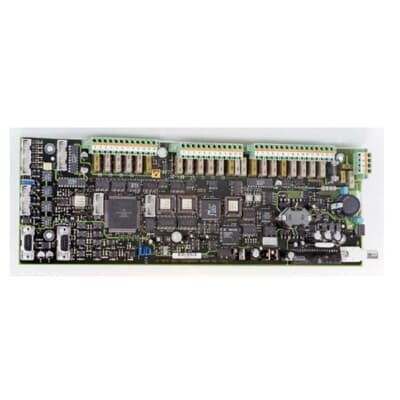
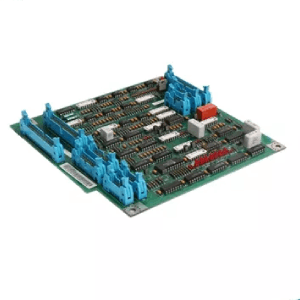
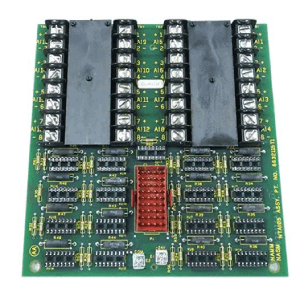
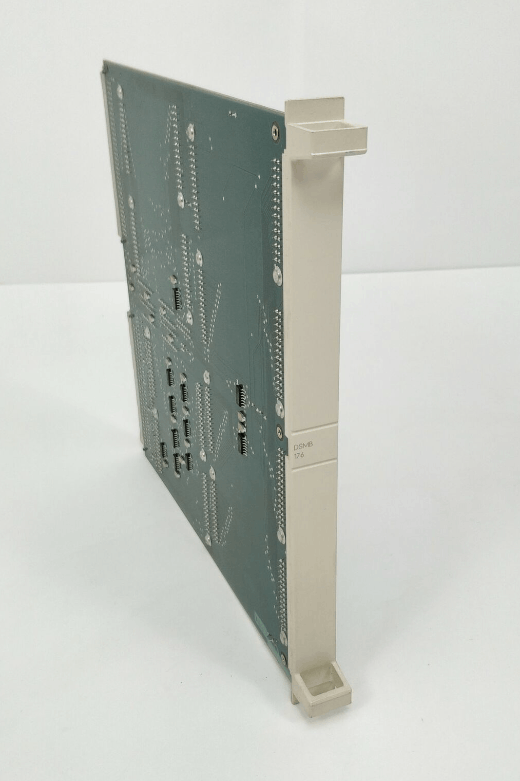
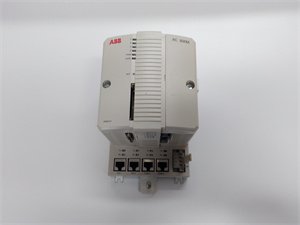
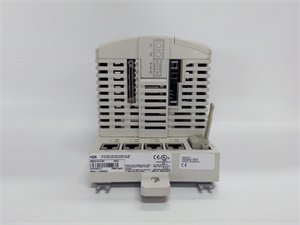
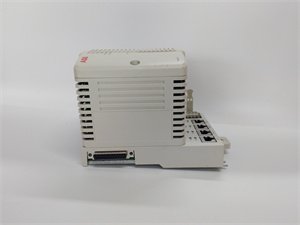
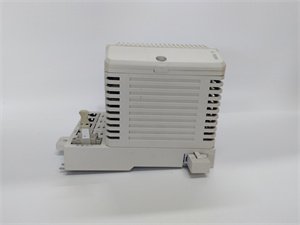
ABB PM861A 3BSE018157R1 High-Performance CPU Module
Manufacturer:ABB
Product Number:ABB PM861A 3BSE018157R1
Payment Methods:T/T, PayPal, Western Union
Condition:New & In Stock
Warranty:1 Year
Lead Time:1-3 Working Days
Certificate:COO
Courier partners:DHL, UPS, TNT, FedEx and EMS.
Business hours:7*24
Product Description
The ABB PM861A 3BSE018157R1 is a mid-range process CPU module engineered for ABB’s AC800M DCS, balancing performance and reliability for mid-scale control applications. At its core, a dual-core ARM Cortex-A9 processor splits tasks between control logic (first core) and communication/protocol processing (second core)—eliminating bottlenecks that plague single-core CPUs. The 2GB RAM supports up to 1,000 PID loops and 10,000 I/O points, while 4GB flash stores firmware, application code, and critical process data (with built-in wear leveling for 10-year lifespan).
Key Technical Specifications
- Model Number: ABB PM861A 3BSE018157R1
- Manufacturer: ABB Industrial Automation Division
- CPU Architecture: 32-bit ARM Cortex-A9 dual-core, 800MHz clock speed
- Memory Configuration: 2GB DDR3 RAM (volatile), 4GB eMMC flash (non-volatile)
- Redundancy Support: 1+1 hot-standby (automatic failover <5ms), sync via dedicated backplane link
- Communication Ports: 2 × 10/100/1000Mbps Ethernet (Profinet/Modbus TCP), 1 × RS485 (Modbus RTU)
- Protocol Support: IEC 61850 (GOOSE/MMS), Profinet IO, Modbus TCP/RTU, OPC UA
- Power Supply: 24VDC ±10%, 0.8A typical current draw (no load)
- Operating Temperature: -25°C to +65°C (-13°F to +149°F)
- Isolation Rating: 1kV AC (Ethernet ports to backplane); 500V AC (signal to power)
- Compatibility: ABB AC800M I/O modules (AI810, AO810, DI810), Advant OCS racks, Control Builder M software
- Mechanical Design: Rack-mount (3U height), conformal-coated PCB, metal housing (IP20)
- Certifications: IEC 61010-1, CE, UL 508, RoHS 2.0, ATEX Zone 2
Field Application & Problem Solved
In mid-scale process automation—refinery distillation units, chemical batch reactors, paper mill drying sections—generic CPUs struggle with two critical flaws: insufficient processing power for complex control loops and unreliable redundancy. A Texas chemical plant lost $160k in off-spec batches when a budget CPU couldn’t handle 60 concurrent PID loops, causing scan time overruns (150ms vs. required 50ms) and delayed control responses. Legacy controllers also lack seamless integration with ABB I/O modules: a Wisconsin paper mill spent 8 hours troubleshooting communication errors between a third-party CPU and AC800M I/O, delaying startup by a day.
You’ll find this module as the “brain” of AC800M DCS racks in mid-sized process plants: benzene distillation units in Louisiana, batch reactors in Ohio, and paper machine control systems in Minnesota. Its core value is balanced performance + ABB-native reliability. The dual-core 800MHz processor fixed the Texas plant’s scan time issues, cutting loop execution to 35ms and eliminating off-spec batches. At the Wisconsin mill, the PM861A’s plug-and-play compatibility with AC800M I/O eliminated communication errors, reducing commissioning time by 70%.
For a Florida wastewater treatment plant, the 1+1 redundancy design prevented a $90k outage when a CPU failed during a storm—failover occurred in 4ms, no process disruption. Its multi-protocol support also simplified integration with legacy Modbus sensors and new Profinet VFDs, avoiding $40k in gateway hardware costs.
Installation & Maintenance Pitfalls
- Firmware Version Lock—Match to I/O Modules: Rookies use outdated CPU firmware (pre-v6.0) with newer I/O modules (v7.0+), causing communication drops. A North Carolina refinery did this, losing 3 hours of production when DI810 inputs failed to register. Update firmware via Ethernet using Control Builder M v6.10+; always verify CPU and I/O firmware are within ±1 version (check ABB’s compatibility matrix).
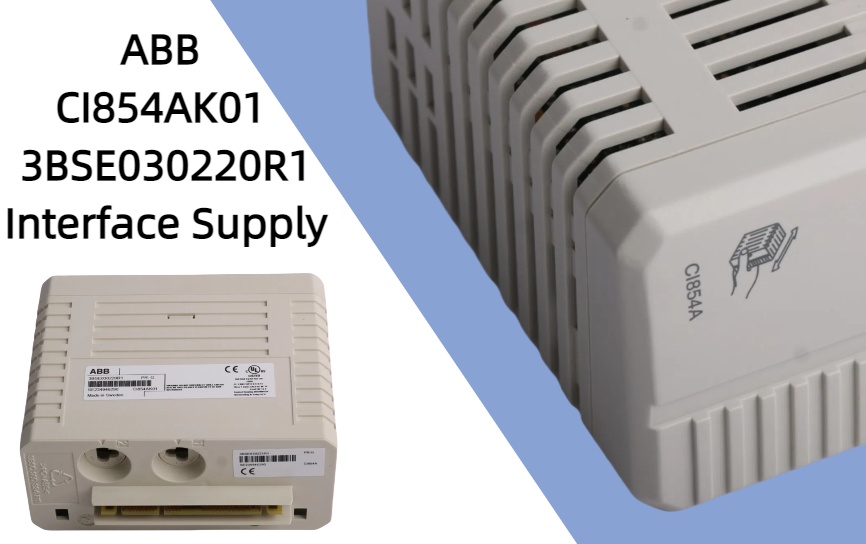
- Redundancy Sync Cable—Use ABB-Certified Cabling: Generic Ethernet cables for redundancy sync cause failover failures. A Pennsylvania chemical plant used Cat5e instead of ABB’s 3BSE030220R1 Cat6 cable; the standby CPU failed to sync, triggering a 2-hour shutdown. Use only ABB-certified sync cables (max length 2m) and secure with strain relief—loose connections break sync.
- Overloading CPU Memory—Limit Unnecessary Tasks: Loading unused function blocks or large historical logs fills flash memory, slowing performance. A Michigan paper mill’s CPU slowed to 200ms scan time after storing 3 years of raw data. Archive historical data to a separate server, delete unused function blocks, and keep flash usage <70% (monitor via DCS diagnostics).
- Grounding—Dedicated Path to Cabinet Ground Bar: Daisy-chaining the CPU’s ground to power modules introduces EMI, corrupting analog signals. A Colorado mining plant’s pressure sensor readings fluctuated by 15% until we ran a 4mm² dedicated ground wire from the CPU chassis to the main ground bar. Never share the CPU’s ground with high-power components (VFDs, power supplies).
Redundancy is managed via a dedicated backplane sync link: the primary CPU transmits real-time data (loop setpoints, I/O status, alarms) to the standby unit at 1ms intervals. If the primary detects a fault (CPU error, power loss, communication failure), the standby takes over in <5ms—faster than the AC800M I/O’s data hold time, ensuring no process disruption.
The module’s multi-protocol support (IEC 61850, Profinet, Modbus) enables seamless integration with legacy and modern devices, eliminating the need for external gateways. Ruggedization features include a conformal-coated PCB (resisting dust, moisture, and chemical vapors) and a wide operating temperature range (-25°C to +65°C), ideal for unconditioned control cabinets.
What sets it apart from generic CPUs is ABB’s ecosystem integration: it’s optimized for Control Builder M software (drag-and-drop logic programming) and AC800M I/O modules, reducing integration errors. For mid-scale plants where downtime costs $12k+/hour, this module isn’t just a CPU—it’s a reliable, scalable control core that keeps processes running smoothly while simplifying maintenance and expansion.
 Loading comments...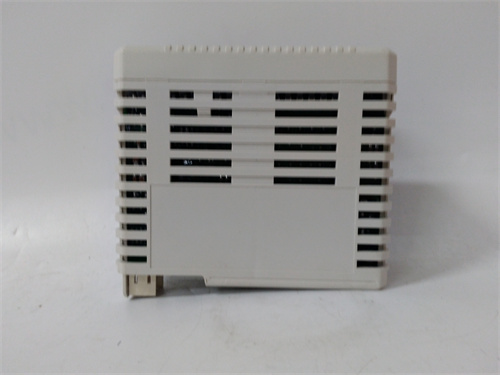
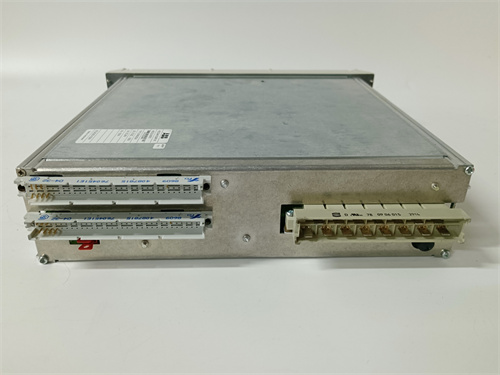
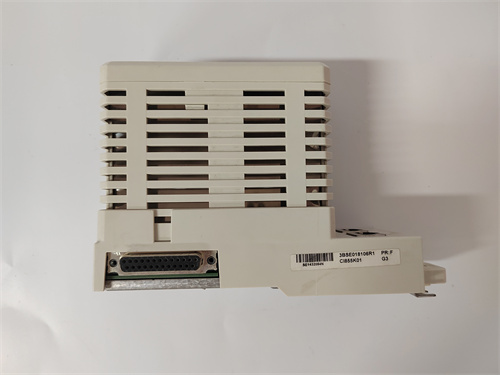
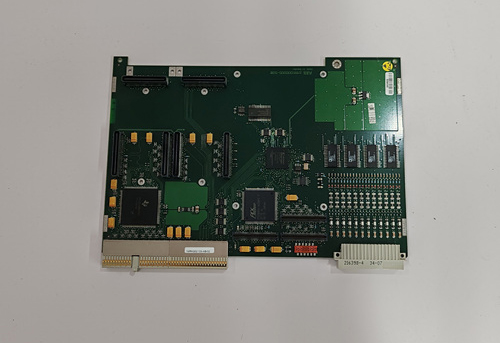
ABB PM861A 3BSE018157R1 High-Performance CPU Module
Manufacturer:ABB
Product Number:ABB PM861A 3BSE018157R1
Payment Methods:T/T, PayPal, Western Union
Condition:New & In Stock
Warranty:1 Year
Lead Time:1-3 Working Days
Certificate:COO
Courier partners:DHL, UPS, TNT, FedEx and EMS.
Business hours:7*24
Product Description
The ABB PM861A 3BSE018157R1 is a mid-range process CPU module engineered for ABB’s AC800M DCS, balancing performance and reliability for mid-scale control applications. At its core, a dual-core ARM Cortex-A9 processor splits tasks between control logic (first core) and communication/protocol processing (second core)—eliminating bottlenecks that plague single-core CPUs. The 2GB RAM supports up to 1,000 PID loops and 10,000 I/O points, while 4GB flash stores firmware, application code, and critical process data (with built-in wear leveling for 10-year lifespan).
Key Technical Specifications
- Model Number: ABB PM861A 3BSE018157R1
- Manufacturer: ABB Industrial Automation Division
- CPU Architecture: 32-bit ARM Cortex-A9 dual-core, 800MHz clock speed
- Memory Configuration: 2GB DDR3 RAM (volatile), 4GB eMMC flash (non-volatile)
- Redundancy Support: 1+1 hot-standby (automatic failover <5ms), sync via dedicated backplane link
- Communication Ports: 2 × 10/100/1000Mbps Ethernet (Profinet/Modbus TCP), 1 × RS485 (Modbus RTU)
- Protocol Support: IEC 61850 (GOOSE/MMS), Profinet IO, Modbus TCP/RTU, OPC UA
- Power Supply: 24VDC ±10%, 0.8A typical current draw (no load)
- Operating Temperature: -25°C to +65°C (-13°F to +149°F)
- Isolation Rating: 1kV AC (Ethernet ports to backplane); 500V AC (signal to power)
- Compatibility: ABB AC800M I/O modules (AI810, AO810, DI810), Advant OCS racks, Control Builder M software
- Mechanical Design: Rack-mount (3U height), conformal-coated PCB, metal housing (IP20)
- Certifications: IEC 61010-1, CE, UL 508, RoHS 2.0, ATEX Zone 2
Field Application & Problem Solved
In mid-scale process automation—refinery distillation units, chemical batch reactors, paper mill drying sections—generic CPUs struggle with two critical flaws: insufficient processing power for complex control loops and unreliable redundancy. A Texas chemical plant lost $160k in off-spec batches when a budget CPU couldn’t handle 60 concurrent PID loops, causing scan time overruns (150ms vs. required 50ms) and delayed control responses. Legacy controllers also lack seamless integration with ABB I/O modules: a Wisconsin paper mill spent 8 hours troubleshooting communication errors between a third-party CPU and AC800M I/O, delaying startup by a day.
You’ll find this module as the “brain” of AC800M DCS racks in mid-sized process plants: benzene distillation units in Louisiana, batch reactors in Ohio, and paper machine control systems in Minnesota. Its core value is balanced performance + ABB-native reliability. The dual-core 800MHz processor fixed the Texas plant’s scan time issues, cutting loop execution to 35ms and eliminating off-spec batches. At the Wisconsin mill, the PM861A’s plug-and-play compatibility with AC800M I/O eliminated communication errors, reducing commissioning time by 70%.
For a Florida wastewater treatment plant, the 1+1 redundancy design prevented a $90k outage when a CPU failed during a storm—failover occurred in 4ms, no process disruption. Its multi-protocol support also simplified integration with legacy Modbus sensors and new Profinet VFDs, avoiding $40k in gateway hardware costs.
Installation & Maintenance Pitfalls
- Firmware Version Lock—Match to I/O Modules: Rookies use outdated CPU firmware (pre-v6.0) with newer I/O modules (v7.0+), causing communication drops. A North Carolina refinery did this, losing 3 hours of production when DI810 inputs failed to register. Update firmware via Ethernet using Control Builder M v6.10+; always verify CPU and I/O firmware are within ±1 version (check ABB’s compatibility matrix).
- Redundancy Sync Cable—Use ABB-Certified Cabling: Generic Ethernet cables for redundancy sync cause failover failures. A Pennsylvania chemical plant used Cat5e instead of ABB’s 3BSE030220R1 Cat6 cable; the standby CPU failed to sync, triggering a 2-hour shutdown. Use only ABB-certified sync cables (max length 2m) and secure with strain relief—loose connections break sync.
- Overloading CPU Memory—Limit Unnecessary Tasks: Loading unused function blocks or large historical logs fills flash memory, slowing performance. A Michigan paper mill’s CPU slowed to 200ms scan time after storing 3 years of raw data. Archive historical data to a separate server, delete unused function blocks, and keep flash usage <70% (monitor via DCS diagnostics).
- Grounding—Dedicated Path to Cabinet Ground Bar: Daisy-chaining the CPU’s ground to power modules introduces EMI, corrupting analog signals. A Colorado mining plant’s pressure sensor readings fluctuated by 15% until we ran a 4mm² dedicated ground wire from the CPU chassis to the main ground bar. Never share the CPU’s ground with high-power components (VFDs, power supplies).
Redundancy is managed via a dedicated backplane sync link: the primary CPU transmits real-time data (loop setpoints, I/O status, alarms) to the standby unit at 1ms intervals. If the primary detects a fault (CPU error, power loss, communication failure), the standby takes over in <5ms—faster than the AC800M I/O’s data hold time, ensuring no process disruption.
The module’s multi-protocol support (IEC 61850, Profinet, Modbus) enables seamless integration with legacy and modern devices, eliminating the need for external gateways. Ruggedization features include a conformal-coated PCB (resisting dust, moisture, and chemical vapors) and a wide operating temperature range (-25°C to +65°C), ideal for unconditioned control cabinets.
What sets it apart from generic CPUs is ABB’s ecosystem integration: it’s optimized for Control Builder M software (drag-and-drop logic programming) and AC800M I/O modules, reducing integration errors. For mid-scale plants where downtime costs $12k+/hour, this module isn’t just a CPU—it’s a reliable, scalable control core that keeps processes running smoothly while simplifying maintenance and expansion.
Need a Custom Automation Solution?
Our team of experts can design and implement a tailored automation system to meet your specific requirements.