
Our Products
Comprehensive industrial automation solutions for global industries
Contact us
If you are interested in our products and want to know more details,please Contact us,we will reply you as soon as we can.
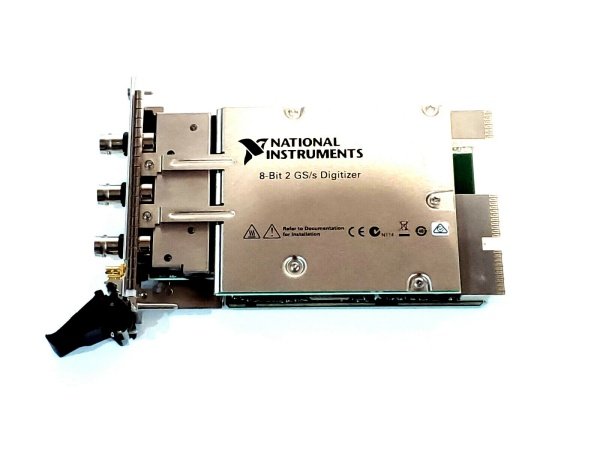
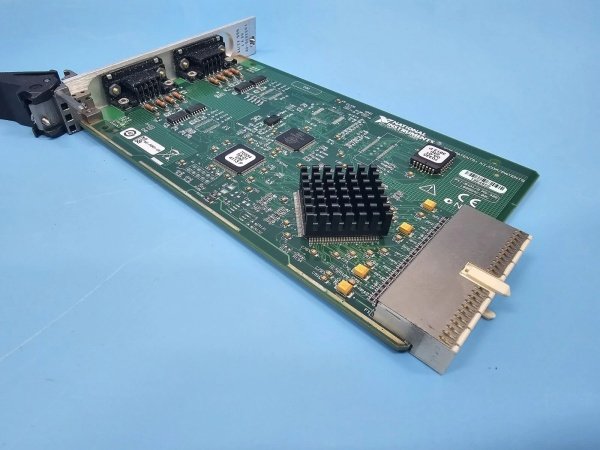
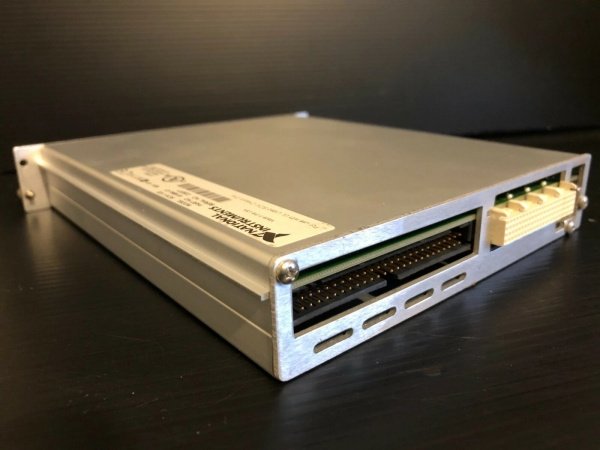
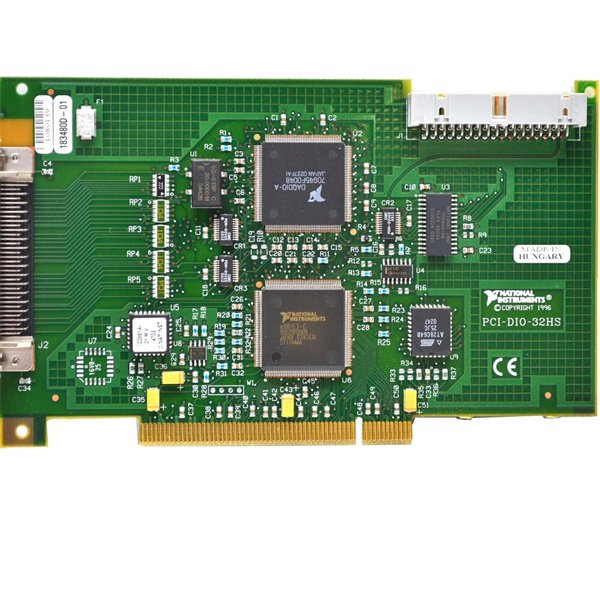
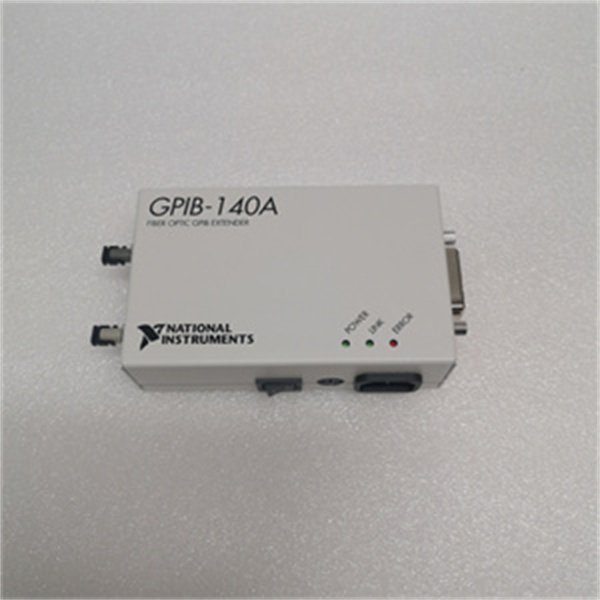
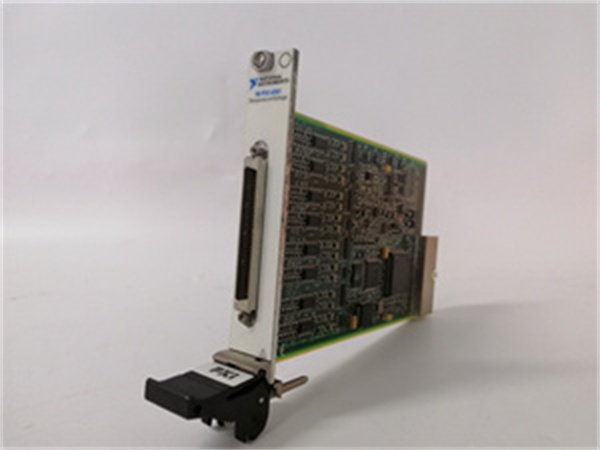
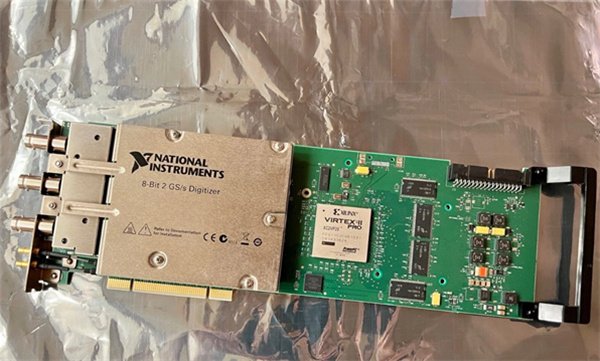
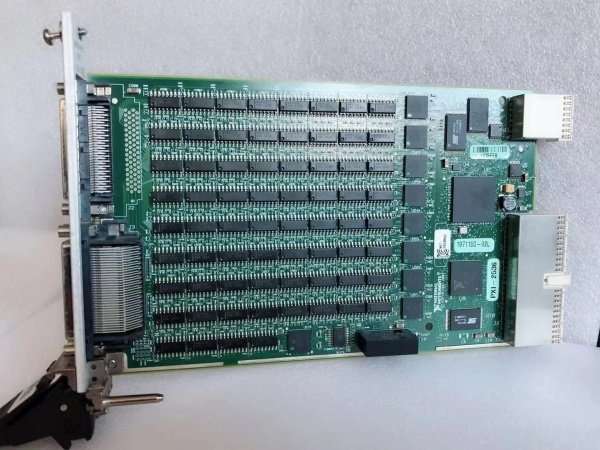
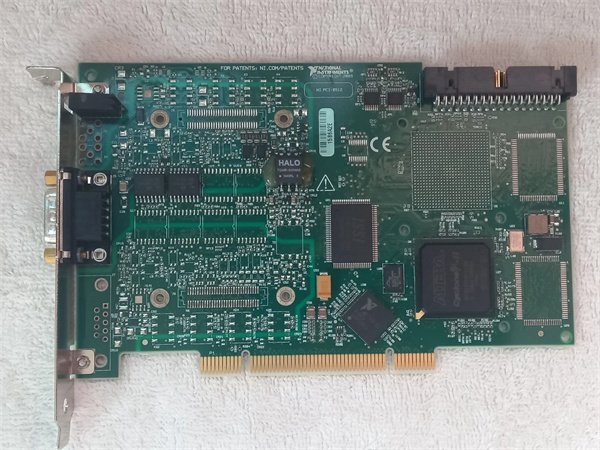
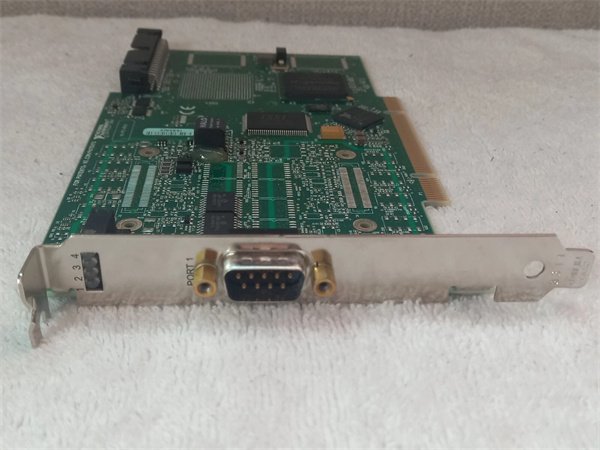
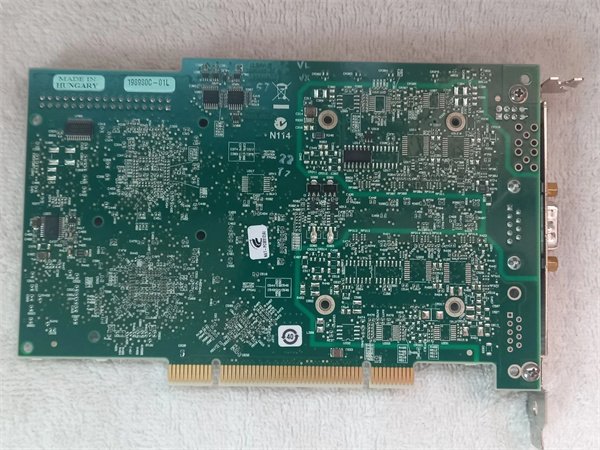
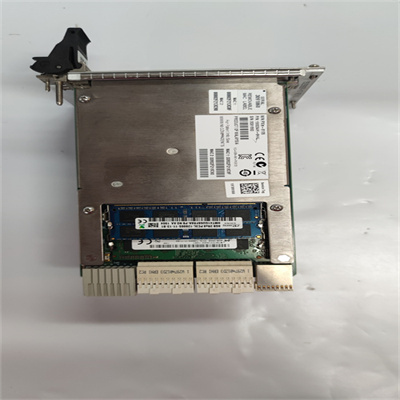
NI PCI-8512 PCI-Based Single-Port CAN Interface Card
Manufacturer:NI
Product Number:NI PCI-8512
Payment Methods:T/T, PayPal, Western Union
Condition:New & In Stock
Warranty:1 Year
Lead Time:1-3 Working Days
Certificate:COO
Courier partners:DHL, UPS, TNT, FedEx and EMS.
Business hours:7*24
Product Description
The NI PCI-8512 is a high-performance single-port CAN interface card from National Instruments (NI), engineered to deliver reliable, cost-efficient Controller Area Network (CAN) communication for PCI-based industrial automation and test systems. Unlike the dual-port NI PCI-8511 (designed for multi-network scenarios), the NI PCI-8512 is optimized for applications requiring single-network connectivity—retaining core CAN/CAN FD capabilities while reducing cost and PCI slot usage.
As a key member of NI’s CAN interface portfolio, the NI PCI-8512 addresses critical needs in automotive diagnostics, small-scale manufacturing, and academic research: its isolated CAN port supports both legacy CAN (up to 1 Mbps) and modern CAN FD (up to 8 Mbps) protocols, ensuring compatibility with new and existing industrial systems. When paired with NI’s NI-CAN driver, the NI PCI-8512 integrates seamlessly with software tools like LabVIEW, enabling users to build real-time CAN monitoring, logging, or control systems—from automotive sensor data collection to factory equipment communication. This focus on single-port efficiency, combined with industrial-grade reliability, makes the NI PCI-8512 a trusted choice for teams needing deterministic CAN communication without the overhead of dual ports.
Detailed Parameter Table
| Parameter Name | Parameter Value |
| Product model | NI PCI-8512 |
| Manufacturer | National Instruments (NI) |
| Product category | PCI-Based Single-Port CAN Interface Card (High-Speed Industrial Communication) |
| CAN protocols supported | CAN 2.0A (11-bit ID), CAN 2.0B (29-bit ID); supports CAN FD (Flexible Data Rate) |
| CAN FD data rates | Up to 8 Mbps (data phase); 1 Mbps (arbitration phase) |
| Standard CAN data rates | Up to 1 Mbps |
| Number of CAN ports | 1 isolated port |
| Isolation voltage | 250 Vrms (port-to-ground) |
| Communication interface | PCI (32-bit, 33 MHz); compatible with 3.3 V and 5 V PCI slots |
| Message buffer | 4,096 receive/transmit buffers (for burst data handling) |
| Triggering capabilities | Hardware-based CAN message triggering (by ID, data content, or timestamp) |
| Synchronization support | External trigger input/output for multi-card synchronization |
| Operating temperature range | 0 °C to 55 °C (32 °F to 131 °F) |
| Storage temperature range | -20 °C to 70 °C (-4 °F to 158 °F) |
| Power consumption | +5 VDC @ 0.8 A (max); +12 VDC @ 0.2 A (max); -12 VDC @ 0.04 A (max) |
| Compliance standards | CE, FCC Class A, UL 61010-1, IEC 61010-1, ISO 11898-2 (CAN physical layer), RoHS 3 |
| Software compatibility | NI-CAN driver, LabVIEW, LabWindows/CVI, C/C++,.NET, Python (via NI-CAN API) |
| Connector type | DSUB-9 (compatible with standard CAN bus cabling) |
Core Advantages and Technical Highlights
Cost-Efficient Single-Port Design for Targeted Applications: The NI PCI-8512’s single-port configuration is its defining advantage, offering the same CAN FD performance as the NI PCI-8511 at a lower cost—ideal for users who only need to connect to one CAN network. For example, a small manufacturing facility uses the NI PCI-8512 to communicate with a single conveyor system’s CAN network (500 kbps), eliminating the need to pay for the second port of the NI PCI-8511 that would go unused. This cost savings, paired with reduced power consumption (0.8 A vs. 1.0 A for the NI PCI-8511), makes the NI PCI-8512 a budget-friendly choice for small-scale or single-network projects.
CAN FD Support for Modern Industrial Systems: Like the NI PCI-8511, the NI PCI-8512 supports CAN FD, delivering data rates up to 8 Mbps in the data phase—critical for modern high-data-rate applications. In electric vehicle (EV) charging station testing, for instance, the NI PCI-8512 uses CAN FD to transmit real-time charging parameters (e.g., voltage, current, state of charge) from the station’s control unit to a test PC. The 8 Mbps rate ensures data is transferred without latency, enabling engineers to monitor charging efficiency and detect anomalies (e.g., current spikes) within milliseconds—performance that legacy CAN cards (limited to 1 Mbps) cannot match.
250 Vrms Isolation for Industrial-Grade Reliability: The NI PCI-8512 features 250 Vrms port-to-ground isolation, identical to the NI PCI-8511, protecting the card and host PC from voltage transients and ground loops common in industrial environments. For example, in a factory with large motors and variable-frequency drives, the NI PCI-8512 reliably communicates with a temperature sensor’s CAN network—even when nearby machinery generates 100 V common-mode noise. This isolation eliminates signal corruption and equipment damage, ensuring consistent communication in harsh conditions where non-isolated CAN cards would fail.
Deep Message Buffers for Burst Data Handling: The NI PCI-8512 includes 4,096 receive/transmit buffers—matching the NI PCI-8511’s per-port buffer capacity—to handle burst data traffic without loss. In automotive ECU diagnostics, for example, the NI PCI-8512 captures hundreds of parameter update messages (e.g., engine RPM, coolant temperature) sent by an ECU in quick succession. The buffers store these messages while the PC processes previous data, ensuring no critical diagnostic information is dropped—even at maximum CAN FD data rates. This buffer capacity is 4x larger than entry-level single-port CAN cards, making the NI PCI-8512 suitable for high-throughput applications.
Typical Application Scenarios
The NI PCI-8512 excels in single-network CAN/CAN FD communication across industries. In automotive diagnostics, it is a staple for repair shops and mobile test teams: technicians connect the NI PCI-8512 to a vehicle’s OBD-II CAN port, using it to read diagnostic trouble codes (DTCs) and stream real-time sensor data (e.g., fuel trim, oxygen sensor values) at 500 kbps. Its compact PCI form factor fits in portable test laptops, while CAN FD support ensures compatibility with modern EVs (e.g., Tesla, Ford Mustang Mach-E) that use CAN FD for high-speed battery data. The NI PCI-8512’s hardware triggering also lets technicians isolate specific DTC messages, simplifying fault diagnosis.
In small-scale manufacturing, the NI PCI-8512 enables communication between a central control PC and a single piece of CAN-based machinery—such as a robotic pick-and-place unit. A electronics assembly shop uses the NI PCI-8512 to send motion commands (e.g., pick position, placement force) to the robot at 1 Mbps and receive status updates (e.g., gripper open/close, error flags) in return. The card’s isolation protects the control PC from electrical noise generated by the robot’s motors, while deep buffers handle burst data from simultaneous status updates. By integrating with LabVIEW, the shop builds a simple HMI (Human-Machine Interface) to monitor robot performance, reducing manual intervention and improving throughput.
In academic research, the NI PCI-8512 is used in electrical engineering labs to teach CAN communication principles: students connect the card to a small CAN network of microcontrollers (e.g., Arduino with CAN shields), using it to send/receive test messages and analyze network traffic. Its compatibility with LabVIEW lets educators create step-by-step tutorials for CAN message filtering and triggering, while its single-port design keeps lab setup costs low. The NI PCI-8512 also supports CAN FD experiments, preparing students for modern industrial communication standards.
Installation Commissioning and Maintenance Instructions
Installation preparation: Before installing the NI PCI-8512, confirm the host PC has an available 32-bit PCI slot (3.3 V or 5 V compatible) and meets system requirements (Windows 7/10/11, 4 GB RAM, 200 MB free disk space for NI-CAN drivers). Power off the PC and disconnect all power sources. Use an anti-static wristband to handle the NI PCI-8512—its CAN transceivers are sensitive to electrostatic discharge. Align the card’s edge connector with the PCI slot, press firmly until the bracket seats against the case, and secure with a screw. Connect CAN bus cabling to the card’s DSUB-9 port (ensure proper termination: 120 Ω resistor at the bus endpoint). After installation, install the latest NI-CAN driver, then run the “NI CAN Configuration Utility” to verify port functionality and set CAN FD/data rates.
Maintenance suggestions: Clean the NI PCI-8512’s PCI connector every 3 months with compressed air to remove dust, which can cause intermittent CAN communication. Inspect the CAN cable connection quarterly—tighten loose screws and replace damaged cables to avoid signal loss. If the NI PCI-8512 fails to detect CAN messages, check the bus termination (ensure 120 Ω resistor is present), verify the CAN data rate matches the network, and use the NI-CAN utility to run a self-test. Back up CAN configuration settings (e.g., baud rate, filter rules) via the utility to speed up reconfiguration if needed. For hardware issues (e.g., unresponsive port, isolation failure), contact NI support—do not open the card, as this voids the warranty and risks damaging CAN transceivers.
 Loading comments...
NI PCI-8512 PCI-Based Single-Port CAN Interface Card
Manufacturer:NI
Product Number:NI PCI-8512
Payment Methods:T/T, PayPal, Western Union
Condition:New & In Stock
Warranty:1 Year
Lead Time:1-3 Working Days
Certificate:COO
Courier partners:DHL, UPS, TNT, FedEx and EMS.
Business hours:7*24
Product Description
The NI PCI-8512 is a high-performance single-port CAN interface card from National Instruments (NI), engineered to deliver reliable, cost-efficient Controller Area Network (CAN) communication for PCI-based industrial automation and test systems. Unlike the dual-port NI PCI-8511 (designed for multi-network scenarios), the NI PCI-8512 is optimized for applications requiring single-network connectivity—retaining core CAN/CAN FD capabilities while reducing cost and PCI slot usage.
As a key member of NI’s CAN interface portfolio, the NI PCI-8512 addresses critical needs in automotive diagnostics, small-scale manufacturing, and academic research: its isolated CAN port supports both legacy CAN (up to 1 Mbps) and modern CAN FD (up to 8 Mbps) protocols, ensuring compatibility with new and existing industrial systems. When paired with NI’s NI-CAN driver, the NI PCI-8512 integrates seamlessly with software tools like LabVIEW, enabling users to build real-time CAN monitoring, logging, or control systems—from automotive sensor data collection to factory equipment communication. This focus on single-port efficiency, combined with industrial-grade reliability, makes the NI PCI-8512 a trusted choice for teams needing deterministic CAN communication without the overhead of dual ports.
Detailed Parameter Table
| Parameter Name | Parameter Value |
| Product model | NI PCI-8512 |
| Manufacturer | National Instruments (NI) |
| Product category | PCI-Based Single-Port CAN Interface Card (High-Speed Industrial Communication) |
| CAN protocols supported | CAN 2.0A (11-bit ID), CAN 2.0B (29-bit ID); supports CAN FD (Flexible Data Rate) |
| CAN FD data rates | Up to 8 Mbps (data phase); 1 Mbps (arbitration phase) |
| Standard CAN data rates | Up to 1 Mbps |
| Number of CAN ports | 1 isolated port |
| Isolation voltage | 250 Vrms (port-to-ground) |
| Communication interface | PCI (32-bit, 33 MHz); compatible with 3.3 V and 5 V PCI slots |
| Message buffer | 4,096 receive/transmit buffers (for burst data handling) |
| Triggering capabilities | Hardware-based CAN message triggering (by ID, data content, or timestamp) |
| Synchronization support | External trigger input/output for multi-card synchronization |
| Operating temperature range | 0 °C to 55 °C (32 °F to 131 °F) |
| Storage temperature range | -20 °C to 70 °C (-4 °F to 158 °F) |
| Power consumption | +5 VDC @ 0.8 A (max); +12 VDC @ 0.2 A (max); -12 VDC @ 0.04 A (max) |
| Compliance standards | CE, FCC Class A, UL 61010-1, IEC 61010-1, ISO 11898-2 (CAN physical layer), RoHS 3 |
| Software compatibility | NI-CAN driver, LabVIEW, LabWindows/CVI, C/C++,.NET, Python (via NI-CAN API) |
| Connector type | DSUB-9 (compatible with standard CAN bus cabling) |
Core Advantages and Technical Highlights
Cost-Efficient Single-Port Design for Targeted Applications: The NI PCI-8512’s single-port configuration is its defining advantage, offering the same CAN FD performance as the NI PCI-8511 at a lower cost—ideal for users who only need to connect to one CAN network. For example, a small manufacturing facility uses the NI PCI-8512 to communicate with a single conveyor system’s CAN network (500 kbps), eliminating the need to pay for the second port of the NI PCI-8511 that would go unused. This cost savings, paired with reduced power consumption (0.8 A vs. 1.0 A for the NI PCI-8511), makes the NI PCI-8512 a budget-friendly choice for small-scale or single-network projects.
CAN FD Support for Modern Industrial Systems: Like the NI PCI-8511, the NI PCI-8512 supports CAN FD, delivering data rates up to 8 Mbps in the data phase—critical for modern high-data-rate applications. In electric vehicle (EV) charging station testing, for instance, the NI PCI-8512 uses CAN FD to transmit real-time charging parameters (e.g., voltage, current, state of charge) from the station’s control unit to a test PC. The 8 Mbps rate ensures data is transferred without latency, enabling engineers to monitor charging efficiency and detect anomalies (e.g., current spikes) within milliseconds—performance that legacy CAN cards (limited to 1 Mbps) cannot match.
250 Vrms Isolation for Industrial-Grade Reliability: The NI PCI-8512 features 250 Vrms port-to-ground isolation, identical to the NI PCI-8511, protecting the card and host PC from voltage transients and ground loops common in industrial environments. For example, in a factory with large motors and variable-frequency drives, the NI PCI-8512 reliably communicates with a temperature sensor’s CAN network—even when nearby machinery generates 100 V common-mode noise. This isolation eliminates signal corruption and equipment damage, ensuring consistent communication in harsh conditions where non-isolated CAN cards would fail.
Deep Message Buffers for Burst Data Handling: The NI PCI-8512 includes 4,096 receive/transmit buffers—matching the NI PCI-8511’s per-port buffer capacity—to handle burst data traffic without loss. In automotive ECU diagnostics, for example, the NI PCI-8512 captures hundreds of parameter update messages (e.g., engine RPM, coolant temperature) sent by an ECU in quick succession. The buffers store these messages while the PC processes previous data, ensuring no critical diagnostic information is dropped—even at maximum CAN FD data rates. This buffer capacity is 4x larger than entry-level single-port CAN cards, making the NI PCI-8512 suitable for high-throughput applications.
Typical Application Scenarios
The NI PCI-8512 excels in single-network CAN/CAN FD communication across industries. In automotive diagnostics, it is a staple for repair shops and mobile test teams: technicians connect the NI PCI-8512 to a vehicle’s OBD-II CAN port, using it to read diagnostic trouble codes (DTCs) and stream real-time sensor data (e.g., fuel trim, oxygen sensor values) at 500 kbps. Its compact PCI form factor fits in portable test laptops, while CAN FD support ensures compatibility with modern EVs (e.g., Tesla, Ford Mustang Mach-E) that use CAN FD for high-speed battery data. The NI PCI-8512’s hardware triggering also lets technicians isolate specific DTC messages, simplifying fault diagnosis.
In small-scale manufacturing, the NI PCI-8512 enables communication between a central control PC and a single piece of CAN-based machinery—such as a robotic pick-and-place unit. A electronics assembly shop uses the NI PCI-8512 to send motion commands (e.g., pick position, placement force) to the robot at 1 Mbps and receive status updates (e.g., gripper open/close, error flags) in return. The card’s isolation protects the control PC from electrical noise generated by the robot’s motors, while deep buffers handle burst data from simultaneous status updates. By integrating with LabVIEW, the shop builds a simple HMI (Human-Machine Interface) to monitor robot performance, reducing manual intervention and improving throughput.
In academic research, the NI PCI-8512 is used in electrical engineering labs to teach CAN communication principles: students connect the card to a small CAN network of microcontrollers (e.g., Arduino with CAN shields), using it to send/receive test messages and analyze network traffic. Its compatibility with LabVIEW lets educators create step-by-step tutorials for CAN message filtering and triggering, while its single-port design keeps lab setup costs low. The NI PCI-8512 also supports CAN FD experiments, preparing students for modern industrial communication standards.
Installation Commissioning and Maintenance Instructions
Installation preparation: Before installing the NI PCI-8512, confirm the host PC has an available 32-bit PCI slot (3.3 V or 5 V compatible) and meets system requirements (Windows 7/10/11, 4 GB RAM, 200 MB free disk space for NI-CAN drivers). Power off the PC and disconnect all power sources. Use an anti-static wristband to handle the NI PCI-8512—its CAN transceivers are sensitive to electrostatic discharge. Align the card’s edge connector with the PCI slot, press firmly until the bracket seats against the case, and secure with a screw. Connect CAN bus cabling to the card’s DSUB-9 port (ensure proper termination: 120 Ω resistor at the bus endpoint). After installation, install the latest NI-CAN driver, then run the “NI CAN Configuration Utility” to verify port functionality and set CAN FD/data rates.
Maintenance suggestions: Clean the NI PCI-8512’s PCI connector every 3 months with compressed air to remove dust, which can cause intermittent CAN communication. Inspect the CAN cable connection quarterly—tighten loose screws and replace damaged cables to avoid signal loss. If the NI PCI-8512 fails to detect CAN messages, check the bus termination (ensure 120 Ω resistor is present), verify the CAN data rate matches the network, and use the NI-CAN utility to run a self-test. Back up CAN configuration settings (e.g., baud rate, filter rules) via the utility to speed up reconfiguration if needed. For hardware issues (e.g., unresponsive port, isolation failure), contact NI support—do not open the card, as this voids the warranty and risks damaging CAN transceivers.

Need a Custom Automation Solution?
Our team of experts can design and implement a tailored automation system to meet your specific requirements.