
Our Products
Comprehensive industrial automation solutions for global industries
Contact us
If you are interested in our products and want to know more details,please Contact us,we will reply you as soon as we can.
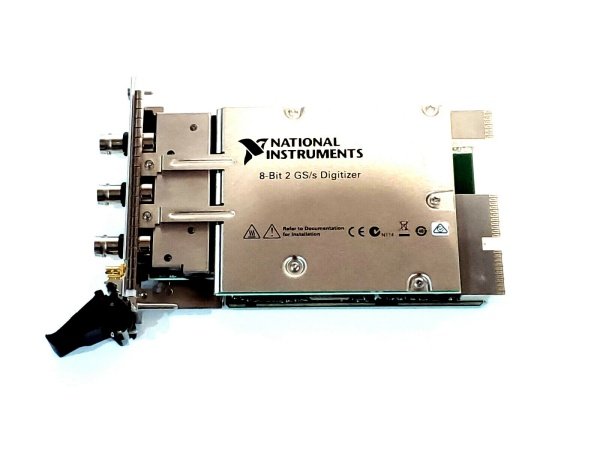
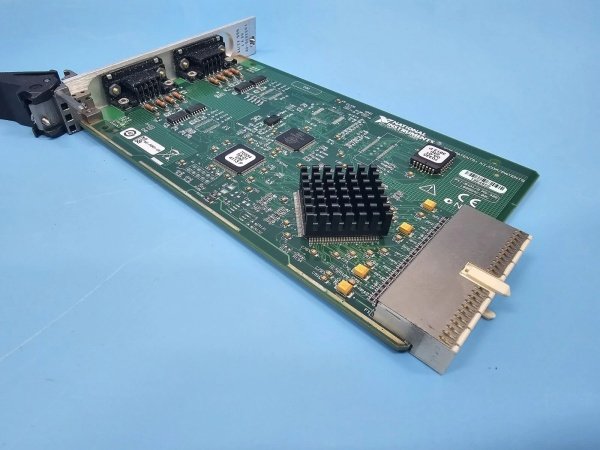
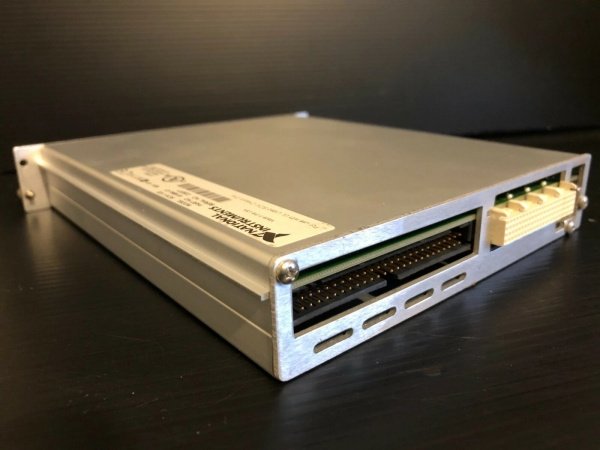
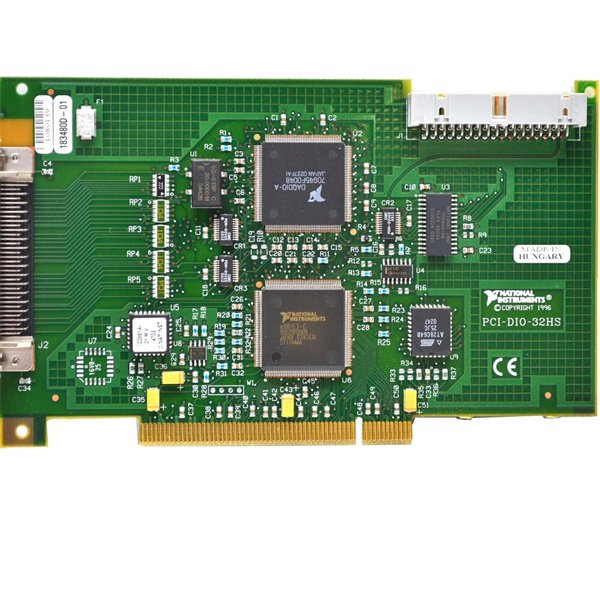
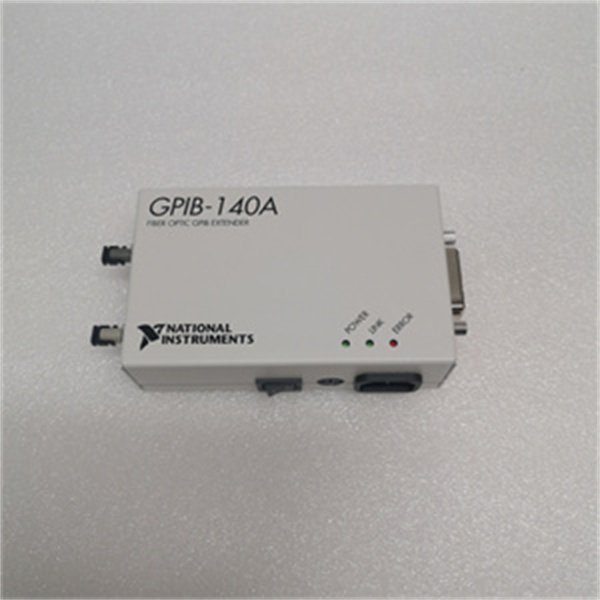
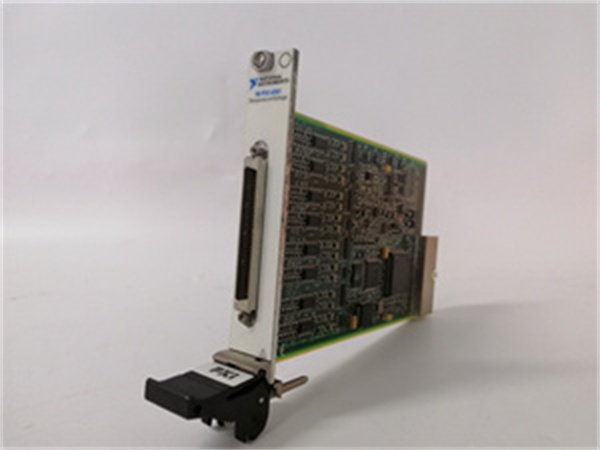
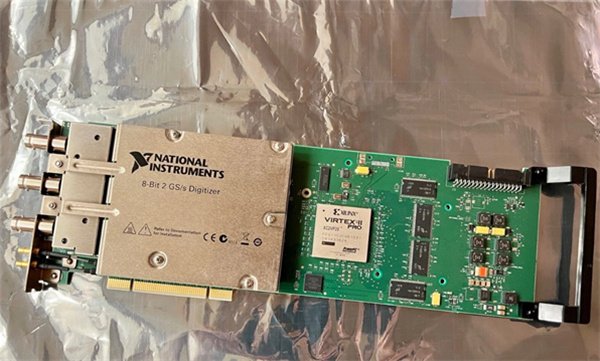
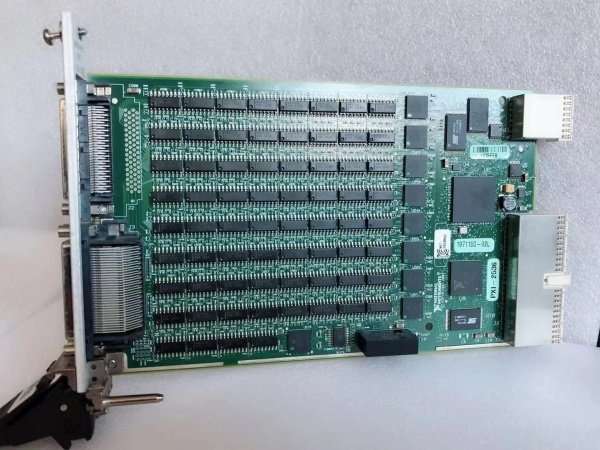
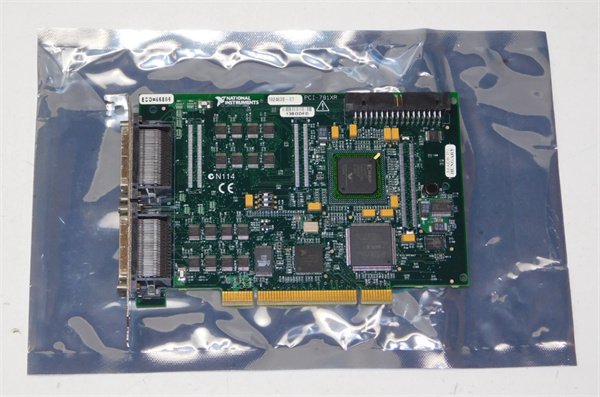
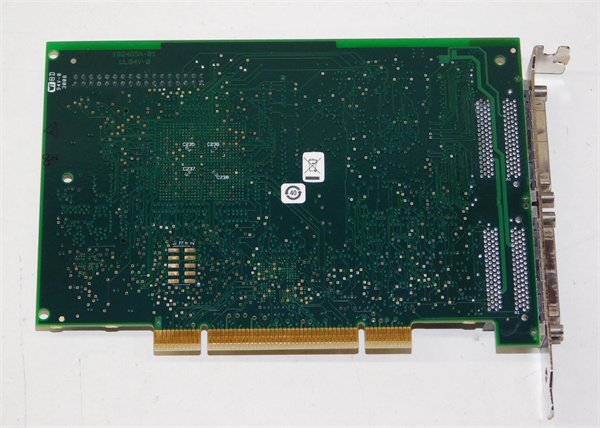
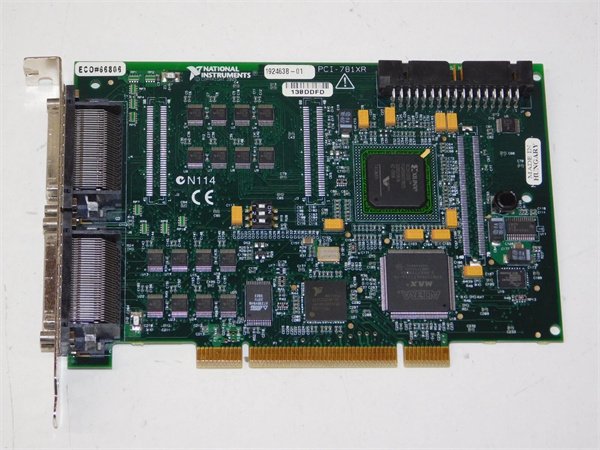
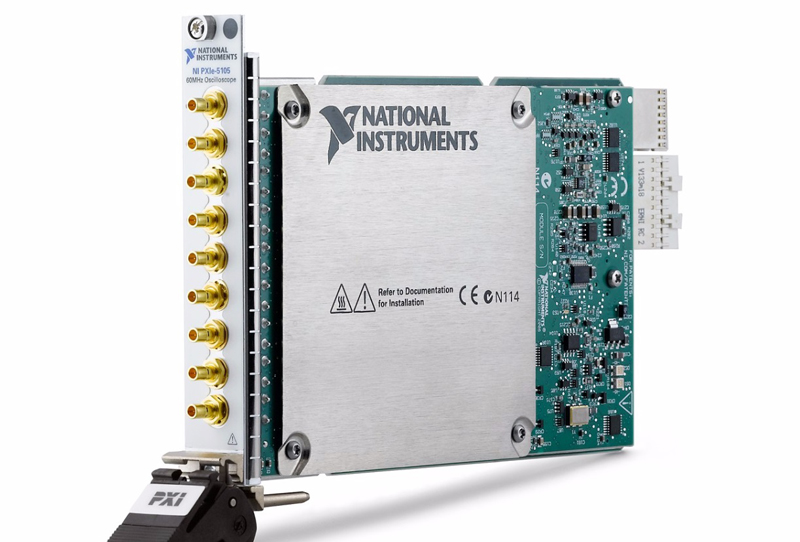
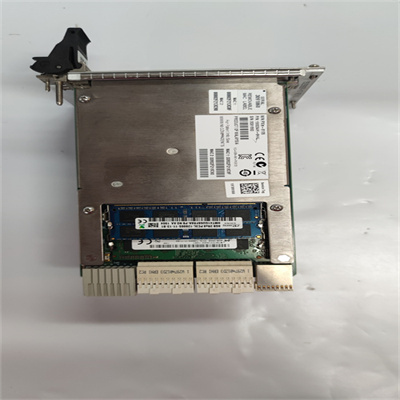
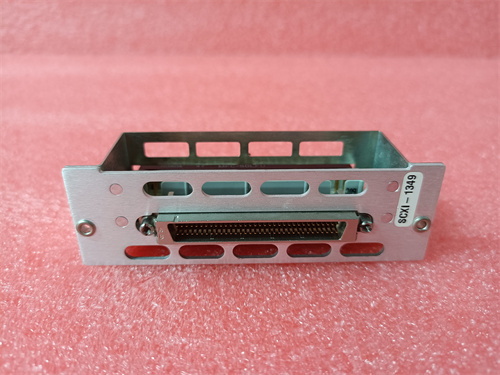
NI PCI-7811 PCI-Based Reconfigurable I/O (RIO) Data Acquisition Card
Manufacturer:NI
Product Number:NI PCI-7811
Payment Methods:T/T, PayPal, Western Union
Condition:New & In Stock
Warranty:1 Year
Lead Time:1-3 Working Days
Certificate:COO
Courier partners:DHL, UPS, TNT, FedEx and EMS.
Business hours:7*24
Product Description
The NI PCI-7811 is a reconfigurable I/O (RIO) DAQ card from National Instruments (NI), designed to bridge the gap between fixed-function DAQ cards (like the NI PCI-6221) and fully customizable industrial controllers. As part of NI’s CompactRIO ecosystem, the NI PCI-7811 integrates a Xilinx FPGA with analog/digital I/O, enabling users to program custom real-time logic—from low-latency control loops to specialized signal processing—without hardware redesigns.
Unlike the NI PCI-6221 (focused on high-precision measurement), the NI PCI-7811 prioritizes flexibility: its 1M-gate FPGA can be reconfigured to handle unique tasks like custom triggering, parallel data processing, or protocol emulation (e.g., CAN, SPI). When paired with NI’s LabVIEW FPGA Module, the NI PCI-7811 lets engineers build tailored systems—such as a real-time motor controller or a custom sensor data logger—by graphically programming the FPGA. This adaptability makes the NI PCI-7811 a top choice for industries like automotive testing, academic research, and industrial automation, where off-the-shelf solutions cannot meet specific requirements.
Detailed Parameter Table
| Parameter Name | Parameter Value |
| Product model | NI PCI-7811 |
| Manufacturer | National Instruments (NI) |
| Product category | PCI-Based Reconfigurable I/O (RIO) Data Acquisition Card (CompactRIO Compatible) |
| FPGA chip | Xilinx Spartan-3E (1M gates, configurable for custom logic) |
| Analog input channels | 8 single-ended / 4 differential channels |
| Analog input resolution | 12-bit |
| Maximum sampling rate (analog input) | 200 kS/s per channel (simultaneous sampling) |
| Analog input voltage range | ±10 V (fixed) |
| Analog output channels | 2 channels (12-bit resolution) |
| Maximum output rate (analog output) | 100 kS/s per channel |
| Digital I/O lines | 40 lines (TTL/CMOS-compatible, bidirectional; configurable via FPGA) |
| Counter/timer | 4 x 32-bit counters (implementable via FPGA for frequency/pulse measurement) |
| Communication interface | PCI (32-bit, 33 MHz); compatible with 3.3 V and 5 V PCI slots |
| Operating temperature range | 0 °C to 55 °C (32 °F to 131 °F) |
| Storage temperature range | -20 °C to 70 °C (-4 °F to 158 °F) |
| Power consumption | +5 VDC @ 2.0 A (max); +12 VDC @ 0.6 A (max); -12 VDC @ 0.2 A (max) |
| Memory | 16 MB DDR2 SDRAM (for FPGA data buffering); 2 MB Flash memory (for FPGA configuration) |
| Calibration support | On-board self-calibration (software-triggered); annual external calibration recommended |
| Software compatibility | NI-RIO driver, LabVIEW FPGA Module, LabVIEW, C/C++ (via NI-RIO API) |
Core Advantages and Technical Highlights
FPGA-Based Customization for Unique Workflows: The NI PCI-7811’s Xilinx Spartan-3E FPGA is its defining advantage, allowing users to implement custom logic that fixed-function cards like the NI PCI-6221 cannot match. For example, in automotive ECU testing, engineers program the FPGA on the NI PCI-7811 to emulate a CAN bus interface—enabling the card to send/receive CAN messages while simultaneously sampling sensor data (analog input) and controlling test fixtures (digital output). This integration replaces three separate devices (DAQ card, CAN interface, controller) with one NI PCI-7811, reducing system complexity and latency.
Low-Latency Real-Time Control: With FPGA logic executed in hardware (not software), the NI PCI-7811 achieves sub-microsecond latency for control tasks—critical for applications like robotics or precision manufacturing. A factory automation team, for instance, uses the NI PCI-7811 to control a robotic arm: the FPGA runs a 1 kHz position control loop, reading encoder data (digital I/O) and adjusting motor voltage (analog output) with <500 ns latency. This speed ensures the arm moves with pinpoint accuracy, outperforming software-based controllers that introduce millisecond delays.
40 Digital I/O Lines for Scalable Control: The NI PCI-7811 includes 40 configurable digital I/O lines—nearly double the NI PCI-6221’s 24 lines—making it ideal for large-scale digital systems. In a semiconductor test setup, technicians use these lines to control 16 relays (output) and read 24 test points (input) on a chip, all synchronized via the FPGA. The lines can also be grouped to implement parallel communication protocols (e.g., 8-bit parallel data transfer), further expanding the NI PCI-7811’s utility for custom test benches.
Simultaneous Sampling for Phase-Coherent Data: Unlike the NI PCI-6221 (which uses a multiplexed analog input), the NI PCI-7811 supports simultaneous sampling across its 8 analog inputs. This ensures phase-coherent data—essential for applications like structural vibration analysis, where engineers connect 4 accelerometers (differential mode) to the NI PCI-7811 to measure vibration across a machine frame. Simultaneous sampling eliminates timing skew between channels, enabling accurate phase difference calculations and reliable fault detection.
Typical Application Scenarios
The NI PCI-7811 excels in custom real-time applications across industries. In automotive powertrain testing, it is used to validate engine control units (ECUs): engineers program the NI PCI-7811’s FPGA to simulate crankshaft position signals (digital output) and sample fuel injector voltage (analog input) at 200 kS/s. The FPGA processes this data in real time to calculate injector timing accuracy, while digital I/O lines trigger a test chamber’s temperature control. This setup lets the team validate ECU performance under dynamic conditions—something fixed-function DAQ cards like the NI PCI-6221 cannot do without external controllers.
In academic robotics research, the NI PCI-7811 is a staple for building custom robot controllers: students program the FPGA to run a 500 Hz closed-loop control for a 4-degree-of-freedom robotic arm. The NI PCI-7811 reads encoder feedback (digital I/O) and sends motor command signals (analog output), with the FPGA ensuring sub-millisecond response times to avoid instability. Its compatibility with LabVIEW FPGA also lets students prototype logic quickly—e.g., adding collision detection by programming the FPGA to monitor current draw (analog input) and stop the arm if thresholds are exceeded.
In industrial machine vision, the NI PCI-7811 synchronizes cameras and lighting: the FPGA triggers 4 cameras (digital output) and samples 2 light sensors (analog input) to adjust brightness in real time. This synchronization ensures consistent image capture, even as part geometry changes on a production line. The NI PCI-7811’s FPGA also processes camera trigger timestamps to calculate part position, eliminating the need for a separate vision controller and reducing system costs.
Installation Commissioning and Maintenance Instructions
Installation preparation: Before installing the NI PCI-7811, confirm the host PC has an available 32-bit PCI slot (3.3 V or 5 V compatible) and meets system requirements (Windows 7/10, 8 GB RAM, 1 GB free disk space for NI-RIO drivers and LabVIEW FPGA). Power off the PC and disconnect all power sources. Use an anti-static wristband and mat to handle the NI PCI-7811—its FPGA and DDR2 memory are sensitive to electrostatic discharge. Align the card’s edge connector with the PCI slot, press firmly until the bracket seats against the case, and secure with two screws (to prevent vibration-induced FPGA connection issues). After installation, install the latest NI-RIO driver and LabVIEW FPGA Module, then run the “NI RIO Hardware Setup” utility to configure the FPGA and verify I/O functionality.
Maintenance suggestions: Clean the NI PCI-7811’s PCI connector every 2 months with low-pressure compressed air to remove dust, which can cause FPGA communication errors. Back up the FPGA configuration to Flash memory (via NI-RIO utility) after programming—this ensures the NI PCI-7811 retains custom logic if power is lost. If the NI PCI-7811 exhibits FPGA configuration failures, reflash the FPGA using the backup file or reinstall the NI-RIO driver. Run self-calibration quarterly to maintain analog input accuracy, especially for applications requiring traceable measurements. For hardware issues (e.g., unresponsive digital I/O), contact NI support—do not open the card, as this voids the warranty and risks damaging the FPGA.
 Loading comments...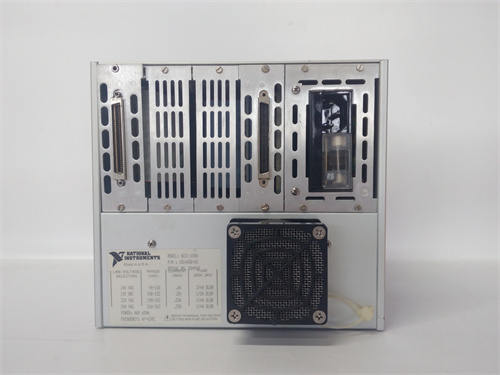
NI PCI-7811 PCI-Based Reconfigurable I/O (RIO) Data Acquisition Card
Manufacturer:NI
Product Number:NI PCI-7811
Payment Methods:T/T, PayPal, Western Union
Condition:New & In Stock
Warranty:1 Year
Lead Time:1-3 Working Days
Certificate:COO
Courier partners:DHL, UPS, TNT, FedEx and EMS.
Business hours:7*24
Product Description
The NI PCI-7811 is a reconfigurable I/O (RIO) DAQ card from National Instruments (NI), designed to bridge the gap between fixed-function DAQ cards (like the NI PCI-6221) and fully customizable industrial controllers. As part of NI’s CompactRIO ecosystem, the NI PCI-7811 integrates a Xilinx FPGA with analog/digital I/O, enabling users to program custom real-time logic—from low-latency control loops to specialized signal processing—without hardware redesigns.
Unlike the NI PCI-6221 (focused on high-precision measurement), the NI PCI-7811 prioritizes flexibility: its 1M-gate FPGA can be reconfigured to handle unique tasks like custom triggering, parallel data processing, or protocol emulation (e.g., CAN, SPI). When paired with NI’s LabVIEW FPGA Module, the NI PCI-7811 lets engineers build tailored systems—such as a real-time motor controller or a custom sensor data logger—by graphically programming the FPGA. This adaptability makes the NI PCI-7811 a top choice for industries like automotive testing, academic research, and industrial automation, where off-the-shelf solutions cannot meet specific requirements.
Detailed Parameter Table
| Parameter Name | Parameter Value |
| Product model | NI PCI-7811 |
| Manufacturer | National Instruments (NI) |
| Product category | PCI-Based Reconfigurable I/O (RIO) Data Acquisition Card (CompactRIO Compatible) |
| FPGA chip | Xilinx Spartan-3E (1M gates, configurable for custom logic) |
| Analog input channels | 8 single-ended / 4 differential channels |
| Analog input resolution | 12-bit |
| Maximum sampling rate (analog input) | 200 kS/s per channel (simultaneous sampling) |
| Analog input voltage range | ±10 V (fixed) |
| Analog output channels | 2 channels (12-bit resolution) |
| Maximum output rate (analog output) | 100 kS/s per channel |
| Digital I/O lines | 40 lines (TTL/CMOS-compatible, bidirectional; configurable via FPGA) |
| Counter/timer | 4 x 32-bit counters (implementable via FPGA for frequency/pulse measurement) |
| Communication interface | PCI (32-bit, 33 MHz); compatible with 3.3 V and 5 V PCI slots |
| Operating temperature range | 0 °C to 55 °C (32 °F to 131 °F) |
| Storage temperature range | -20 °C to 70 °C (-4 °F to 158 °F) |
| Power consumption | +5 VDC @ 2.0 A (max); +12 VDC @ 0.6 A (max); -12 VDC @ 0.2 A (max) |
| Memory | 16 MB DDR2 SDRAM (for FPGA data buffering); 2 MB Flash memory (for FPGA configuration) |
| Calibration support | On-board self-calibration (software-triggered); annual external calibration recommended |
| Software compatibility | NI-RIO driver, LabVIEW FPGA Module, LabVIEW, C/C++ (via NI-RIO API) |
Core Advantages and Technical Highlights
FPGA-Based Customization for Unique Workflows: The NI PCI-7811’s Xilinx Spartan-3E FPGA is its defining advantage, allowing users to implement custom logic that fixed-function cards like the NI PCI-6221 cannot match. For example, in automotive ECU testing, engineers program the FPGA on the NI PCI-7811 to emulate a CAN bus interface—enabling the card to send/receive CAN messages while simultaneously sampling sensor data (analog input) and controlling test fixtures (digital output). This integration replaces three separate devices (DAQ card, CAN interface, controller) with one NI PCI-7811, reducing system complexity and latency.
Low-Latency Real-Time Control: With FPGA logic executed in hardware (not software), the NI PCI-7811 achieves sub-microsecond latency for control tasks—critical for applications like robotics or precision manufacturing. A factory automation team, for instance, uses the NI PCI-7811 to control a robotic arm: the FPGA runs a 1 kHz position control loop, reading encoder data (digital I/O) and adjusting motor voltage (analog output) with <500 ns latency. This speed ensures the arm moves with pinpoint accuracy, outperforming software-based controllers that introduce millisecond delays.
40 Digital I/O Lines for Scalable Control: The NI PCI-7811 includes 40 configurable digital I/O lines—nearly double the NI PCI-6221’s 24 lines—making it ideal for large-scale digital systems. In a semiconductor test setup, technicians use these lines to control 16 relays (output) and read 24 test points (input) on a chip, all synchronized via the FPGA. The lines can also be grouped to implement parallel communication protocols (e.g., 8-bit parallel data transfer), further expanding the NI PCI-7811’s utility for custom test benches.
Simultaneous Sampling for Phase-Coherent Data: Unlike the NI PCI-6221 (which uses a multiplexed analog input), the NI PCI-7811 supports simultaneous sampling across its 8 analog inputs. This ensures phase-coherent data—essential for applications like structural vibration analysis, where engineers connect 4 accelerometers (differential mode) to the NI PCI-7811 to measure vibration across a machine frame. Simultaneous sampling eliminates timing skew between channels, enabling accurate phase difference calculations and reliable fault detection.
Typical Application Scenarios
The NI PCI-7811 excels in custom real-time applications across industries. In automotive powertrain testing, it is used to validate engine control units (ECUs): engineers program the NI PCI-7811’s FPGA to simulate crankshaft position signals (digital output) and sample fuel injector voltage (analog input) at 200 kS/s. The FPGA processes this data in real time to calculate injector timing accuracy, while digital I/O lines trigger a test chamber’s temperature control. This setup lets the team validate ECU performance under dynamic conditions—something fixed-function DAQ cards like the NI PCI-6221 cannot do without external controllers.
In academic robotics research, the NI PCI-7811 is a staple for building custom robot controllers: students program the FPGA to run a 500 Hz closed-loop control for a 4-degree-of-freedom robotic arm. The NI PCI-7811 reads encoder feedback (digital I/O) and sends motor command signals (analog output), with the FPGA ensuring sub-millisecond response times to avoid instability. Its compatibility with LabVIEW FPGA also lets students prototype logic quickly—e.g., adding collision detection by programming the FPGA to monitor current draw (analog input) and stop the arm if thresholds are exceeded.
In industrial machine vision, the NI PCI-7811 synchronizes cameras and lighting: the FPGA triggers 4 cameras (digital output) and samples 2 light sensors (analog input) to adjust brightness in real time. This synchronization ensures consistent image capture, even as part geometry changes on a production line. The NI PCI-7811’s FPGA also processes camera trigger timestamps to calculate part position, eliminating the need for a separate vision controller and reducing system costs.
Installation Commissioning and Maintenance Instructions
Installation preparation: Before installing the NI PCI-7811, confirm the host PC has an available 32-bit PCI slot (3.3 V or 5 V compatible) and meets system requirements (Windows 7/10, 8 GB RAM, 1 GB free disk space for NI-RIO drivers and LabVIEW FPGA). Power off the PC and disconnect all power sources. Use an anti-static wristband and mat to handle the NI PCI-7811—its FPGA and DDR2 memory are sensitive to electrostatic discharge. Align the card’s edge connector with the PCI slot, press firmly until the bracket seats against the case, and secure with two screws (to prevent vibration-induced FPGA connection issues). After installation, install the latest NI-RIO driver and LabVIEW FPGA Module, then run the “NI RIO Hardware Setup” utility to configure the FPGA and verify I/O functionality.
Maintenance suggestions: Clean the NI PCI-7811’s PCI connector every 2 months with low-pressure compressed air to remove dust, which can cause FPGA communication errors. Back up the FPGA configuration to Flash memory (via NI-RIO utility) after programming—this ensures the NI PCI-7811 retains custom logic if power is lost. If the NI PCI-7811 exhibits FPGA configuration failures, reflash the FPGA using the backup file or reinstall the NI-RIO driver. Run self-calibration quarterly to maintain analog input accuracy, especially for applications requiring traceable measurements. For hardware issues (e.g., unresponsive digital I/O), contact NI support—do not open the card, as this voids the warranty and risks damaging the FPGA.
Need a Custom Automation Solution?
Our team of experts can design and implement a tailored automation system to meet your specific requirements.