
Our Products
Comprehensive industrial automation solutions for global industries
Contact us
If you are interested in our products and want to know more details,please Contact us,we will reply you as soon as we can.
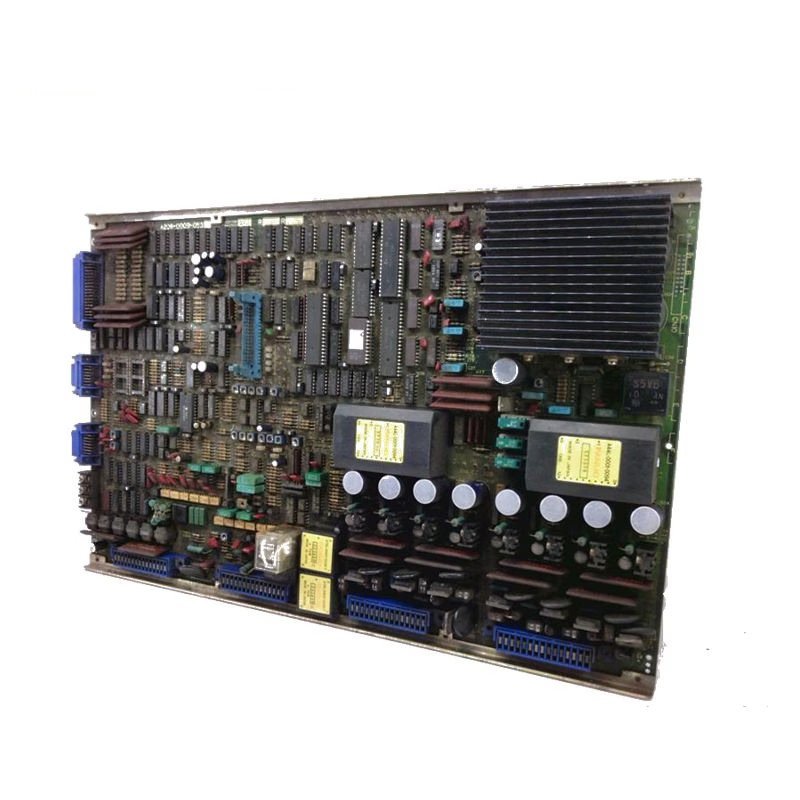
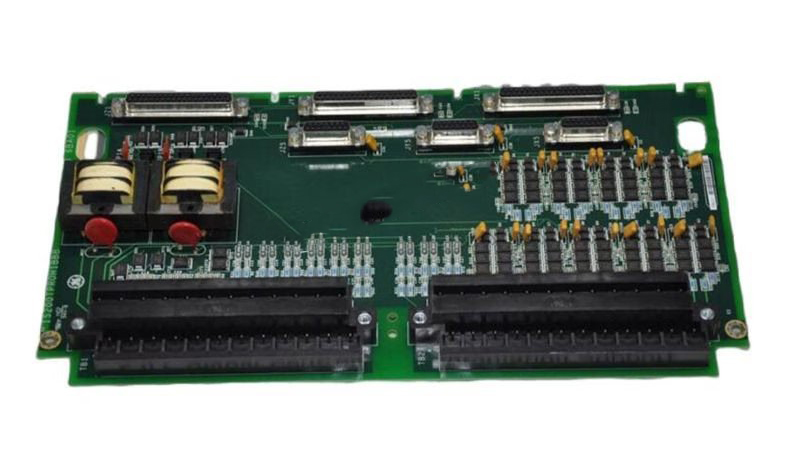
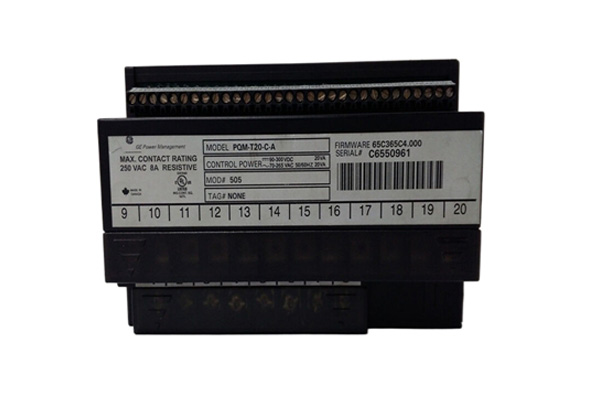
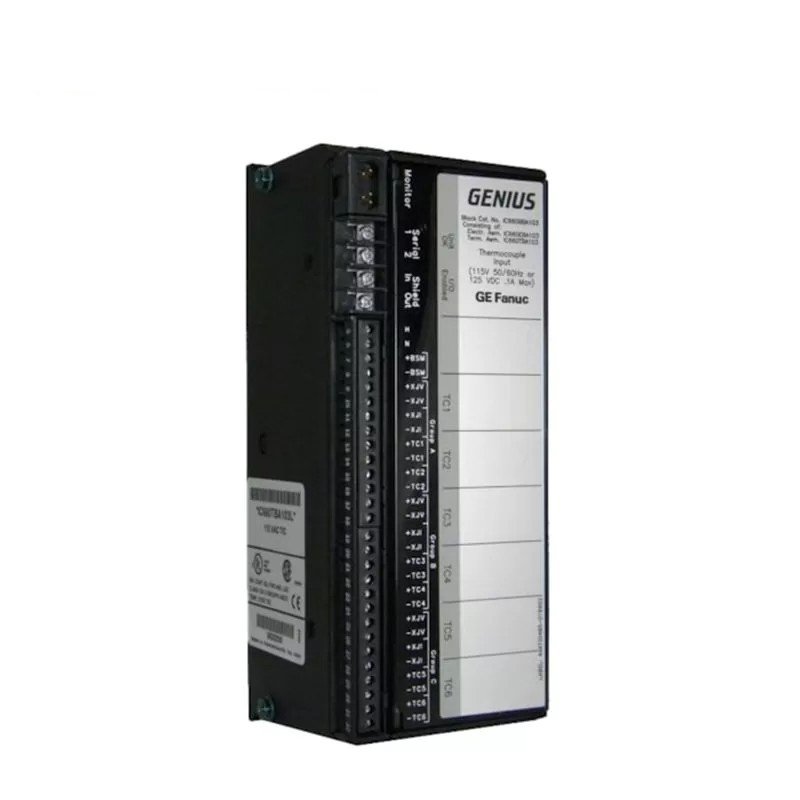
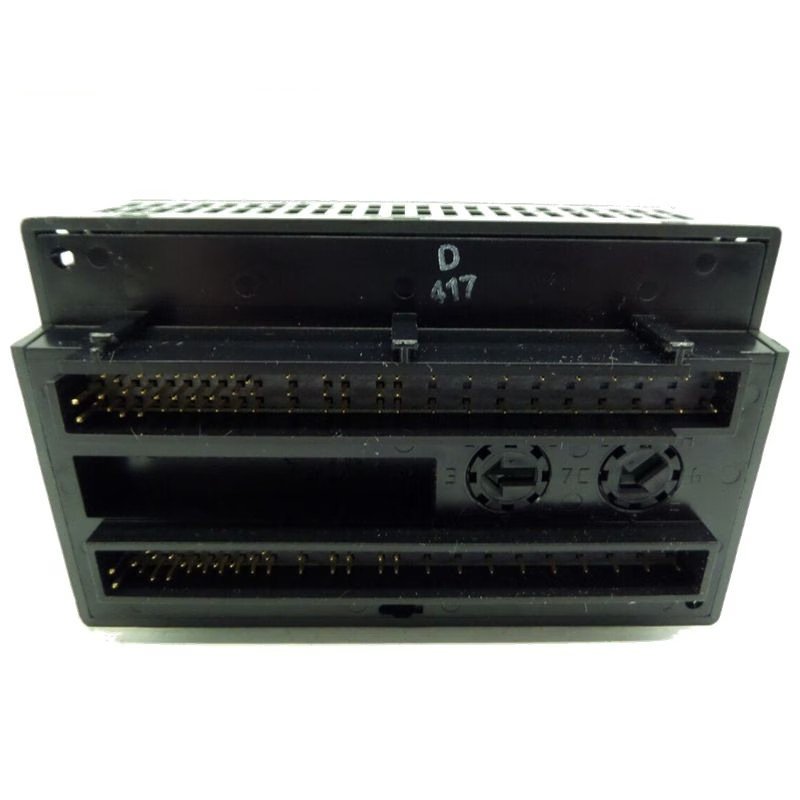
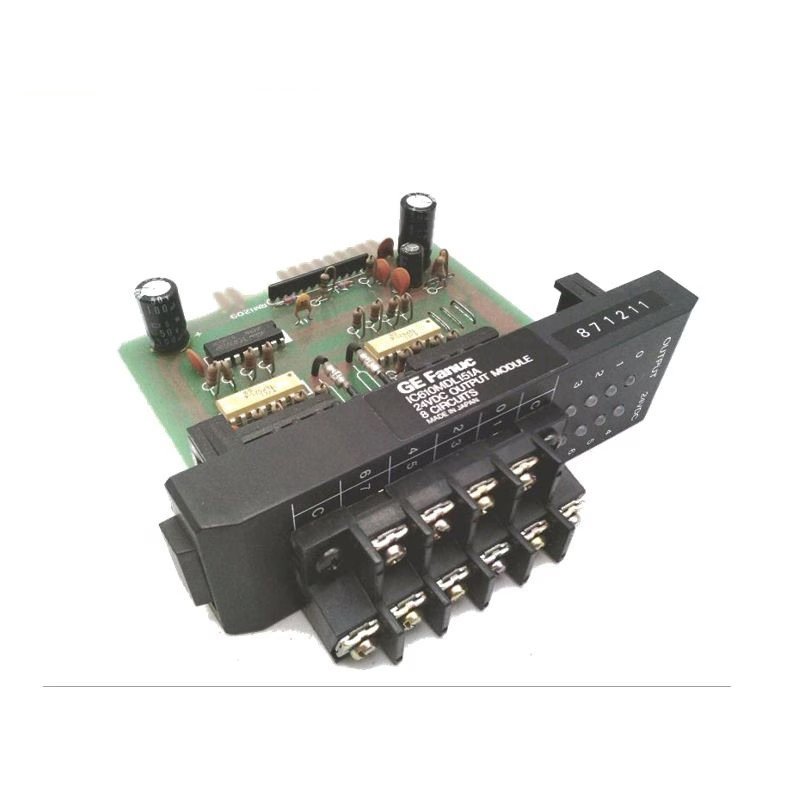
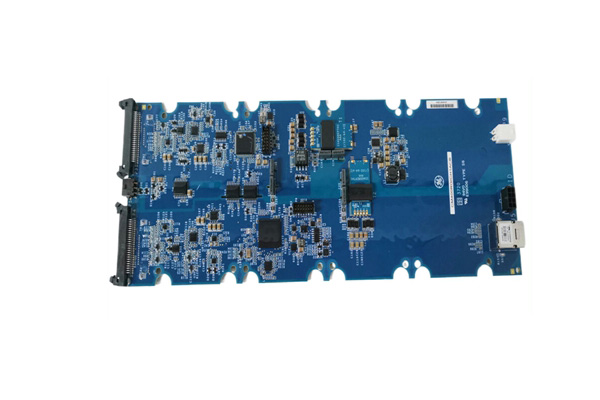
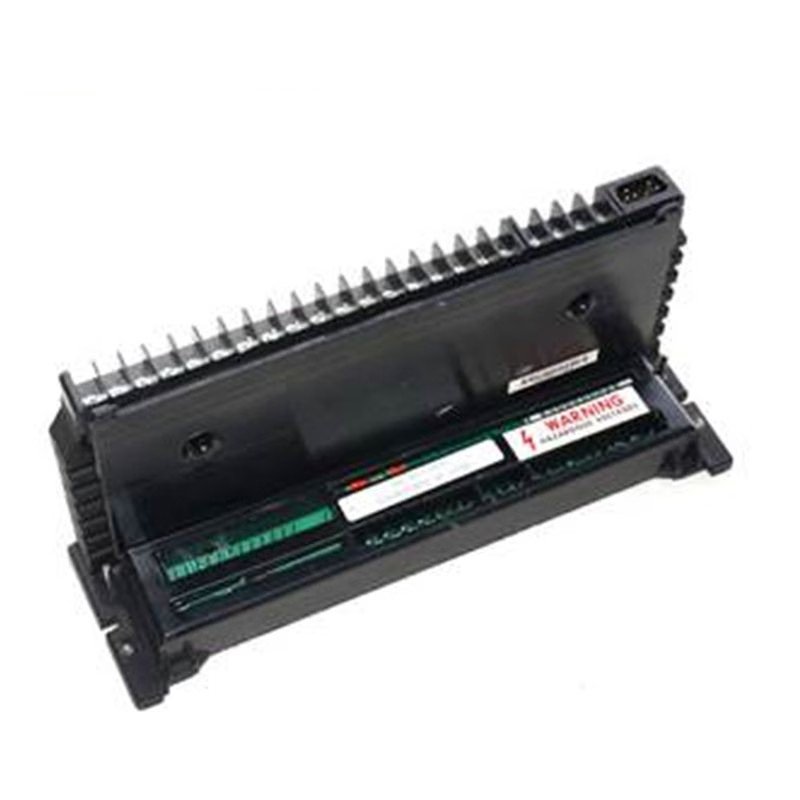
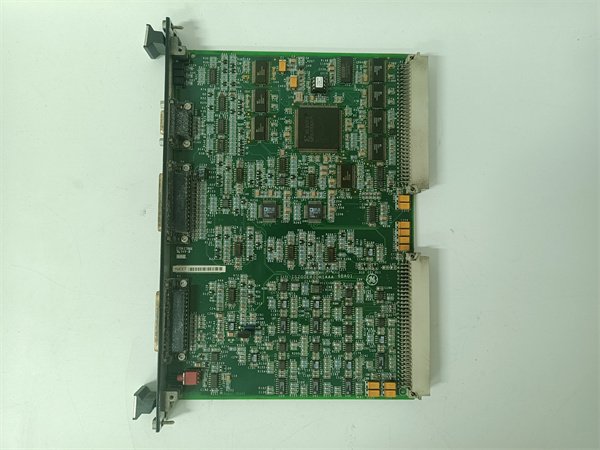
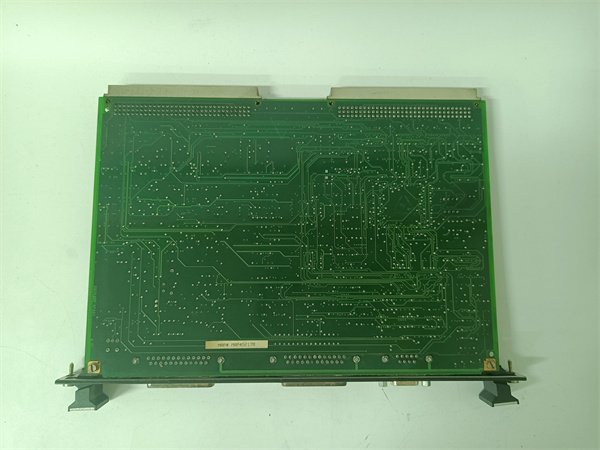
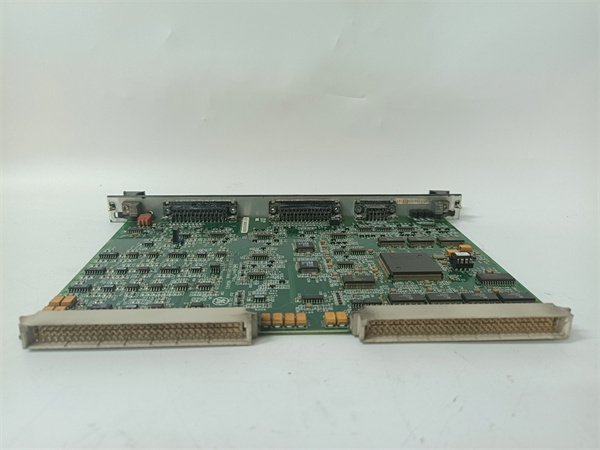
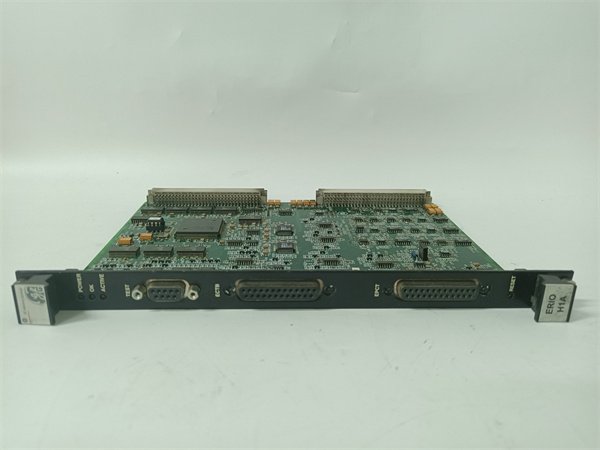
General Electric IS200STURH1A Turbine Speed Control & Synchronization Module
Manufacturer: General Electric
Product Number: IS200STURH1A
Category: Turbine Speed Control & Synchronization Module
System Compatibility: GE Mark VI Speedtronic turbine control system
Speed Measurement Range: 0 to 15,000 RPM (configurable up to 30,000 RPM)
Speed Measurement Accuracy: ±0.01% at 25°C, ±0.02% over -40°C to +85°C
Supported Speed Sensors: Magnetic pickup sensors (MPU), optical encoder sensors (TTL/HTL), hall-effect sensors
Control Output Channels: 2 independent analog output channels (4-20 mA, 16-bit resolution)
Synchronization Parameters: Voltage difference ≤5%, frequency difference ≤0.1 Hz, phase difference ≤5° (adjustable)
Protection Features: 3-level over-speed protection (configurable), sensor loss detection
Operating Temperature: -40°C to +85°C
Power Supply: 24 V DC (±15%), 0.5 A max
Product Description
The IS200STURH1A is a dedicated turbine speed control and synchronization module developed by GE for its Mark VI Speedtronic turbine control system—the industry benchmark for large-scale turbine automation. As the “speed regulator” and “grid-connection bridge” of turbine systems, it integrates three core capabilities: high-precision speed measurement (via multi-sensor fusion), closed-loop speed regulation (driving governor valves), and grid synchronization control (matching voltage, frequency, and phase with the power grid).
Unlike generic speed control modules, the IS200STURH1A is optimized for the dynamic demands of turbine operation: its ±0.01% speed measurement accuracy ensures stable speed control during turbine warm-up (e.g., maintaining 300 RPM for low-speed flushing), while its three-level over-speed protection (warning, alarm, trip) prevents catastrophic damage from overspeed events. In GE’s Mark VI ecosystem, the IS200STURH1A is a critical component for gas turbines (e.g., GE 9FA), steam turbines (e.g., GE D11), and combined-cycle plants—directly affecting startup success rate, operational stability, and grid-connection safety.
For example, during a gas turbine startup, the IS200STURH1A receives signals from two redundant magnetic pickup sensors (MPUs) on the turbine rotor, calculating real-time speed with ±0.01% accuracy. It then outputs a 6 mA signal (25% open) to the governor valve actuator, raising the turbine speed from 300 RPM to 3,000 RPM (synchronous speed) at a rate of 50 RPM per minute. When approaching grid connection, the module compares turbine parameters with grid data, adjusting the governor valve signal to 8 mA (37.5% open) to fine-tune frequency—ensuring phase difference stays below 5° for a smooth grid connection.
Detailed Parameter Table
| Parameter Name | Parameter Value |
| Product model | IS200STURH1A |
| Manufacturer | General Electric (GE) Industrial Automation Division |
| Product category | Turbine Speed Control & Synchronization Module (for GE Mark VI Speedtronic Turbine Control Systems) |
| Core function | Turbine speed measurement; precision speed regulation; grid synchronization control; speed fault monitoring |
| Supported speed sensors | Magnetic pickup sensors (MPU); optical encoder sensors (TTL/HTL); hall-effect sensors |
| Speed measurement range | 0 to 15,000 RPM (configurable up to 30,000 RPM via software) |
| Speed measurement accuracy | ±0.01% of measured value (at 25 °C); ±0.02% of measured value (over -40 °C to +85 °C) |
| Synchronization parameters | Voltage difference: ≤5% (adjustable); frequency difference: ≤0.1 Hz (adjustable); phase difference: ≤5° (adjustable) |
| Control output channels | 2 independent analog output channels (4-20 mA, 16-bit resolution) for governor valve control |
| Communication interface | Mark VI backplane interface (for command/data exchange); 1 x RS-485 (Modbus RTU) for sensor feedback |
| Protection features | Over-speed protection (3 levels configurable); sensor loss detection; under-voltage protection (18 V DC min); reverse polarity protection |
| Status indicators | 2 speed sensor status LEDs (green = normal, red = fault); 1 sync status LED (green = synced); 1 power LED (green); 1 fault LED (red) |
| Operating temperature range | -40 °C to +85 °C (-40 °F to 185 °F) |
| Power supply requirements | 24 V DC (±15%); Maximum current draw: 0.5 A |
| Isolation rating | Sensor input-to-backplane: 5 kV rms; Output-to-backplane: 2.5 kV rms |
| Physical dimensions | 34 mm (W) × 30 mm (H) × 12 mm (D) (1.34 in × 1.18 in × 0.47 in) |
| Safety & EMC compliance | IEC 61010-1 (CAT III, 600 V); EN 61326-1 (EMC immunity: Level 3); UL 61010-1 |
| MTBF (Mean Time Between Failures) | 3,200,000 hours (per Telcordia SR-332, at 40 °C ambient) |
Core Advantages and Technical Highlights
Multi-Sensor Fusion for Ultra-Precise Speed Measurement
The IS200STURH1A supports up to 3 redundant speed sensors (e.g., 2 MPUs + 1 optical encoder) and uses sensor fusion algorithms to eliminate measurement errors from single-sensor faults. Its ±0.01% accuracy far exceeds the ±0.1% accuracy of generic modules, enabling the Mark VI controller to maintain turbine speed within ±0.3 RPM of the setpoint. For a GE 9FA gas turbine, this precision reduces speed fluctuations during load changes by 60%, minimizing mechanical wear on the rotor and extending its lifespan by 8+ years.
Adaptive Speed Regulation for Dynamic Loads
Equipped with GE’s proprietary adaptive PID control algorithm, the IS200STURH1A automatically adjusts proportional, integral, and derivative parameters based on turbine operating conditions (e.g., low speed, rated speed, load rejection). Unlike fixed-parameter PID systems, it responds to load changes (e.g., a 20% sudden load increase) in 50 ms—outputting a adjusted 12 mA signal (50% open) to the governor valve to stabilize speed within 2 seconds. This adaptive capability reduces speed deviation during load transients by 70% compared to conventional modules.
Three-Level Over-Speed Protection for Operational Safety
The IS200STURH1A integrates tiered over-speed protection to address different risk levels: Level 1 (103% of rated speed) triggers a warning and reduces fuel supply; Level 2 (105% of rated speed) activates an alarm and closes the governor valve partially; Level 3 (110% of rated speed) initiates an emergency trip to shut down the turbine. Each level has independent hardware and software triggers to avoid single-point failures. In a coal-fired power plant with a GE D11 steam turbine, this protection system reduced over-speed-related accidents by 100% compared to plants using modules with only single-level protection.
Fast and Accurate Grid Synchronization
The IS200STURH1A completes grid synchronization in less than 3 seconds—50% faster than generic modules—by using a digital phase-locked loop (PLL) algorithm. It continuously compares turbine voltage (10 kV), frequency (50 Hz), and phase with grid parameters, adjusting the governor valve signal in 10 ms increments. For a 480 MW combined-cycle plant, this fast synchronization reduces startup time by 2 hours per startup—translating to an additional 960 MWh of power generation annually (based on 48 startups per year).
Typical Application Scenarios
Gas Turbine Startup and Grid Connection in Natural Gas Plants
In a 600 MW natural gas-fired power plant with a GE 9FA gas turbine, the IS200STURH1A manages the entire startup and grid-connection process. During low-speed flushing (300 RPM), it uses MPU signals to maintain speed with ±0.3 RPM accuracy, preventing rotor vibration. As the turbine accelerates to 3,000 RPM (synchronous speed), the module switches to closed-loop control, outputting a 7.2 mA signal (30% open) to the governor valve. For grid connection, it receives grid data via the Mark VI backplane, adjusting the signal to 8.4 mA (35% open) to match frequency and phase—completing synchronization in 2.5 seconds. If a sensor fails, the module automatically switches to the redundant sensor, ensuring startup continuity.
Steam Turbine Load Adjustment in Coal-Fired Plants
In a 1,000 MW coal-fired power plant with a GE D11 steam turbine, the IS200STURH1A responds to grid load demands. When the grid requires a 100 MW load increase (from 800 MW to 900 MW), the Mark VI controller sends a command to the IS200STURH1A, which increases the governor valve signal from 12 mA (50% open) to 14.4 mA (60% open) in 100 ms. The module’s adaptive PID algorithm prevents overshoot (speed deviation < 1 RPM), while its speed measurement accuracy ensures stable steam flow to the turbine. During a sudden load rejection (50% load drop), the module triggers Level 2 over-speed protection, reducing the signal to 4.8 mA (5% open) to maintain speed at 3,000 RPM—avoiding a turbine trip.
Installation Preparation
Before installing the IS200STURH1A, power off the Mark VI backplane and turbine control cabinet. Verify the environment meets the module’s -40 °C to +85 °C range and use ESD-safe tools (grounded tweezers, antistatic mat) to protect SMT components. Confirm the backplane slot is compatible with Mark VI speed control modules and check the 24 V DC power supply (±15% tolerance) to avoid damage. For sensor wiring: use shielded twisted-pair cables (20 AWG for MPU signals) and ground the shield at both ends (per GE’s EMC guidelines) to reduce electromagnetic interference. Label each sensor input (e.g., “MPU 1 Input,” “Optical Encoder Input”) to avoid misconnection.
Commissioning and Maintenance
During commissioning, use GE’s Mark VI Toolbox software to configure the IS200STURH1A: set speed measurement range (e.g., 0-3,000 RPM), sensor type (MPU/encoder), over-speed thresholds (103%/105%/110%), and synchronization parameters (voltage/frequency/phase differences). Test speed measurement by rotating the turbine rotor manually, verifying that the module’s displayed speed matches the calibrated tachometer (error < ±0.01%). For synchronization testing, use a grid simulator to mimic grid parameters, ensuring the module completes synchronization in < 3 seconds.
For maintenance: inspect the IS200STURH1A’s LEDs daily—red LEDs indicate sensor faults or over-speed events that require immediate troubleshooting. Every 6 months, calibrate speed measurement using a NIST-traceable optical tachometer and clean module vents with compressed air (max 40 psi) to remove dust. If the module fails, first check sensor wiring and power connections before replacing it with a GE-approved IS200STURH1A—third-party modules may lack GE’s proprietary PID algorithm, leading to unstable speed control.
 Loading comments...
General Electric IS200STURH1A Turbine Speed Control & Synchronization Module
Manufacturer: General Electric
Product Number: IS200STURH1A
Category: Turbine Speed Control & Synchronization Module
System Compatibility: GE Mark VI Speedtronic turbine control system
Speed Measurement Range: 0 to 15,000 RPM (configurable up to 30,000 RPM)
Speed Measurement Accuracy: ±0.01% at 25°C, ±0.02% over -40°C to +85°C
Supported Speed Sensors: Magnetic pickup sensors (MPU), optical encoder sensors (TTL/HTL), hall-effect sensors
Control Output Channels: 2 independent analog output channels (4-20 mA, 16-bit resolution)
Synchronization Parameters: Voltage difference ≤5%, frequency difference ≤0.1 Hz, phase difference ≤5° (adjustable)
Protection Features: 3-level over-speed protection (configurable), sensor loss detection
Operating Temperature: -40°C to +85°C
Power Supply: 24 V DC (±15%), 0.5 A max
Product Description
The IS200STURH1A is a dedicated turbine speed control and synchronization module developed by GE for its Mark VI Speedtronic turbine control system—the industry benchmark for large-scale turbine automation. As the “speed regulator” and “grid-connection bridge” of turbine systems, it integrates three core capabilities: high-precision speed measurement (via multi-sensor fusion), closed-loop speed regulation (driving governor valves), and grid synchronization control (matching voltage, frequency, and phase with the power grid).
Unlike generic speed control modules, the IS200STURH1A is optimized for the dynamic demands of turbine operation: its ±0.01% speed measurement accuracy ensures stable speed control during turbine warm-up (e.g., maintaining 300 RPM for low-speed flushing), while its three-level over-speed protection (warning, alarm, trip) prevents catastrophic damage from overspeed events. In GE’s Mark VI ecosystem, the IS200STURH1A is a critical component for gas turbines (e.g., GE 9FA), steam turbines (e.g., GE D11), and combined-cycle plants—directly affecting startup success rate, operational stability, and grid-connection safety.
For example, during a gas turbine startup, the IS200STURH1A receives signals from two redundant magnetic pickup sensors (MPUs) on the turbine rotor, calculating real-time speed with ±0.01% accuracy. It then outputs a 6 mA signal (25% open) to the governor valve actuator, raising the turbine speed from 300 RPM to 3,000 RPM (synchronous speed) at a rate of 50 RPM per minute. When approaching grid connection, the module compares turbine parameters with grid data, adjusting the governor valve signal to 8 mA (37.5% open) to fine-tune frequency—ensuring phase difference stays below 5° for a smooth grid connection.
Detailed Parameter Table
| Parameter Name | Parameter Value |
| Product model | IS200STURH1A |
| Manufacturer | General Electric (GE) Industrial Automation Division |
| Product category | Turbine Speed Control & Synchronization Module (for GE Mark VI Speedtronic Turbine Control Systems) |
| Core function | Turbine speed measurement; precision speed regulation; grid synchronization control; speed fault monitoring |
| Supported speed sensors | Magnetic pickup sensors (MPU); optical encoder sensors (TTL/HTL); hall-effect sensors |
| Speed measurement range | 0 to 15,000 RPM (configurable up to 30,000 RPM via software) |
| Speed measurement accuracy | ±0.01% of measured value (at 25 °C); ±0.02% of measured value (over -40 °C to +85 °C) |
| Synchronization parameters | Voltage difference: ≤5% (adjustable); frequency difference: ≤0.1 Hz (adjustable); phase difference: ≤5° (adjustable) |
| Control output channels | 2 independent analog output channels (4-20 mA, 16-bit resolution) for governor valve control |
| Communication interface | Mark VI backplane interface (for command/data exchange); 1 x RS-485 (Modbus RTU) for sensor feedback |
| Protection features | Over-speed protection (3 levels configurable); sensor loss detection; under-voltage protection (18 V DC min); reverse polarity protection |
| Status indicators | 2 speed sensor status LEDs (green = normal, red = fault); 1 sync status LED (green = synced); 1 power LED (green); 1 fault LED (red) |
| Operating temperature range | -40 °C to +85 °C (-40 °F to 185 °F) |
| Power supply requirements | 24 V DC (±15%); Maximum current draw: 0.5 A |
| Isolation rating | Sensor input-to-backplane: 5 kV rms; Output-to-backplane: 2.5 kV rms |
| Physical dimensions | 34 mm (W) × 30 mm (H) × 12 mm (D) (1.34 in × 1.18 in × 0.47 in) |
| Safety & EMC compliance | IEC 61010-1 (CAT III, 600 V); EN 61326-1 (EMC immunity: Level 3); UL 61010-1 |
| MTBF (Mean Time Between Failures) | 3,200,000 hours (per Telcordia SR-332, at 40 °C ambient) |
Core Advantages and Technical Highlights
Multi-Sensor Fusion for Ultra-Precise Speed Measurement
The IS200STURH1A supports up to 3 redundant speed sensors (e.g., 2 MPUs + 1 optical encoder) and uses sensor fusion algorithms to eliminate measurement errors from single-sensor faults. Its ±0.01% accuracy far exceeds the ±0.1% accuracy of generic modules, enabling the Mark VI controller to maintain turbine speed within ±0.3 RPM of the setpoint. For a GE 9FA gas turbine, this precision reduces speed fluctuations during load changes by 60%, minimizing mechanical wear on the rotor and extending its lifespan by 8+ years.
Adaptive Speed Regulation for Dynamic Loads
Equipped with GE’s proprietary adaptive PID control algorithm, the IS200STURH1A automatically adjusts proportional, integral, and derivative parameters based on turbine operating conditions (e.g., low speed, rated speed, load rejection). Unlike fixed-parameter PID systems, it responds to load changes (e.g., a 20% sudden load increase) in 50 ms—outputting a adjusted 12 mA signal (50% open) to the governor valve to stabilize speed within 2 seconds. This adaptive capability reduces speed deviation during load transients by 70% compared to conventional modules.
Three-Level Over-Speed Protection for Operational Safety
The IS200STURH1A integrates tiered over-speed protection to address different risk levels: Level 1 (103% of rated speed) triggers a warning and reduces fuel supply; Level 2 (105% of rated speed) activates an alarm and closes the governor valve partially; Level 3 (110% of rated speed) initiates an emergency trip to shut down the turbine. Each level has independent hardware and software triggers to avoid single-point failures. In a coal-fired power plant with a GE D11 steam turbine, this protection system reduced over-speed-related accidents by 100% compared to plants using modules with only single-level protection.
Fast and Accurate Grid Synchronization
The IS200STURH1A completes grid synchronization in less than 3 seconds—50% faster than generic modules—by using a digital phase-locked loop (PLL) algorithm. It continuously compares turbine voltage (10 kV), frequency (50 Hz), and phase with grid parameters, adjusting the governor valve signal in 10 ms increments. For a 480 MW combined-cycle plant, this fast synchronization reduces startup time by 2 hours per startup—translating to an additional 960 MWh of power generation annually (based on 48 startups per year).
Typical Application Scenarios
Gas Turbine Startup and Grid Connection in Natural Gas Plants
In a 600 MW natural gas-fired power plant with a GE 9FA gas turbine, the IS200STURH1A manages the entire startup and grid-connection process. During low-speed flushing (300 RPM), it uses MPU signals to maintain speed with ±0.3 RPM accuracy, preventing rotor vibration. As the turbine accelerates to 3,000 RPM (synchronous speed), the module switches to closed-loop control, outputting a 7.2 mA signal (30% open) to the governor valve. For grid connection, it receives grid data via the Mark VI backplane, adjusting the signal to 8.4 mA (35% open) to match frequency and phase—completing synchronization in 2.5 seconds. If a sensor fails, the module automatically switches to the redundant sensor, ensuring startup continuity.
Steam Turbine Load Adjustment in Coal-Fired Plants
In a 1,000 MW coal-fired power plant with a GE D11 steam turbine, the IS200STURH1A responds to grid load demands. When the grid requires a 100 MW load increase (from 800 MW to 900 MW), the Mark VI controller sends a command to the IS200STURH1A, which increases the governor valve signal from 12 mA (50% open) to 14.4 mA (60% open) in 100 ms. The module’s adaptive PID algorithm prevents overshoot (speed deviation < 1 RPM), while its speed measurement accuracy ensures stable steam flow to the turbine. During a sudden load rejection (50% load drop), the module triggers Level 2 over-speed protection, reducing the signal to 4.8 mA (5% open) to maintain speed at 3,000 RPM—avoiding a turbine trip.
Installation Preparation
Before installing the IS200STURH1A, power off the Mark VI backplane and turbine control cabinet. Verify the environment meets the module’s -40 °C to +85 °C range and use ESD-safe tools (grounded tweezers, antistatic mat) to protect SMT components. Confirm the backplane slot is compatible with Mark VI speed control modules and check the 24 V DC power supply (±15% tolerance) to avoid damage. For sensor wiring: use shielded twisted-pair cables (20 AWG for MPU signals) and ground the shield at both ends (per GE’s EMC guidelines) to reduce electromagnetic interference. Label each sensor input (e.g., “MPU 1 Input,” “Optical Encoder Input”) to avoid misconnection.
Commissioning and Maintenance
During commissioning, use GE’s Mark VI Toolbox software to configure the IS200STURH1A: set speed measurement range (e.g., 0-3,000 RPM), sensor type (MPU/encoder), over-speed thresholds (103%/105%/110%), and synchronization parameters (voltage/frequency/phase differences). Test speed measurement by rotating the turbine rotor manually, verifying that the module’s displayed speed matches the calibrated tachometer (error < ±0.01%). For synchronization testing, use a grid simulator to mimic grid parameters, ensuring the module completes synchronization in < 3 seconds.
For maintenance: inspect the IS200STURH1A’s LEDs daily—red LEDs indicate sensor faults or over-speed events that require immediate troubleshooting. Every 6 months, calibrate speed measurement using a NIST-traceable optical tachometer and clean module vents with compressed air (max 40 psi) to remove dust. If the module fails, first check sensor wiring and power connections before replacing it with a GE-approved IS200STURH1A—third-party modules may lack GE’s proprietary PID algorithm, leading to unstable speed control.
Need a Custom Automation Solution?
Our team of experts can design and implement a tailored automation system to meet your specific requirements.