
Our Products
Comprehensive industrial automation solutions for global industries
Contact us
If you are interested in our products and want to know more details,please Contact us,we will reply you as soon as we can.
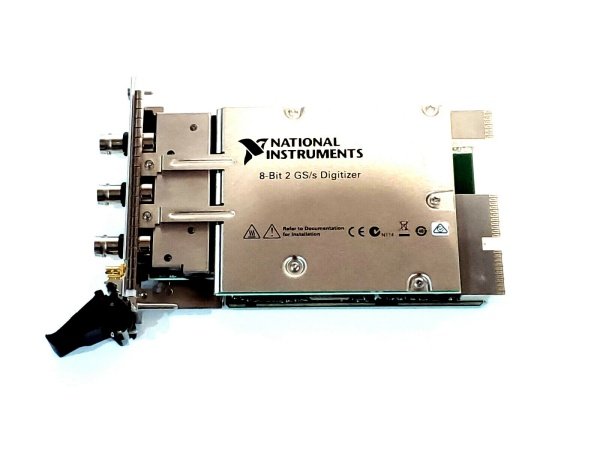
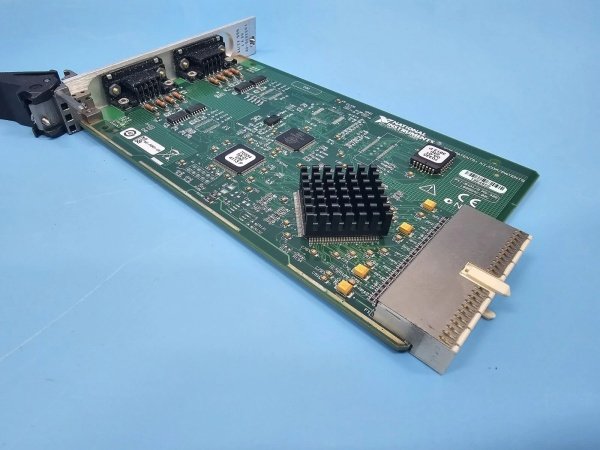
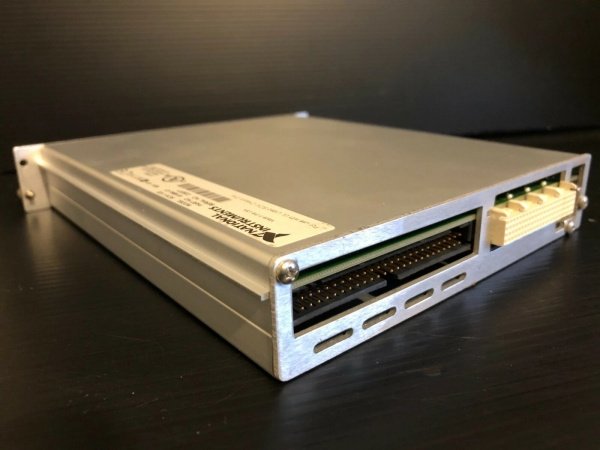
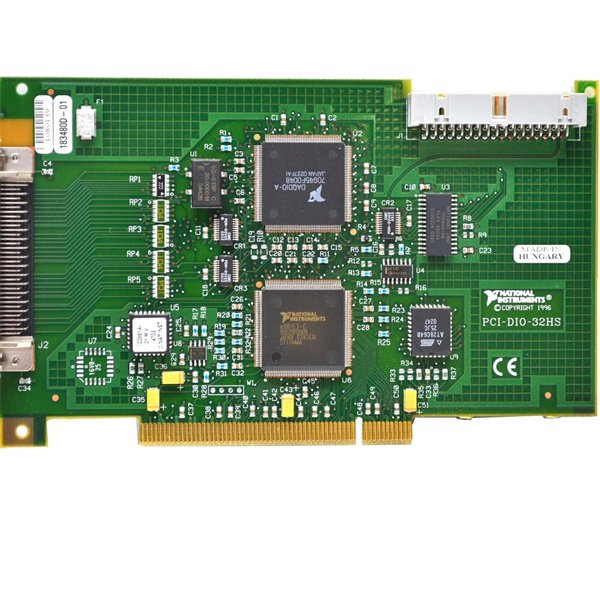
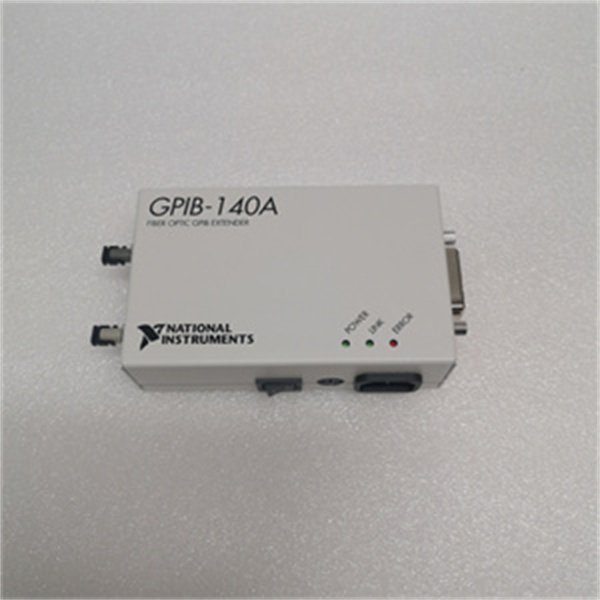
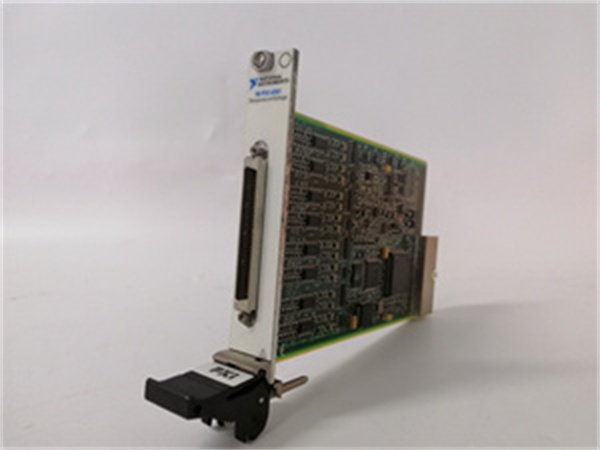
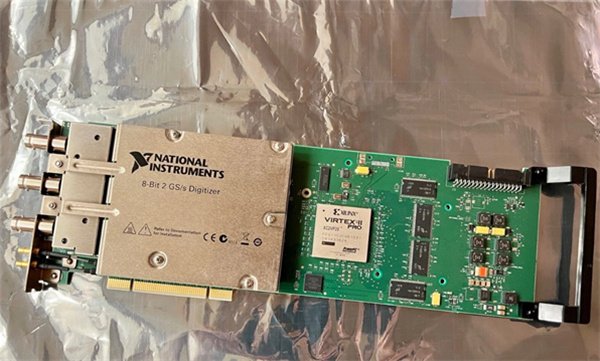
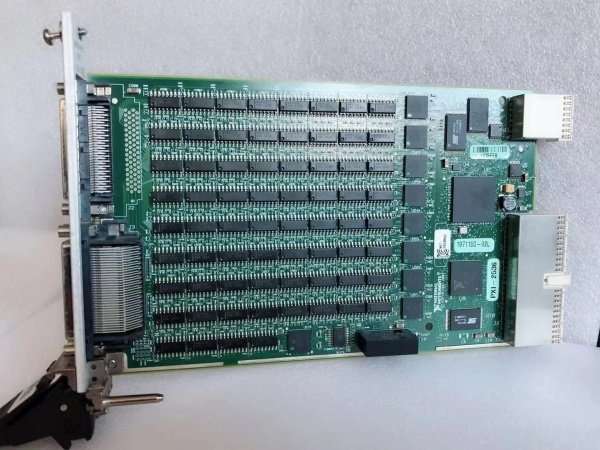
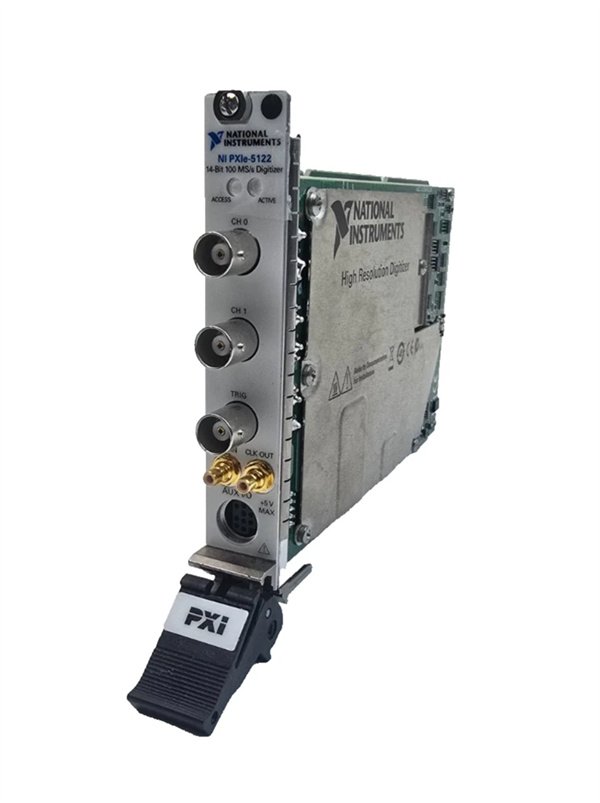
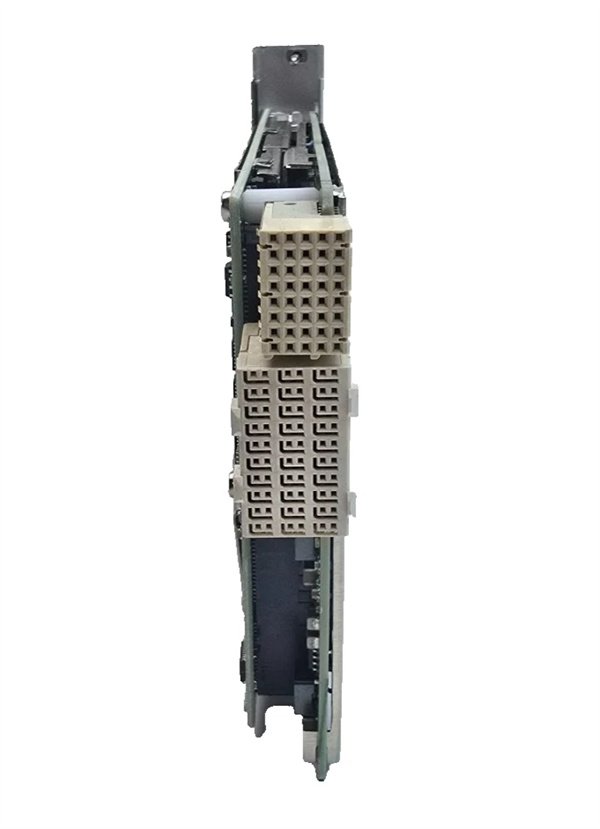
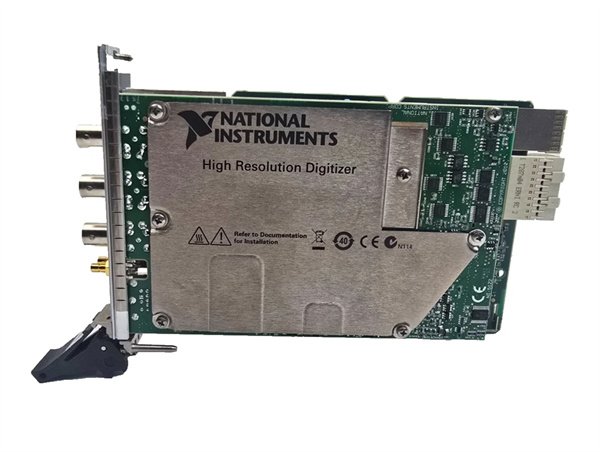
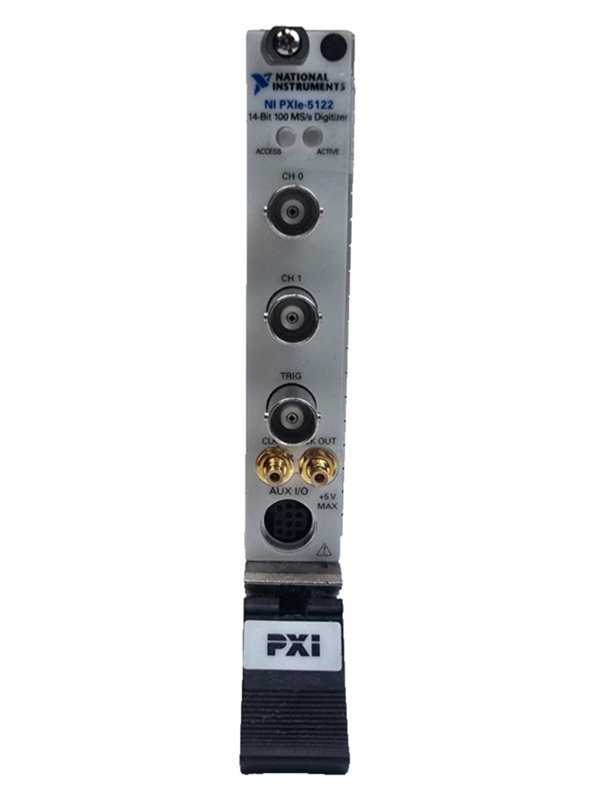
NI PXlE-5122 High-Speed PXI Express (PXIe) Digitizer
Manufacturer: National Instruments (NI)
Product Number: PXIe-5122
Category: High-Speed PXI Express Digitizer
Bandwidth: 100 MHz
Sampling Rate: 100 MS/s
Resolution: 14-bit
Application: High-frequency, fast-transient analog signal capture
Product Description
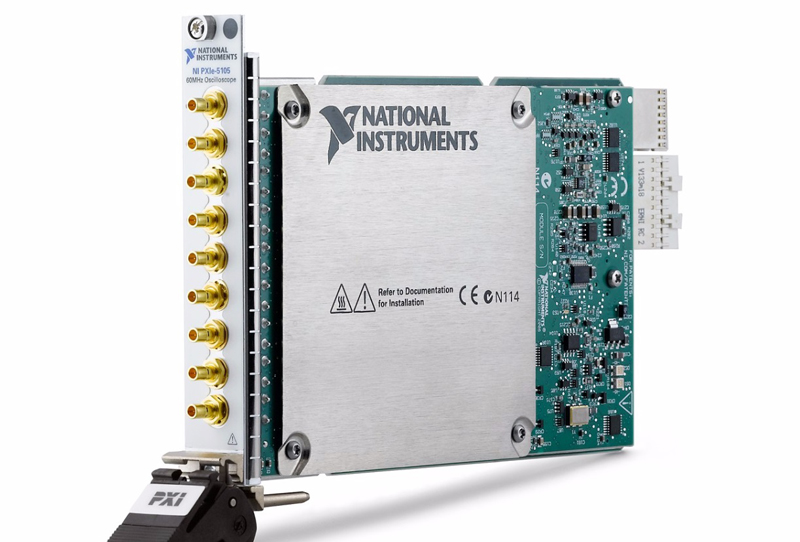
The NI PXIe-5122 is a high-speed PXI Express digitizer from National Instruments (NI), engineered to capture high-frequency, fast-transient analog signals—addressing critical gaps in high-speed test workflows that power-focused tools like the NI PXIe-4143 (high-power SMU) or low-bandwidth DAQ cards cannot fill. As a flagship model in NI’s high-speed digitizer lineup, the NI PXIe-5122 delivers 1 GS/s sampling per channel and 300 MHz bandwidth, making it indispensable for capturing RF chirps, radar returns, and high-speed digital edges.
Unlike standalone oscilloscopes (limited to benchtop use) or general-purpose DAQ cards, the NI PXIe-5122 integrates seamlessly into PXIe systems. Its 512 MB onboard memory per channel and scatter-gather DMA enable uninterrupted capture of large waveform datasets—critical for analyzing intermittent faults or long-duration transients. When paired with a NI PXIe-8861 controller and NI PXIe-5412 AWG, the NI PXIe-5122 synchronizes via TClk to form closed-loop test systems, ensuring precise alignment between stimulus and response. Whether used in aerospace R&D or semiconductor manufacturing, the NI PXIe-5122 provides the speed and precision needed for modern high-frequency testing.
Detailed parameter table
| Parameter name | Parameter value |
| Product model | NI PXIe-5122 |
| Manufacturer | National Instruments (NI) |
| Product category | High-Speed PXI Express (PXIe) Digitizer (Analog Signal Capture) |
| Electrical Performance (Analog Input) | 2 differential / 4 single-ended channels; 12-bit resolution; 1 GS/s max sampling rate per channel (simultaneous); 300 MHz (-3 dB) bandwidth; ±0.5 V/±1 V/±2 V/±5 V software-selectable input ranges |
| Signal Integrity | > 60 dB SNR (100 MHz, ±1 V); > 75 dBc SFDR (100 MHz); < 80 µVrms input-referred noise (±1 V); < -70 dB cross-talk (adjacent channels) |
| Onboard Memory & Capture Modes | 512 MB FIFO per channel (expandable via chassis); Single-shot/continuous/segmented/triggered modes; 100% pre-trigger buffer; 0–10 s programmable post-trigger delay |
| Physical Dimensions | 3U PXIe form factor (160 mm × 100 mm × 22 mm); ~380 g weight; Compatible with NI PXIe-1085/NI PXIe-1095 chassis |
| Interface & Communication | PXIe x4 lane (3.0 compliant, 16 GB/s max transfer); 2× SMA connectors; PXIe trigger bus + TClk; JTAG firmware port; NI-SCOPE driver support (SCPI/LabVIEW/C/C++/Python) |
| Environmental Requirements | 0 °C–55 °C operating temperature; -20 °C–70 °C storage temperature; 10%–90% non-condensing humidity; 2 g vibration (10 Hz–500 Hz); 50 g shock (11 ms half-sine) |
| Power & Compatibility | 15 W typical power (PXIe backplane); Windows 10/11/NI Linux Real-Time support; Works with NI PXIe-8861 (controller) and NI PXIe-5412 (AWG) |
| Triggering Capabilities | Analog (edge/level), digital (PXIe bus), external (SMA) sources; ±1 mV analog trigger sensitivity (±1 V); -100 ms–+10 s trigger delay; 10 ns–10 s trigger holdoff |
| Safety & Compliance |
CE/FCC Class A/UL 61010-1/IEC 61010-1; ±15 kV (air)/±8 kV (contact) ESD protection; ±10 V absolute max input overvoltage protection |
Core advantages and technical highlights
High-Speed Capture for 300 MHz Signals: The NI PXIe-5122’s 1 GS/s sampling rate and 300 MHz bandwidth enable it to capture signals that slower tools miss. For example, in 5G base station testing, the NI PXIe-5122 captures 256 QAM modulated signals (200 MHz bandwidth) at 1 GS/s, resolving subtle amplitude/phase changes to verify 3GPP compliance. Without this speed, aliasing would distort measurements—rendering test results invalid. This capability surpasses the NI PXIe-4143, which focuses on power sourcing rather than high-frequency signal acquisition.
Long-Duration Transient Analysis: With 512 MB onboard memory per channel, the NI PXIe-5122 captures extended transient events. In a power electronics lab, the NI PXIe-5122 monitors DC-DC converter output for voltage spikes, using 100% pre-trigger memory to record 1 ms of waveform before the spike and 4 ms after. This full context helps diagnose root causes, unlike entry-level digitizers (64 MB memory) that truncate critical data. The NI PXIe-4143, lacking dedicated capture memory, cannot replicate this functionality.
PXIe Synchronization for Multi-Instrument Systems: The NI PXIe-5122 supports PXIe triggers and TClk, enabling sub-10 ns alignment with other PXIe instruments. In aerospace avionics testing, the NI PXIe-5122 (capturing 1 GS/s bus signals) synchronizes with a NI PXIe-5412 (generating stimuli) via TClk—ensuring signal alignment for validating response times. This precision is far superior to the NI PXIe-4143’s power-focused timing, making the NI PXIe-5122 essential for multi-instrument test setups.
Efficient DMA Data Streaming: Scatter-gather DMA offloads data transfer from the CPU, letting the NI PXIe-5122 stream 1 GS/s data to storage continuously. In radar testing, the NI PXIe-5122 streams 2 GB/s of IQ data to an SSD, enabling real-time demodulation without bottlenecks. The NI PXIe-4143, limited to 1 kS/s power measurements, cannot handle this throughput—ensuring the NI PXIe-5122 runs 24/7 in automated systems without data loss.
Typical application scenarios
In aerospace radar validation, a defense contractor uses the NI PXIe-5122 to test airborne radar systems. Installed in a NI PXIe-1095 chassis (controlled by a NI PXIe-8861), the NI PXIe-5122 captures 2-channel radar returns (300 MHz bandwidth) at 1 GS/s. Its 512 MB memory stores 512 µs of data per capture, while 1 mV analog triggering isolates targets. Synchronized with a NI PXIe-5412 AWG via TClk, the NI PXIe-5122 ensures time-aligned stimulus/response—enabling ±1 meter target distance accuracy. This precision outperforms standalone oscilloscopes and is impossible with the NI PXIe-4143.
In semiconductor testing, a manufacturer uses the NI PXIe-5122 to characterize 10 Gbps FPGA serial links. The NI PXIe-5122 samples 5 Gbps clock/data signals (200 MHz bandwidth) at 1 GS/s, measuring jitter and signal integrity for PCIe Gen 3 compliance. Its < -70 dB cross-talk prevents channel interference, while DMA streaming logs thousands of eye diagrams for statistical analysis. This automates testing, cutting characterization time by 50% compared to manual oscilloscope use.
Installation, commissioning and maintenance instructions
Installation preparation: Power off the PXIe chassis (e.g., NI PXIe-1095) and wear an ESD wristband (±15 kV) to protect the NI PXIe-5122’s analog front-end. Verify the chassis has an x4 lane slot, then gather a Phillips screwdriver and 50 Ω SMA cables (300 MHz rated). Align the NI PXIe-5122 with chassis rails, insert until the PXIe connector seats, and secure with the front-panel screw. Connect SMA cables to the NI PXIe-5122’s inputs and DUT—ensure 50 Ω impedance matching to avoid signal reflection.
Maintenance suggestions: After installation, power on the chassis/PC, install NI-SCOPE/LabVIEW, and use NI MAX to detect the NI PXIe-5122. Run a “Signal Integrity Test” (100 MHz sine wave, ±1 V) to verify SNR/SFDR. Calibrate the NI PXIe-5122 annually with a NIST-traceable generator to maintain performance. Inspect SMA connectors quarterly—clean with 99.9% isopropyl alcohol and a lint-free swab to remove oxidation. If the NI PXIe-5122 captures distorted waveforms, check cables or update firmware via JTAG. Avoid temperatures >55 °C or humidity >90% to protect ADCs and amplifiers.
 Loading comments...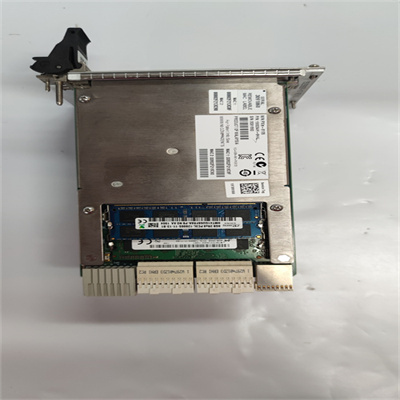
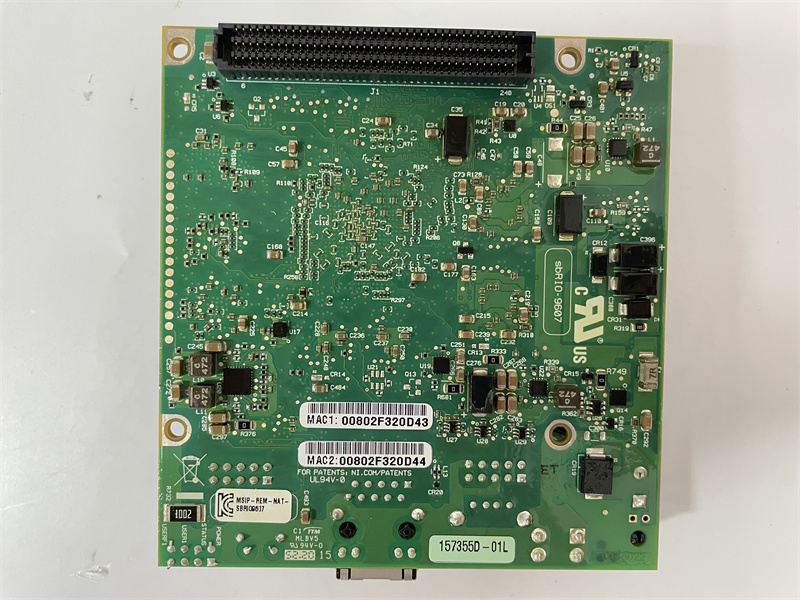
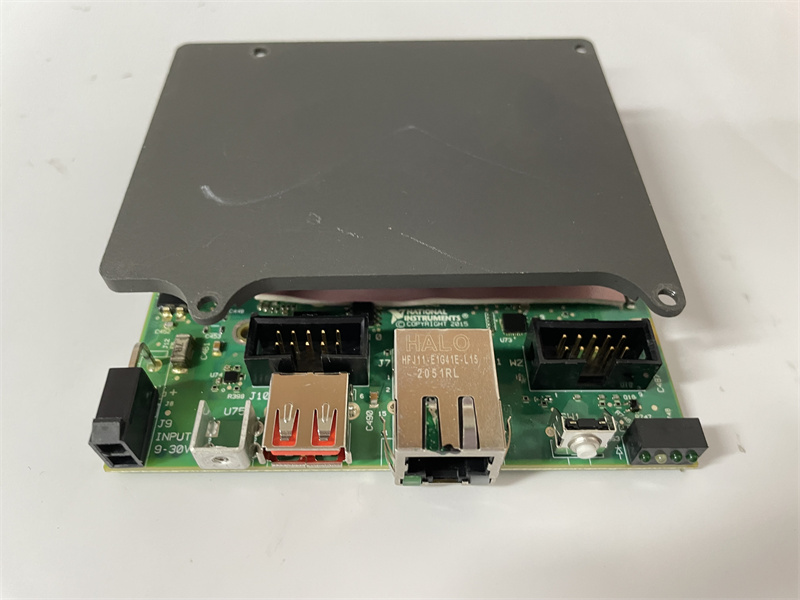
NI PXlE-5122 High-Speed PXI Express (PXIe) Digitizer
Manufacturer: National Instruments (NI)
Product Number: PXIe-5122
Category: High-Speed PXI Express Digitizer
Bandwidth: 100 MHz
Sampling Rate: 100 MS/s
Resolution: 14-bit
Application: High-frequency, fast-transient analog signal capture
Product Description
The NI PXIe-5122 is a high-speed PXI Express digitizer from National Instruments (NI), engineered to capture high-frequency, fast-transient analog signals—addressing critical gaps in high-speed test workflows that power-focused tools like the NI PXIe-4143 (high-power SMU) or low-bandwidth DAQ cards cannot fill. As a flagship model in NI’s high-speed digitizer lineup, the NI PXIe-5122 delivers 1 GS/s sampling per channel and 300 MHz bandwidth, making it indispensable for capturing RF chirps, radar returns, and high-speed digital edges.
Unlike standalone oscilloscopes (limited to benchtop use) or general-purpose DAQ cards, the NI PXIe-5122 integrates seamlessly into PXIe systems. Its 512 MB onboard memory per channel and scatter-gather DMA enable uninterrupted capture of large waveform datasets—critical for analyzing intermittent faults or long-duration transients. When paired with a NI PXIe-8861 controller and NI PXIe-5412 AWG, the NI PXIe-5122 synchronizes via TClk to form closed-loop test systems, ensuring precise alignment between stimulus and response. Whether used in aerospace R&D or semiconductor manufacturing, the NI PXIe-5122 provides the speed and precision needed for modern high-frequency testing.
Detailed parameter table
| Parameter name | Parameter value |
| Product model | NI PXIe-5122 |
| Manufacturer | National Instruments (NI) |
| Product category | High-Speed PXI Express (PXIe) Digitizer (Analog Signal Capture) |
| Electrical Performance (Analog Input) | 2 differential / 4 single-ended channels; 12-bit resolution; 1 GS/s max sampling rate per channel (simultaneous); 300 MHz (-3 dB) bandwidth; ±0.5 V/±1 V/±2 V/±5 V software-selectable input ranges |
| Signal Integrity | > 60 dB SNR (100 MHz, ±1 V); > 75 dBc SFDR (100 MHz); < 80 µVrms input-referred noise (±1 V); < -70 dB cross-talk (adjacent channels) |
| Onboard Memory & Capture Modes | 512 MB FIFO per channel (expandable via chassis); Single-shot/continuous/segmented/triggered modes; 100% pre-trigger buffer; 0–10 s programmable post-trigger delay |
| Physical Dimensions | 3U PXIe form factor (160 mm × 100 mm × 22 mm); ~380 g weight; Compatible with NI PXIe-1085/NI PXIe-1095 chassis |
| Interface & Communication | PXIe x4 lane (3.0 compliant, 16 GB/s max transfer); 2× SMA connectors; PXIe trigger bus + TClk; JTAG firmware port; NI-SCOPE driver support (SCPI/LabVIEW/C/C++/Python) |
| Environmental Requirements | 0 °C–55 °C operating temperature; -20 °C–70 °C storage temperature; 10%–90% non-condensing humidity; 2 g vibration (10 Hz–500 Hz); 50 g shock (11 ms half-sine) |
| Power & Compatibility | 15 W typical power (PXIe backplane); Windows 10/11/NI Linux Real-Time support; Works with NI PXIe-8861 (controller) and NI PXIe-5412 (AWG) |
| Triggering Capabilities | Analog (edge/level), digital (PXIe bus), external (SMA) sources; ±1 mV analog trigger sensitivity (±1 V); -100 ms–+10 s trigger delay; 10 ns–10 s trigger holdoff |
| Safety & Compliance |
CE/FCC Class A/UL 61010-1/IEC 61010-1; ±15 kV (air)/±8 kV (contact) ESD protection; ±10 V absolute max input overvoltage protection |
Core advantages and technical highlights
High-Speed Capture for 300 MHz Signals: The NI PXIe-5122’s 1 GS/s sampling rate and 300 MHz bandwidth enable it to capture signals that slower tools miss. For example, in 5G base station testing, the NI PXIe-5122 captures 256 QAM modulated signals (200 MHz bandwidth) at 1 GS/s, resolving subtle amplitude/phase changes to verify 3GPP compliance. Without this speed, aliasing would distort measurements—rendering test results invalid. This capability surpasses the NI PXIe-4143, which focuses on power sourcing rather than high-frequency signal acquisition.
Long-Duration Transient Analysis: With 512 MB onboard memory per channel, the NI PXIe-5122 captures extended transient events. In a power electronics lab, the NI PXIe-5122 monitors DC-DC converter output for voltage spikes, using 100% pre-trigger memory to record 1 ms of waveform before the spike and 4 ms after. This full context helps diagnose root causes, unlike entry-level digitizers (64 MB memory) that truncate critical data. The NI PXIe-4143, lacking dedicated capture memory, cannot replicate this functionality.
PXIe Synchronization for Multi-Instrument Systems: The NI PXIe-5122 supports PXIe triggers and TClk, enabling sub-10 ns alignment with other PXIe instruments. In aerospace avionics testing, the NI PXIe-5122 (capturing 1 GS/s bus signals) synchronizes with a NI PXIe-5412 (generating stimuli) via TClk—ensuring signal alignment for validating response times. This precision is far superior to the NI PXIe-4143’s power-focused timing, making the NI PXIe-5122 essential for multi-instrument test setups.
Efficient DMA Data Streaming: Scatter-gather DMA offloads data transfer from the CPU, letting the NI PXIe-5122 stream 1 GS/s data to storage continuously. In radar testing, the NI PXIe-5122 streams 2 GB/s of IQ data to an SSD, enabling real-time demodulation without bottlenecks. The NI PXIe-4143, limited to 1 kS/s power measurements, cannot handle this throughput—ensuring the NI PXIe-5122 runs 24/7 in automated systems without data loss.
Typical application scenarios
In aerospace radar validation, a defense contractor uses the NI PXIe-5122 to test airborne radar systems. Installed in a NI PXIe-1095 chassis (controlled by a NI PXIe-8861), the NI PXIe-5122 captures 2-channel radar returns (300 MHz bandwidth) at 1 GS/s. Its 512 MB memory stores 512 µs of data per capture, while 1 mV analog triggering isolates targets. Synchronized with a NI PXIe-5412 AWG via TClk, the NI PXIe-5122 ensures time-aligned stimulus/response—enabling ±1 meter target distance accuracy. This precision outperforms standalone oscilloscopes and is impossible with the NI PXIe-4143.
In semiconductor testing, a manufacturer uses the NI PXIe-5122 to characterize 10 Gbps FPGA serial links. The NI PXIe-5122 samples 5 Gbps clock/data signals (200 MHz bandwidth) at 1 GS/s, measuring jitter and signal integrity for PCIe Gen 3 compliance. Its < -70 dB cross-talk prevents channel interference, while DMA streaming logs thousands of eye diagrams for statistical analysis. This automates testing, cutting characterization time by 50% compared to manual oscilloscope use.
Installation, commissioning and maintenance instructions
Installation preparation: Power off the PXIe chassis (e.g., NI PXIe-1095) and wear an ESD wristband (±15 kV) to protect the NI PXIe-5122’s analog front-end. Verify the chassis has an x4 lane slot, then gather a Phillips screwdriver and 50 Ω SMA cables (300 MHz rated). Align the NI PXIe-5122 with chassis rails, insert until the PXIe connector seats, and secure with the front-panel screw. Connect SMA cables to the NI PXIe-5122’s inputs and DUT—ensure 50 Ω impedance matching to avoid signal reflection.
Maintenance suggestions: After installation, power on the chassis/PC, install NI-SCOPE/LabVIEW, and use NI MAX to detect the NI PXIe-5122. Run a “Signal Integrity Test” (100 MHz sine wave, ±1 V) to verify SNR/SFDR. Calibrate the NI PXIe-5122 annually with a NIST-traceable generator to maintain performance. Inspect SMA connectors quarterly—clean with 99.9% isopropyl alcohol and a lint-free swab to remove oxidation. If the NI PXIe-5122 captures distorted waveforms, check cables or update firmware via JTAG. Avoid temperatures >55 °C or humidity >90% to protect ADCs and amplifiers.

Need a Custom Automation Solution?
Our team of experts can design and implement a tailored automation system to meet your specific requirements.