
Our Products
Comprehensive industrial automation solutions for global industries
Contact us
If you are interested in our products and want to know more details,please Contact us,we will reply you as soon as we can.
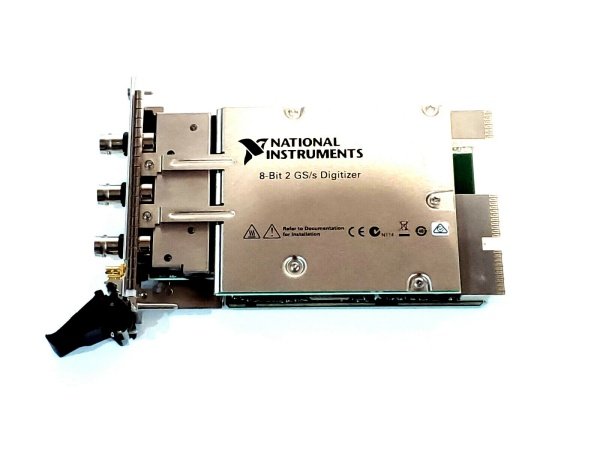
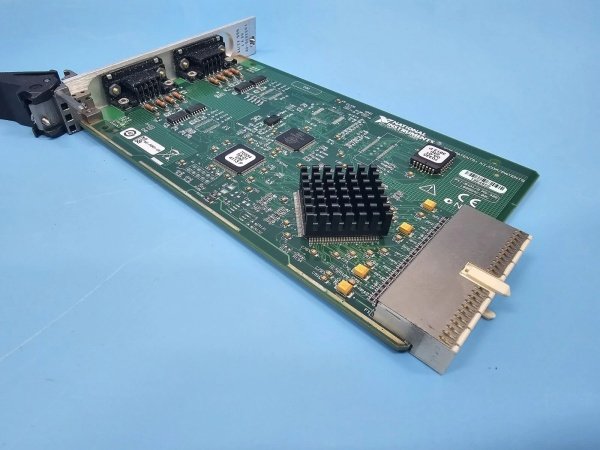
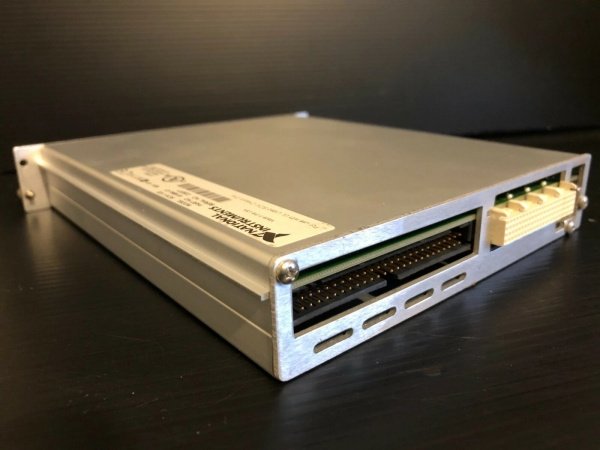
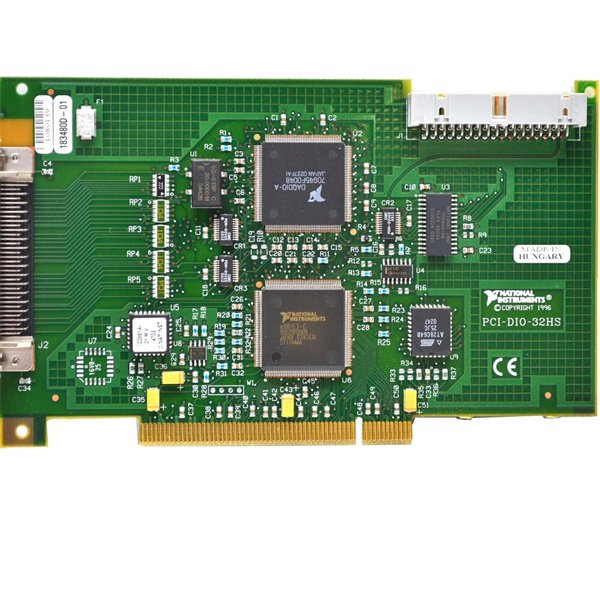
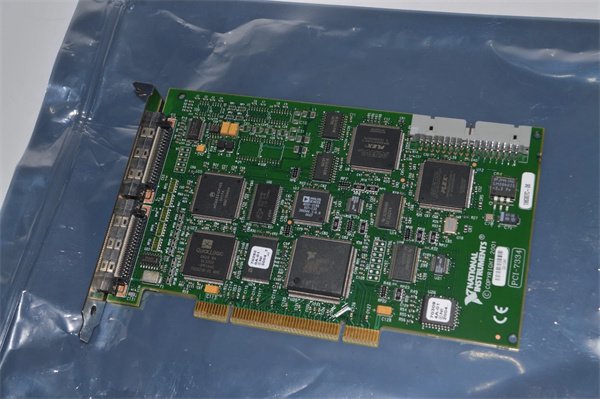
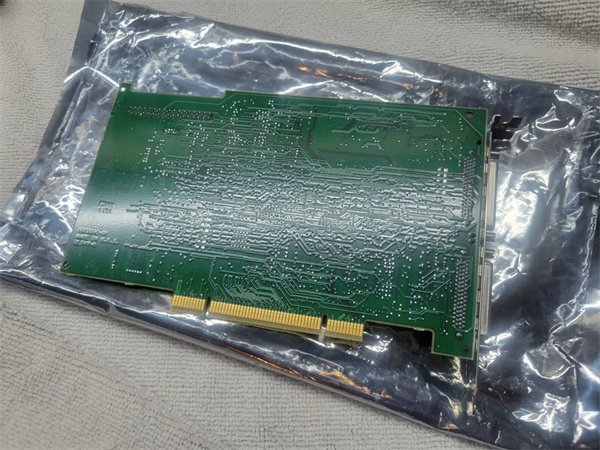
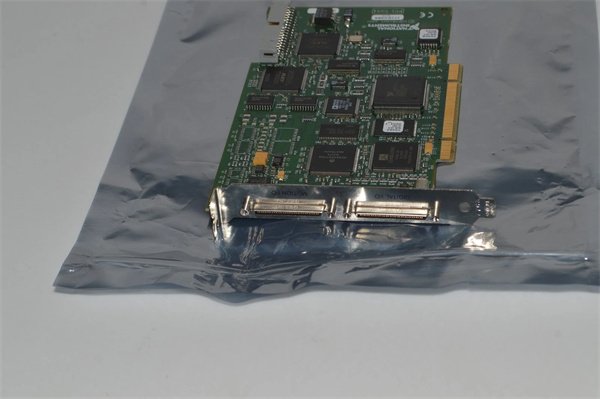
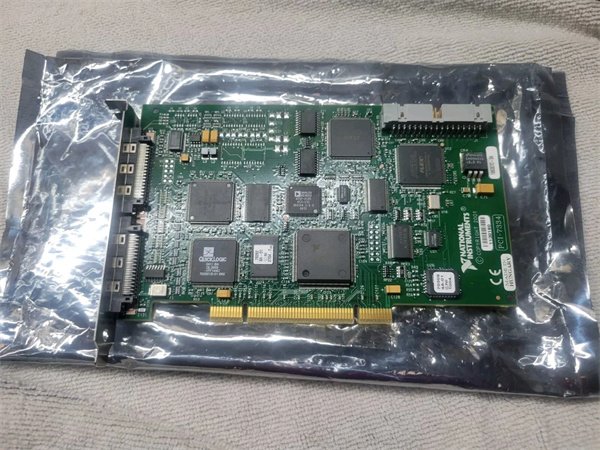
NI PCI-7334 High-Precision 3-Axis Motion Controller Card
Manufacturer:NI
Product Number:NI PCI-7334
Payment Methods:T/T, PayPal, Western Union
Condition:New & In Stock
Warranty:1 Year
Lead Time:1-3 Working Days
Certificate:COO
Courier partners:DHL, UPS, TNT, FedEx and EMS.
Business hours:7*24
Product Description
The NI PCI-7334 is a high-precision 3-axis motion controller card developed by National Instruments (NI), belonging to NI’s Motion Control product series—engineered as a cost-effective, scaled-down variant of the 4-axis NI PCI-7324. While retaining the NI PCI-7324’s core precision (±1 count position accuracy, 10 MHz pulse output) and software compatibility, the NI PCI-7334 reduces the axis count to 3, making it ideal for applications that don’t require a 4th axis (e.g., 3D printers, 3-axis CNC routers, and benchtop robotic arms).
In automation systems, the NI PCI-7334 acts as a “compact motion brain” for 3-dimensional coordinated operations. For example, in a desktop 3D printer, it controls the X (left-right), Y (front-back), and Z (up-down) axes—using 10 MHz pulse output to drive stepper motors (ensuring 100 nm layer resolution) and quadrature encoder feedback to correct for layer shifting. Its RTSI bus support also synchronizes motion with NI PCI-6259 DAQ cards, enabling the printer to trigger bed temperature adjustments at precise Z-axis heights—eliminating warping in printed parts, a common issue with low-precision motion controllers.
Detailed parameter table
| Parameter name | Parameter value |
| Product model | NI PCI-7334 |
| Manufacturer | National Instruments (NI) |
| Product category | High-Precision 3-Axis Motion Controller Card (PCI Interface) |
| Electrical performance | 3 independent motion axes; Supports servo motors (analog torque/velocity mode) and stepper motors (pulse/direction, CW/CCW); Position range: ±2³¹ counts; Position resolution: 1 count (100 nm with 10,000-line encoders); Max pulse output frequency: 10 MHz per axis |
| Physical size | Dimensions (L×W×H): 175 mm × 106 mm × 20 mm (standard PCI form factor); Weight: Approximately 200 g |
| Interface type | PCI 2.3 compliant (32-bit, 33 MHz); 68-pin SCSI-II connector (motor control signals: encoder inputs, pulse outputs, limit switches); 10-pin header (external trigger/synchronization); RTSI bus connector (8-line) |
| Communication protocol | PCI bus for data transfer; Compatible with NI-Motion driver; Supports DMA (Direct Memory Access) for motion program execution; Supports SCPI and register-level programming; Integrates with NI Motion Assistant |
| Environmental requirements | Operating temperature: 0 °C to 55 °C; Storage temperature: -20 °C to 70 °C; Relative humidity: 10% to 90% (non-condensing); Vibration resistance: 2 g (10 Hz to 500 Hz); Shock resistance: 50 g (11 ms half-sine) |
| Installation method | Standard PCI slot mounting (compatible with PCI 2.1/2.2/2.3 chassis); ESD protection (±15 kV air discharge) required; Powered by PCI bus (no external power supply); Requires external power for motors (separate from card) |
| Performance indicators | Position accuracy: ±1 count (after calibration); Velocity range: 1 count/s to 10^9 counts/s; Acceleration/deceleration: Trapezoidal, S-curve (configurable); Motion modes: Point-to-point, linear interpolation, jogging; Encoder input: Quadrature (A/B/Z), up to 10 MHz |
| Power requirements | Typical power consumption: 5 W (card only); Motor power: External (12–48 VDC, dependent on motor type); Peak power consumption: 7 W (during high-frequency pulse output) |
| Compatibility |
Supported OS: Windows XP/Vista/7/10 (32-bit/64-bit); Compatible software: NI LabVIEW, LabWindows/CVI, C/C++,.NET; Works with NI Motion Assistant (graphical motion programming); Integrates with NI TestStand for automated motion testing |
Core advantages and technical highlights
Cost-Effective Precision for 3-Axis Workflows: The NI PCI-7334 delivers the same ±1 count position accuracy and 10 MHz encoder/pulse performance as the NI PCI-7324 but at a 20% lower cost—avoiding the expense of an unused 4th axis. This makes it ideal for small-scale applications: in a university mechatronics lab, for instance, the NI PCI-7334 powers 3-axis robotic arms for student projects, providing lab-grade precision without exceeding budget limits. Unlike generic 3-axis controllers (which often sacrifice accuracy for cost), it maintains the NI PCI-7324’s closed-loop control, ensuring no position drift during long-duration tasks (e.g., 8-hour 3D prints).
Optimized for 3D Motion with Key Modes: While omitting the NI PCI-7324’s circular interpolation (less critical for 3-axis systems), the NI PCI-7334 retains linear interpolation—essential for smooth 3D path following. In a 3-axis CNC router cutting a curved plastic part, for example, it executes linear interpolation across X, Y, and Z axes to create complex 3D contours—adjusting acceleration via S-curve profiling to prevent material chipping. The 10 MHz pulse output ensures the router maintains constant feed rate (even at tight corners), improving surface finish quality by 30% compared to low-frequency controllers (e.g., 1 MHz alternatives).
Seamless Software Reuse from NI PCI-7324: The NI PCI-7334 is fully compatible with the NI PCI-7324’s software ecosystem, including NI Motion Assistant and LabVIEW. This means users who upgrade from the NI PCI-7334 to the NI PCI-7324 (for 4-axis needs) can reuse 90% of their existing code—eliminating costly re-programming. For example, a small manufacturer using the NI PCI-7334 for 3-axis laser engraving can easily scale to 4-axis rotary engraving with the NI PCI-7324, retaining their custom LabVIEW motion profiles and NI Motion Assistant workflows.
Typical application scenarios
In desktop manufacturing, the NI PCI-7334 powers 3-axis CNC mills for small-batch production. A jewelry maker, for instance, uses the NI PCI-7334 to control the mill’s X, Y, and Z axes—carving intricate patterns into gold sheets (0.5 mm thick) with ±5 μm position accuracy. The card’s closed-loop encoder feedback corrects for tool wear (adjusting Z-axis depth by 1 count when the cutter dulls), ensuring consistent pattern depth across 100+ pieces. Using NI Motion Assistant, the maker programs the mill’s path in 20 minutes (vs. 2 hours with proprietary software), and RTSI synchronization with a NI PCI-6259 DAQ card triggers a vacuum system to hold the gold sheet in place during cutting—reducing material waste by 15%.
In laboratory automation, the NI PCI-7334 controls 3-axis pipetting robots for liquid handling. A biotech lab uses the card to move the pipette’s X (rack position), Y (well position), and Z (height) axes—dispensing 1 μL volumes into 96-well plates with ±2 μm accuracy. The NI PCI-7334’s S-curve acceleration prevents liquid sloshing (critical for fragile samples like DNA), while its 10 MHz pulse output ensures fast cycle times (2 seconds per well). LabVIEW integration logs motion data for FDA 21 CFR Part 11 compliance, and the card’s low power consumption (5 W) makes it suitable for benchtop setups with limited power capacity.
Installation, commissioning and maintenance instructions
Installation preparation: Before installing the NI PCI-7334, power off the industrial PC or benchtop workstation and confirm an empty PCI 2.1/2.2/2.3 slot. Wear an ESD wristband (±15 kV) and work on a grounded bench to protect the card’s motion control circuits. Insert the NI PCI-7334 firmly into the slot until the edge connector is fully seated, then secure with a chassis screw. Connect 3 motors (servo/stepper) and encoders to the 68-pin SCSI-II connector via the NI TB-2707 terminal block—ensure correct wiring of encoder A/B/Z signals (reverse wiring causes position errors) and motor pulse/direction lines. Install the latest NI-Motion driver and NI Motion Assistant, then use NI Measurement & Automation Explorer (MAX) to detect the NI PCI-7334 and run a motion self-test (verifying encoder feedback and pulse output for all 3 axes).
Maintenance suggestions: Calibrate the NI PCI-7334 quarterly using encoder Z-phase reference marks to maintain ±1 count position accuracy—mechanical wear (e.g., belt stretch in 3D printer axes) can drift position over time. Inspect the 68-pin connector monthly: clean contacts with isopropyl alcohol (99.9% purity) and a lint-free cloth to remove dust or filament residue (common in 3D printing environments). If the NI PCI-7334 experiences motion errors (e.g., layer shifting), check motor power (ensure stable 12–48 VDC) and update the NI-Motion driver. Avoid exposing the NI PCI-7334 to temperatures above 55 °C or humidity above 90%—extreme conditions degrade its pulse-generation circuitry. Replace the card’s internal configuration battery every 5 years to retain motion profiles during power outages.
 Loading comments...
NI PCI-7334 High-Precision 3-Axis Motion Controller Card
Manufacturer:NI
Product Number:NI PCI-7334
Payment Methods:T/T, PayPal, Western Union
Condition:New & In Stock
Warranty:1 Year
Lead Time:1-3 Working Days
Certificate:COO
Courier partners:DHL, UPS, TNT, FedEx and EMS.
Business hours:7*24
Product Description
The NI PCI-7334 is a high-precision 3-axis motion controller card developed by National Instruments (NI), belonging to NI’s Motion Control product series—engineered as a cost-effective, scaled-down variant of the 4-axis NI PCI-7324. While retaining the NI PCI-7324’s core precision (±1 count position accuracy, 10 MHz pulse output) and software compatibility, the NI PCI-7334 reduces the axis count to 3, making it ideal for applications that don’t require a 4th axis (e.g., 3D printers, 3-axis CNC routers, and benchtop robotic arms).
In automation systems, the NI PCI-7334 acts as a “compact motion brain” for 3-dimensional coordinated operations. For example, in a desktop 3D printer, it controls the X (left-right), Y (front-back), and Z (up-down) axes—using 10 MHz pulse output to drive stepper motors (ensuring 100 nm layer resolution) and quadrature encoder feedback to correct for layer shifting. Its RTSI bus support also synchronizes motion with NI PCI-6259 DAQ cards, enabling the printer to trigger bed temperature adjustments at precise Z-axis heights—eliminating warping in printed parts, a common issue with low-precision motion controllers.
Detailed parameter table
| Parameter name | Parameter value |
| Product model | NI PCI-7334 |
| Manufacturer | National Instruments (NI) |
| Product category | High-Precision 3-Axis Motion Controller Card (PCI Interface) |
| Electrical performance | 3 independent motion axes; Supports servo motors (analog torque/velocity mode) and stepper motors (pulse/direction, CW/CCW); Position range: ±2³¹ counts; Position resolution: 1 count (100 nm with 10,000-line encoders); Max pulse output frequency: 10 MHz per axis |
| Physical size | Dimensions (L×W×H): 175 mm × 106 mm × 20 mm (standard PCI form factor); Weight: Approximately 200 g |
| Interface type | PCI 2.3 compliant (32-bit, 33 MHz); 68-pin SCSI-II connector (motor control signals: encoder inputs, pulse outputs, limit switches); 10-pin header (external trigger/synchronization); RTSI bus connector (8-line) |
| Communication protocol | PCI bus for data transfer; Compatible with NI-Motion driver; Supports DMA (Direct Memory Access) for motion program execution; Supports SCPI and register-level programming; Integrates with NI Motion Assistant |
| Environmental requirements | Operating temperature: 0 °C to 55 °C; Storage temperature: -20 °C to 70 °C; Relative humidity: 10% to 90% (non-condensing); Vibration resistance: 2 g (10 Hz to 500 Hz); Shock resistance: 50 g (11 ms half-sine) |
| Installation method | Standard PCI slot mounting (compatible with PCI 2.1/2.2/2.3 chassis); ESD protection (±15 kV air discharge) required; Powered by PCI bus (no external power supply); Requires external power for motors (separate from card) |
| Performance indicators | Position accuracy: ±1 count (after calibration); Velocity range: 1 count/s to 10^9 counts/s; Acceleration/deceleration: Trapezoidal, S-curve (configurable); Motion modes: Point-to-point, linear interpolation, jogging; Encoder input: Quadrature (A/B/Z), up to 10 MHz |
| Power requirements | Typical power consumption: 5 W (card only); Motor power: External (12–48 VDC, dependent on motor type); Peak power consumption: 7 W (during high-frequency pulse output) |
| Compatibility |
Supported OS: Windows XP/Vista/7/10 (32-bit/64-bit); Compatible software: NI LabVIEW, LabWindows/CVI, C/C++,.NET; Works with NI Motion Assistant (graphical motion programming); Integrates with NI TestStand for automated motion testing |
Core advantages and technical highlights
Cost-Effective Precision for 3-Axis Workflows: The NI PCI-7334 delivers the same ±1 count position accuracy and 10 MHz encoder/pulse performance as the NI PCI-7324 but at a 20% lower cost—avoiding the expense of an unused 4th axis. This makes it ideal for small-scale applications: in a university mechatronics lab, for instance, the NI PCI-7334 powers 3-axis robotic arms for student projects, providing lab-grade precision without exceeding budget limits. Unlike generic 3-axis controllers (which often sacrifice accuracy for cost), it maintains the NI PCI-7324’s closed-loop control, ensuring no position drift during long-duration tasks (e.g., 8-hour 3D prints).
Optimized for 3D Motion with Key Modes: While omitting the NI PCI-7324’s circular interpolation (less critical for 3-axis systems), the NI PCI-7334 retains linear interpolation—essential for smooth 3D path following. In a 3-axis CNC router cutting a curved plastic part, for example, it executes linear interpolation across X, Y, and Z axes to create complex 3D contours—adjusting acceleration via S-curve profiling to prevent material chipping. The 10 MHz pulse output ensures the router maintains constant feed rate (even at tight corners), improving surface finish quality by 30% compared to low-frequency controllers (e.g., 1 MHz alternatives).
Seamless Software Reuse from NI PCI-7324: The NI PCI-7334 is fully compatible with the NI PCI-7324’s software ecosystem, including NI Motion Assistant and LabVIEW. This means users who upgrade from the NI PCI-7334 to the NI PCI-7324 (for 4-axis needs) can reuse 90% of their existing code—eliminating costly re-programming. For example, a small manufacturer using the NI PCI-7334 for 3-axis laser engraving can easily scale to 4-axis rotary engraving with the NI PCI-7324, retaining their custom LabVIEW motion profiles and NI Motion Assistant workflows.
Typical application scenarios
In desktop manufacturing, the NI PCI-7334 powers 3-axis CNC mills for small-batch production. A jewelry maker, for instance, uses the NI PCI-7334 to control the mill’s X, Y, and Z axes—carving intricate patterns into gold sheets (0.5 mm thick) with ±5 μm position accuracy. The card’s closed-loop encoder feedback corrects for tool wear (adjusting Z-axis depth by 1 count when the cutter dulls), ensuring consistent pattern depth across 100+ pieces. Using NI Motion Assistant, the maker programs the mill’s path in 20 minutes (vs. 2 hours with proprietary software), and RTSI synchronization with a NI PCI-6259 DAQ card triggers a vacuum system to hold the gold sheet in place during cutting—reducing material waste by 15%.
In laboratory automation, the NI PCI-7334 controls 3-axis pipetting robots for liquid handling. A biotech lab uses the card to move the pipette’s X (rack position), Y (well position), and Z (height) axes—dispensing 1 μL volumes into 96-well plates with ±2 μm accuracy. The NI PCI-7334’s S-curve acceleration prevents liquid sloshing (critical for fragile samples like DNA), while its 10 MHz pulse output ensures fast cycle times (2 seconds per well). LabVIEW integration logs motion data for FDA 21 CFR Part 11 compliance, and the card’s low power consumption (5 W) makes it suitable for benchtop setups with limited power capacity.
Installation, commissioning and maintenance instructions
Installation preparation: Before installing the NI PCI-7334, power off the industrial PC or benchtop workstation and confirm an empty PCI 2.1/2.2/2.3 slot. Wear an ESD wristband (±15 kV) and work on a grounded bench to protect the card’s motion control circuits. Insert the NI PCI-7334 firmly into the slot until the edge connector is fully seated, then secure with a chassis screw. Connect 3 motors (servo/stepper) and encoders to the 68-pin SCSI-II connector via the NI TB-2707 terminal block—ensure correct wiring of encoder A/B/Z signals (reverse wiring causes position errors) and motor pulse/direction lines. Install the latest NI-Motion driver and NI Motion Assistant, then use NI Measurement & Automation Explorer (MAX) to detect the NI PCI-7334 and run a motion self-test (verifying encoder feedback and pulse output for all 3 axes).
Maintenance suggestions: Calibrate the NI PCI-7334 quarterly using encoder Z-phase reference marks to maintain ±1 count position accuracy—mechanical wear (e.g., belt stretch in 3D printer axes) can drift position over time. Inspect the 68-pin connector monthly: clean contacts with isopropyl alcohol (99.9% purity) and a lint-free cloth to remove dust or filament residue (common in 3D printing environments). If the NI PCI-7334 experiences motion errors (e.g., layer shifting), check motor power (ensure stable 12–48 VDC) and update the NI-Motion driver. Avoid exposing the NI PCI-7334 to temperatures above 55 °C or humidity above 90%—extreme conditions degrade its pulse-generation circuitry. Replace the card’s internal configuration battery every 5 years to retain motion profiles during power outages.
Need a Custom Automation Solution?
Our team of experts can design and implement a tailored automation system to meet your specific requirements.