
Our Products
Comprehensive industrial automation solutions for global industries
Contact us
If you are interested in our products and want to know more details,please Contact us,we will reply you as soon as we can.
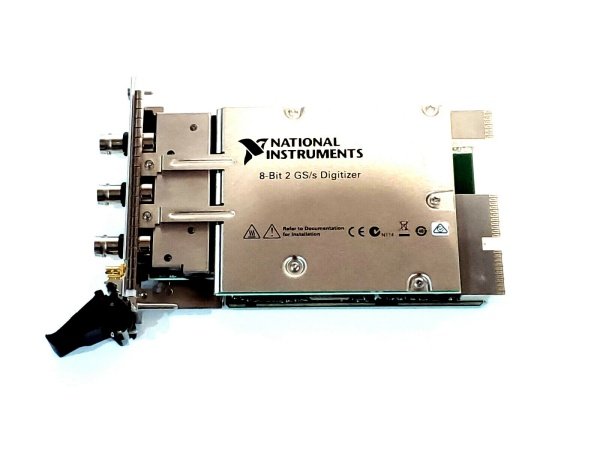
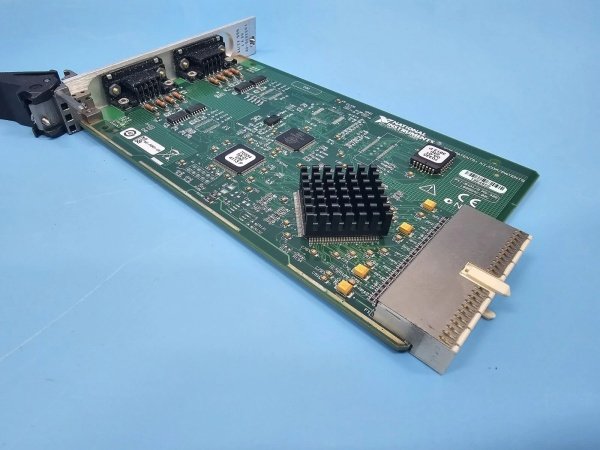
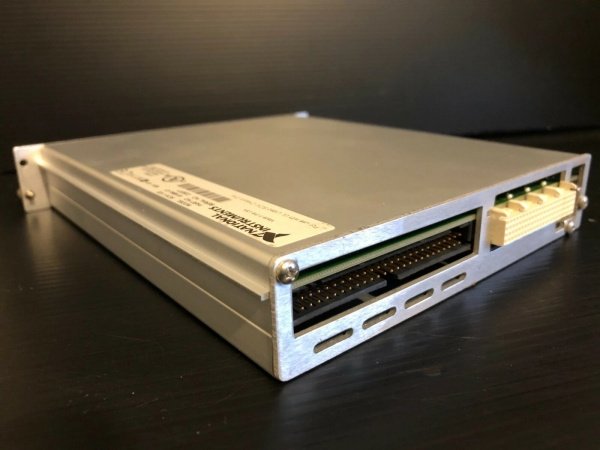
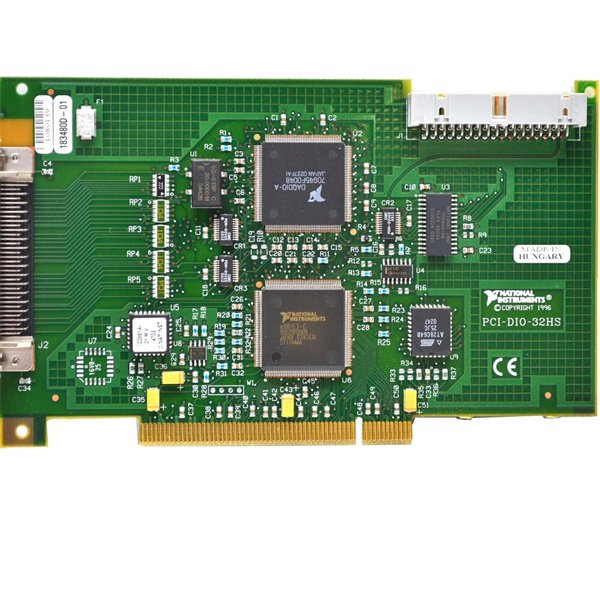
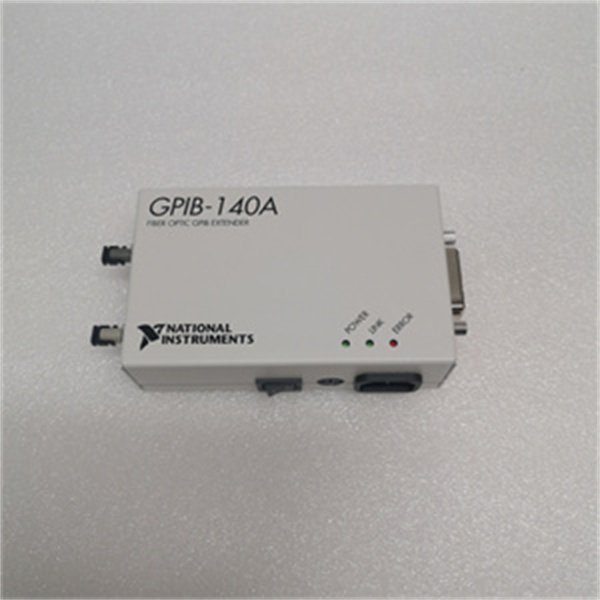
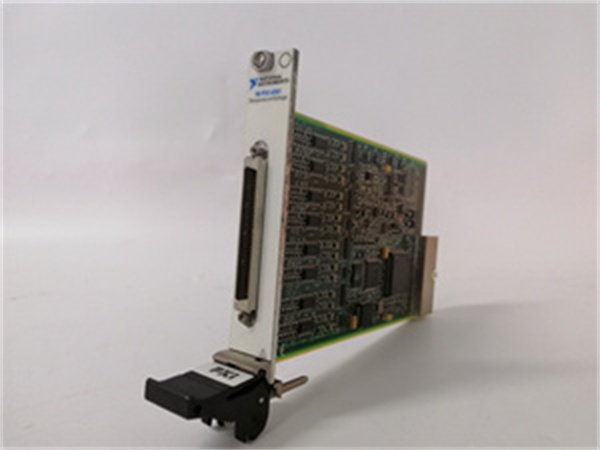
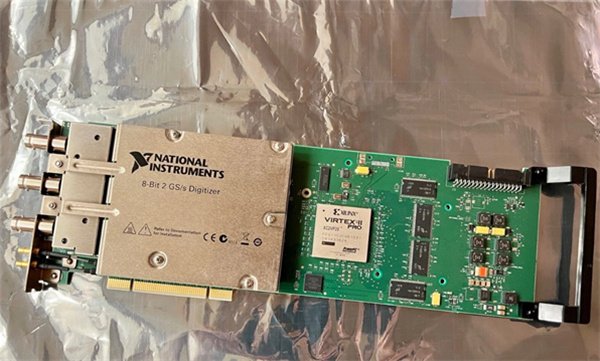
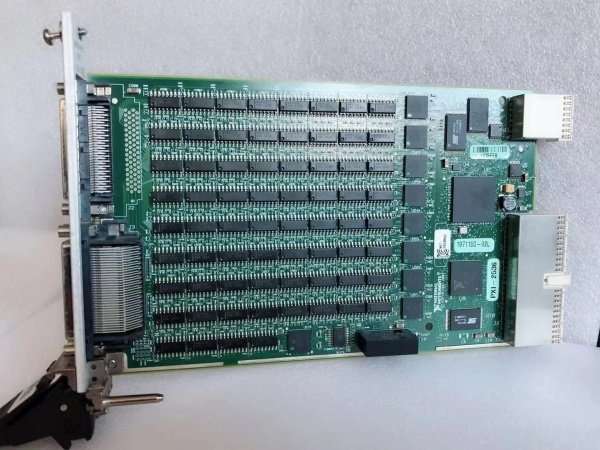
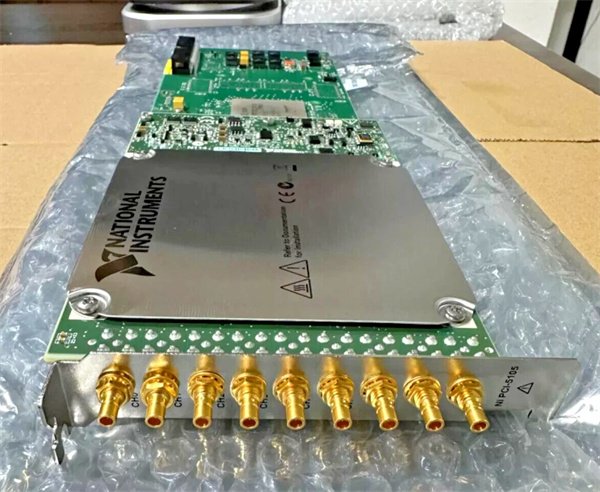
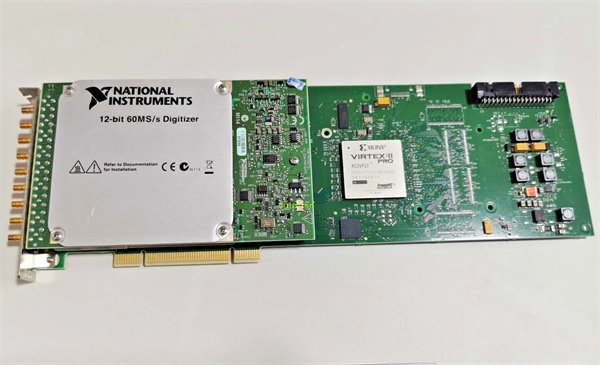
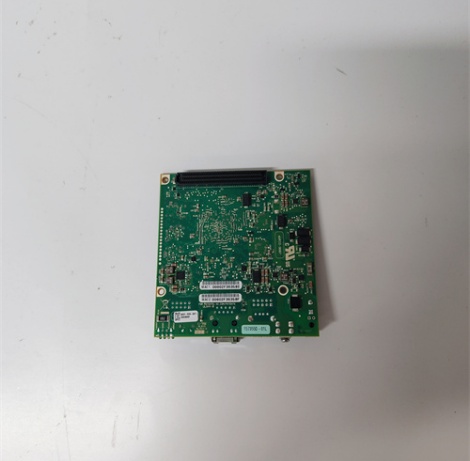
NI PCI-5105 PCI-Based 2-Channel High-Speed Digitizer Card
Manufacturer:NI
Product Number:NI PCI-5105
Payment Methods:T/T, PayPal, Western Union
Condition:New & In Stock
Warranty:1 Year
Lead Time:1-3 Working Days
Certificate:COO
Courier partners:DHL, UPS, TNT, FedEx and EMS.
Business hours:7*24
Product Description
The NI PCI-5105 is a reliable 2-channel high-speed digitizer card developed by National Instruments (NI), designed to deliver cost-effective, medium-speed signal measurement for legacy PCI-based test and automation systems. As a key legacy model in NI’s digitizer portfolio, it balances performance and affordability, making it ideal for capturing mid-frequency signals (up to 60 MHz) in industrial maintenance, academic research, and low-volume manufacturing testing.
At the core of the NI PCI-5105 is its flexible input design—supporting both single-ended and configurable differential inputs—which adapts to diverse signal sources, from sensors to digital communication modules. When paired with NI’s legacy-compatible NI-SCOPE driver and software tools like LabVIEW, the NI PCI-5105 transforms older desktop or industrial PCs into functional oscilloscope systems. Engineers can leverage its 200 MS/s sampling rate to capture transient signals (e.g., 5 ns pulses) and 4 MSample memory depth to store medium-duration data, eliminating the need for costly hardware upgrades when maintaining legacy test setups. This compatibility ensures businesses can extend the lifecycle of existing PCI-based systems without sacrificing measurement accuracy.
Detailed Parameter Table
| Parameter Name | Parameter Value |
| Product model | NI PCI-5105 |
| Manufacturer | National Instruments (NI) |
| Product category | PCI-Based 2-Channel High-Speed Digitizer Card |
| Analog input channels | 2 single-ended channels (configurable for differential input) |
| Sampling rate | Up to 200 MS/s per channel (single-channel mode); 100 MS/s per channel (dual-channel mode) |
| Vertical resolution | 8-bit |
| Input voltage range | ±1 V, ±2 V, ±5 V, ±10 V (software-selectable; external attenuation required for larger ranges) |
| Bandwidth | DC to 60 MHz (-3 dB) |
| Memory depth | 4 MSample per channel (standard); no expandable memory option |
| Triggering capabilities | Edge triggering (rising/falling), level triggering, hysteresis control (0.1 V to 1 V) |
| Communication interface | PCI (32-bit, 33 MHz); backward compatible with 5-V PCI slots |
| Operating temperature range | 0 °C to 55 °C (32 °F to 131 °F) |
| Storage temperature range | -20 °C to 70 °C (-4 °F to 158 °F) |
| Physical dimensions (W×H×D) | 17.46 cm × 10.67 cm × 2.54 cm (6.87 in × 4.20 in × 1.00 in) |
| Weight | Approximately 140 g (4.94 oz) |
| Power consumption | +5 VDC @ 1.2 A (max), +12 VDC @ 0.8 A (max), -12 VDC @ 0.08 A (max) |
| Software support | NI-SCOPE driver (legacy version compatible), LabVIEW 2018+, LabWindows/CVI, C/C++,.NET |
| Compliance standards | CE, FCC Class A, UL 61010-1, IEC 61010-1, RoHS 2 |
Core Advantages and Technical Highlights
Legacy System Compatibility: The NI PCI-5105 is optimized for 32-bit PCI slots (including older 5-V PCI architectures), making it a critical replacement or expansion component for legacy test systems. For example, manufacturing facilities with decades-old PCI-based test benches for automotive sensors can integrate the NI PCI-5105 without upgrading the entire PC infrastructure—saving time and capital costs. Its compatibility with legacy NI-SCOPE driver versions also ensures seamless integration with existing LabVIEW code, avoiding expensive software rewrites.
Cost-Effective Medium-Speed Performance: With a 200 MS/s sampling rate and 60 MHz bandwidth, the NI PCI-5105 delivers performance tailored to mid-frequency applications (e.g., 100 MHz Ethernet pre-compliance testing, audio amplifier transient analysis) where high-end 1 GS/s digitizers (like the NI PCI-5122) are unnecessary. Its 8-bit resolution and software-selectable voltage ranges (±1 V to ±10 V) provide sufficient accuracy for non-critical measurements, making it a budget-friendly choice for academic labs or small-scale industrial testing.
Flexible Input Configuration: Unlike fixed-input digitizers, the NI PCI-5105 allows users to switch between single-ended and differential input modes. Single-ended mode simplifies connections to ground-referenced signals (e.g., temperature sensor outputs), while differential mode reduces noise pickup for floating signals (e.g., motor drive voltages). This flexibility lets a single NI PCI-5105 handle multiple test scenarios—for instance, measuring a sensor’s single-ended DC offset in the morning and a power supply’s differential AC ripple in the afternoon—reducing the need for multiple specialized cards.
Simplified Operation for Non-Experts: The NI PCI-5105 features intuitive triggering (edge and level) with adjustable hysteresis, making it easy to set up for basic signal capture. Novice users can configure the card in minutes via LabVIEW’s graphical interface, selecting sampling rates and voltage ranges without deep technical expertise. For example, students in electrical engineering labs can use the NI PCI-5105 to measure RC circuit time constants, leveraging its simple triggering to isolate charge/discharge cycles and generate clear waveform visualizations.
Typical Application Scenarios
The NI PCI-5105 excels in legacy system maintenance and cost-sensitive medium-speed measurement applications. In industrial maintenance, it is used to troubleshoot older machinery—such as 20-year-old HVAC control systems or legacy robotic arms—by capturing analog control signals (e.g., 0–10 V motor speed commands). Maintenance technicians install the NI PCI-5105 in a PCI-based industrial PC, connecting its channels to the machinery’s sensor outputs. The card’s 200 MS/s sampling rate captures transient glitches (e.g., 10 ns voltage drops) that cause intermittent failures, while its compatibility with legacy software ensures it works with existing maintenance dashboards.
In academic research, the NI PCI-5105 supports undergraduate and graduate projects in electrical engineering and physics. For example, in a university’s signal processing lab, students use the NI PCI-5105 to analyze analog-to-digital converter (ADC) performance: the card captures input sine waves (up to 60 MHz) and output digital signals, allowing students to calculate THD (Total Harmonic Distortion) and SNR (Signal-to-Noise Ratio). Its low cost and easy software integration make it accessible for classroom use, where budgets and user expertise are limited.
In low-volume electronics manufacturing, the NI PCI-5105 is used for end-of-line (EOL) testing of low-speed devices like basic power supplies or analog sensors. For instance, a small-scale manufacturer of 12-V DC power supplies uses the NI PCI-5105 to measure output voltage ripple (typically <1 MHz) and load transient responses. The card’s dual-channel capability lets technicians compare the power supply’s input (channel 1) and output (channel 2) signals simultaneously, verifying stability without investing in high-end test equipment.
Installation Commissioning and Maintenance Instructions
Installation preparation: Before installing the NI PCI-5105, confirm the host PC has an available 32-bit PCI slot (compatible with 3.3-V or 5-V PCI architectures) and meets system requirements (Windows 7/10, 4 GB RAM, 300 MB free disk space for legacy NI-SCOPE drivers). Power off the PC and disconnect all power sources to prevent electrical damage. Use an anti-static wristband when handling the NI PCI-5105 to avoid ESD damage to internal components. Align the card’s edge connector with the PCI slot, press firmly until the bracket seats against the PC case, and secure it with a screw to prevent movement. After installation, power on the PC and install the latest legacy-compatible NI-SCOPE driver (verify driver version compatibility with your OS via NI’s website) to enable communication.
Maintenance suggestions: For long-term reliability of the NI PCI-5105, clean the PCI connector every 3 months with compressed air to remove dust, which can cause intermittent connectivity. Inspect the card’s BNC input connectors for bent pins or corrosion—replace damaged cables immediately to avoid signal distortion. If the NI PCI-5105 fails to capture signals, check for loose connections, verify the driver is correctly installed (reinstall if needed), and ensure the input voltage range matches the signal amplitude (e.g., use ±10 V range for 8 V signals to avoid clipping). Calibrate the card annually using NI’s Calibration Executive (legacy version) to maintain voltage accuracy. For hardware issues (e.g., unresponsive channels, no power), contact NI technical support—do not open the card, as this voids the warranty.
 Loading comments...

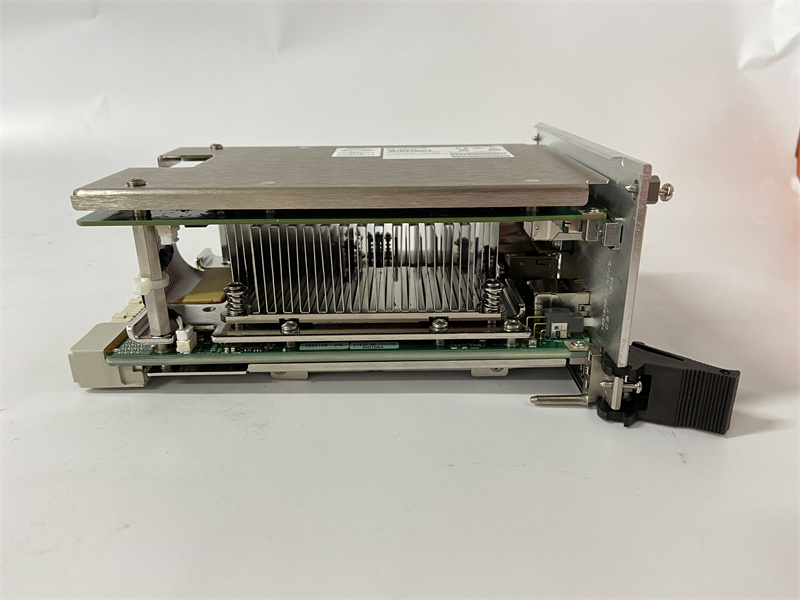
NI PCI-5105 PCI-Based 2-Channel High-Speed Digitizer Card
Manufacturer:NI
Product Number:NI PCI-5105
Payment Methods:T/T, PayPal, Western Union
Condition:New & In Stock
Warranty:1 Year
Lead Time:1-3 Working Days
Certificate:COO
Courier partners:DHL, UPS, TNT, FedEx and EMS.
Business hours:7*24
Product Description
The NI PCI-5105 is a reliable 2-channel high-speed digitizer card developed by National Instruments (NI), designed to deliver cost-effective, medium-speed signal measurement for legacy PCI-based test and automation systems. As a key legacy model in NI’s digitizer portfolio, it balances performance and affordability, making it ideal for capturing mid-frequency signals (up to 60 MHz) in industrial maintenance, academic research, and low-volume manufacturing testing.
At the core of the NI PCI-5105 is its flexible input design—supporting both single-ended and configurable differential inputs—which adapts to diverse signal sources, from sensors to digital communication modules. When paired with NI’s legacy-compatible NI-SCOPE driver and software tools like LabVIEW, the NI PCI-5105 transforms older desktop or industrial PCs into functional oscilloscope systems. Engineers can leverage its 200 MS/s sampling rate to capture transient signals (e.g., 5 ns pulses) and 4 MSample memory depth to store medium-duration data, eliminating the need for costly hardware upgrades when maintaining legacy test setups. This compatibility ensures businesses can extend the lifecycle of existing PCI-based systems without sacrificing measurement accuracy.
Detailed Parameter Table
| Parameter Name | Parameter Value |
| Product model | NI PCI-5105 |
| Manufacturer | National Instruments (NI) |
| Product category | PCI-Based 2-Channel High-Speed Digitizer Card |
| Analog input channels | 2 single-ended channels (configurable for differential input) |
| Sampling rate | Up to 200 MS/s per channel (single-channel mode); 100 MS/s per channel (dual-channel mode) |
| Vertical resolution | 8-bit |
| Input voltage range | ±1 V, ±2 V, ±5 V, ±10 V (software-selectable; external attenuation required for larger ranges) |
| Bandwidth | DC to 60 MHz (-3 dB) |
| Memory depth | 4 MSample per channel (standard); no expandable memory option |
| Triggering capabilities | Edge triggering (rising/falling), level triggering, hysteresis control (0.1 V to 1 V) |
| Communication interface | PCI (32-bit, 33 MHz); backward compatible with 5-V PCI slots |
| Operating temperature range | 0 °C to 55 °C (32 °F to 131 °F) |
| Storage temperature range | -20 °C to 70 °C (-4 °F to 158 °F) |
| Physical dimensions (W×H×D) | 17.46 cm × 10.67 cm × 2.54 cm (6.87 in × 4.20 in × 1.00 in) |
| Weight | Approximately 140 g (4.94 oz) |
| Power consumption | +5 VDC @ 1.2 A (max), +12 VDC @ 0.8 A (max), -12 VDC @ 0.08 A (max) |
| Software support | NI-SCOPE driver (legacy version compatible), LabVIEW 2018+, LabWindows/CVI, C/C++,.NET |
| Compliance standards | CE, FCC Class A, UL 61010-1, IEC 61010-1, RoHS 2 |
Core Advantages and Technical Highlights
Legacy System Compatibility: The NI PCI-5105 is optimized for 32-bit PCI slots (including older 5-V PCI architectures), making it a critical replacement or expansion component for legacy test systems. For example, manufacturing facilities with decades-old PCI-based test benches for automotive sensors can integrate the NI PCI-5105 without upgrading the entire PC infrastructure—saving time and capital costs. Its compatibility with legacy NI-SCOPE driver versions also ensures seamless integration with existing LabVIEW code, avoiding expensive software rewrites.
Cost-Effective Medium-Speed Performance: With a 200 MS/s sampling rate and 60 MHz bandwidth, the NI PCI-5105 delivers performance tailored to mid-frequency applications (e.g., 100 MHz Ethernet pre-compliance testing, audio amplifier transient analysis) where high-end 1 GS/s digitizers (like the NI PCI-5122) are unnecessary. Its 8-bit resolution and software-selectable voltage ranges (±1 V to ±10 V) provide sufficient accuracy for non-critical measurements, making it a budget-friendly choice for academic labs or small-scale industrial testing.
Flexible Input Configuration: Unlike fixed-input digitizers, the NI PCI-5105 allows users to switch between single-ended and differential input modes. Single-ended mode simplifies connections to ground-referenced signals (e.g., temperature sensor outputs), while differential mode reduces noise pickup for floating signals (e.g., motor drive voltages). This flexibility lets a single NI PCI-5105 handle multiple test scenarios—for instance, measuring a sensor’s single-ended DC offset in the morning and a power supply’s differential AC ripple in the afternoon—reducing the need for multiple specialized cards.
Simplified Operation for Non-Experts: The NI PCI-5105 features intuitive triggering (edge and level) with adjustable hysteresis, making it easy to set up for basic signal capture. Novice users can configure the card in minutes via LabVIEW’s graphical interface, selecting sampling rates and voltage ranges without deep technical expertise. For example, students in electrical engineering labs can use the NI PCI-5105 to measure RC circuit time constants, leveraging its simple triggering to isolate charge/discharge cycles and generate clear waveform visualizations.
Typical Application Scenarios
The NI PCI-5105 excels in legacy system maintenance and cost-sensitive medium-speed measurement applications. In industrial maintenance, it is used to troubleshoot older machinery—such as 20-year-old HVAC control systems or legacy robotic arms—by capturing analog control signals (e.g., 0–10 V motor speed commands). Maintenance technicians install the NI PCI-5105 in a PCI-based industrial PC, connecting its channels to the machinery’s sensor outputs. The card’s 200 MS/s sampling rate captures transient glitches (e.g., 10 ns voltage drops) that cause intermittent failures, while its compatibility with legacy software ensures it works with existing maintenance dashboards.
In academic research, the NI PCI-5105 supports undergraduate and graduate projects in electrical engineering and physics. For example, in a university’s signal processing lab, students use the NI PCI-5105 to analyze analog-to-digital converter (ADC) performance: the card captures input sine waves (up to 60 MHz) and output digital signals, allowing students to calculate THD (Total Harmonic Distortion) and SNR (Signal-to-Noise Ratio). Its low cost and easy software integration make it accessible for classroom use, where budgets and user expertise are limited.
In low-volume electronics manufacturing, the NI PCI-5105 is used for end-of-line (EOL) testing of low-speed devices like basic power supplies or analog sensors. For instance, a small-scale manufacturer of 12-V DC power supplies uses the NI PCI-5105 to measure output voltage ripple (typically <1 MHz) and load transient responses. The card’s dual-channel capability lets technicians compare the power supply’s input (channel 1) and output (channel 2) signals simultaneously, verifying stability without investing in high-end test equipment.
Installation Commissioning and Maintenance Instructions
Installation preparation: Before installing the NI PCI-5105, confirm the host PC has an available 32-bit PCI slot (compatible with 3.3-V or 5-V PCI architectures) and meets system requirements (Windows 7/10, 4 GB RAM, 300 MB free disk space for legacy NI-SCOPE drivers). Power off the PC and disconnect all power sources to prevent electrical damage. Use an anti-static wristband when handling the NI PCI-5105 to avoid ESD damage to internal components. Align the card’s edge connector with the PCI slot, press firmly until the bracket seats against the PC case, and secure it with a screw to prevent movement. After installation, power on the PC and install the latest legacy-compatible NI-SCOPE driver (verify driver version compatibility with your OS via NI’s website) to enable communication.
Maintenance suggestions: For long-term reliability of the NI PCI-5105, clean the PCI connector every 3 months with compressed air to remove dust, which can cause intermittent connectivity. Inspect the card’s BNC input connectors for bent pins or corrosion—replace damaged cables immediately to avoid signal distortion. If the NI PCI-5105 fails to capture signals, check for loose connections, verify the driver is correctly installed (reinstall if needed), and ensure the input voltage range matches the signal amplitude (e.g., use ±10 V range for 8 V signals to avoid clipping). Calibrate the card annually using NI’s Calibration Executive (legacy version) to maintain voltage accuracy. For hardware issues (e.g., unresponsive channels, no power), contact NI technical support—do not open the card, as this voids the warranty.
Need a Custom Automation Solution?
Our team of experts can design and implement a tailored automation system to meet your specific requirements.