
Our Products
Comprehensive industrial automation solutions for global industries
Contact us
If you are interested in our products and want to know more details,please Contact us,we will reply you as soon as we can.
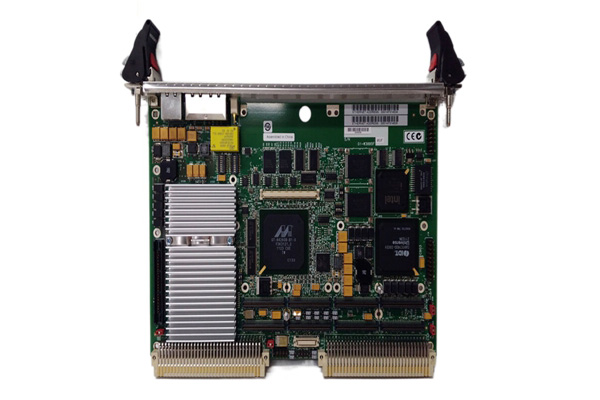
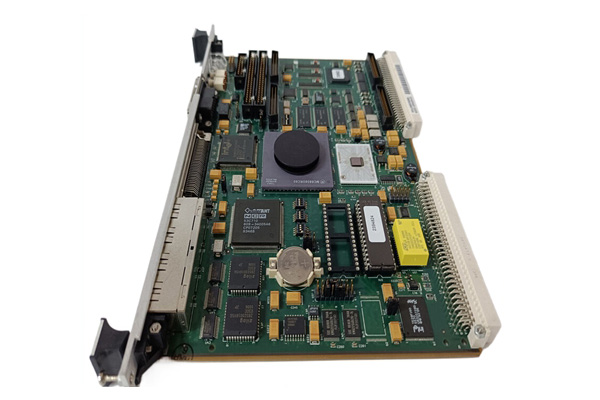
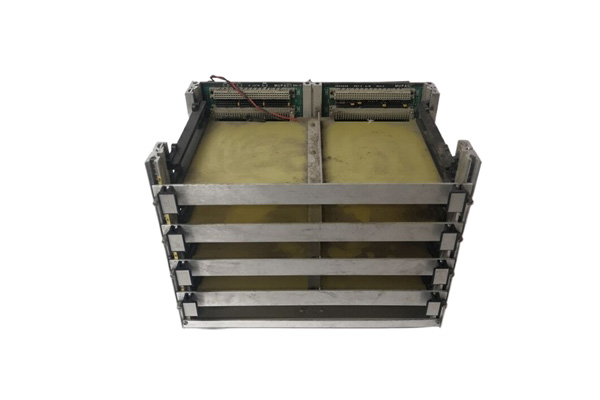
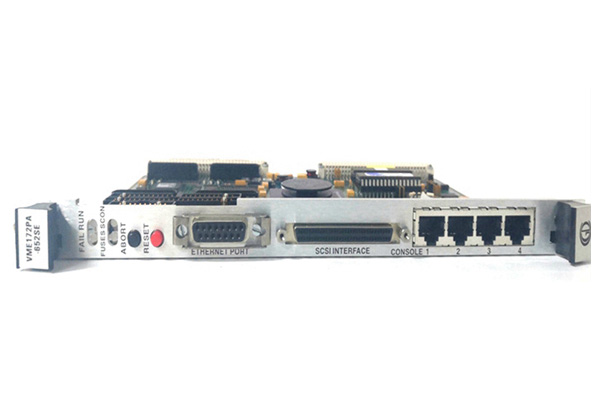
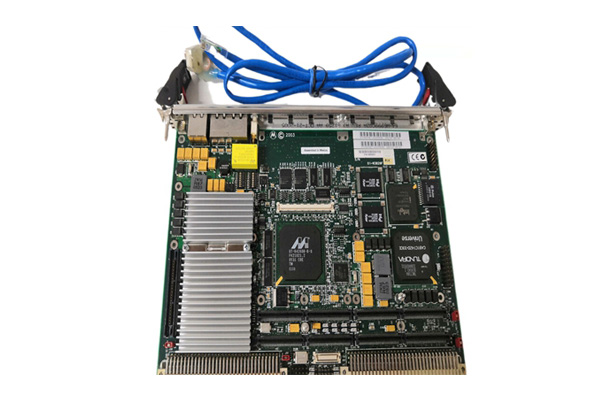
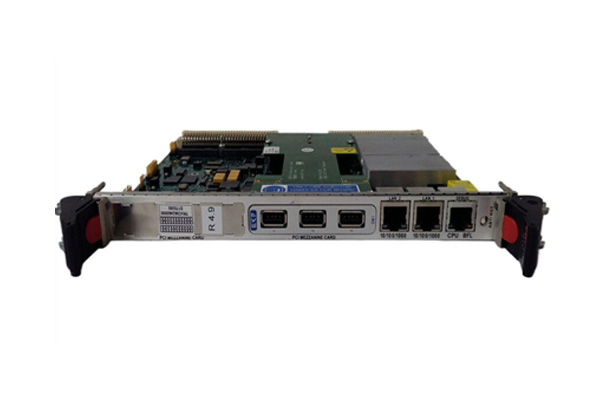
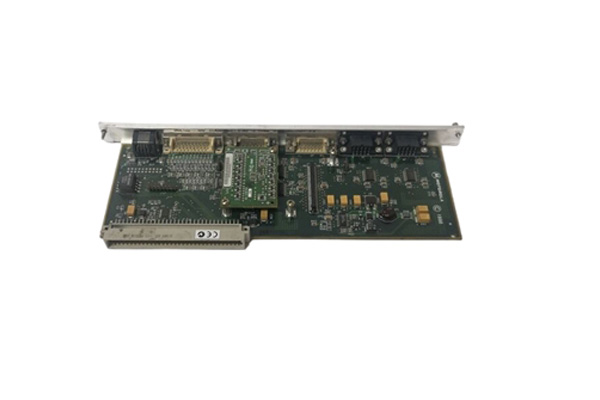
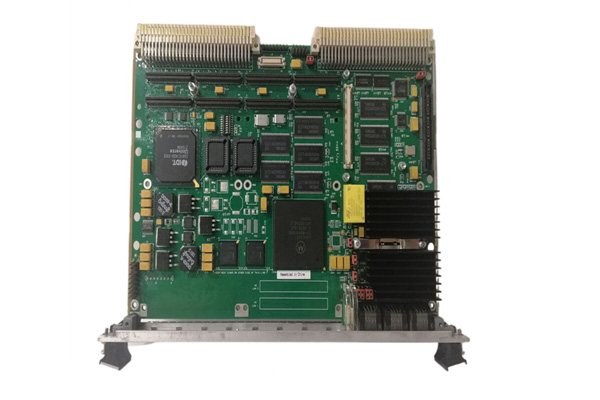
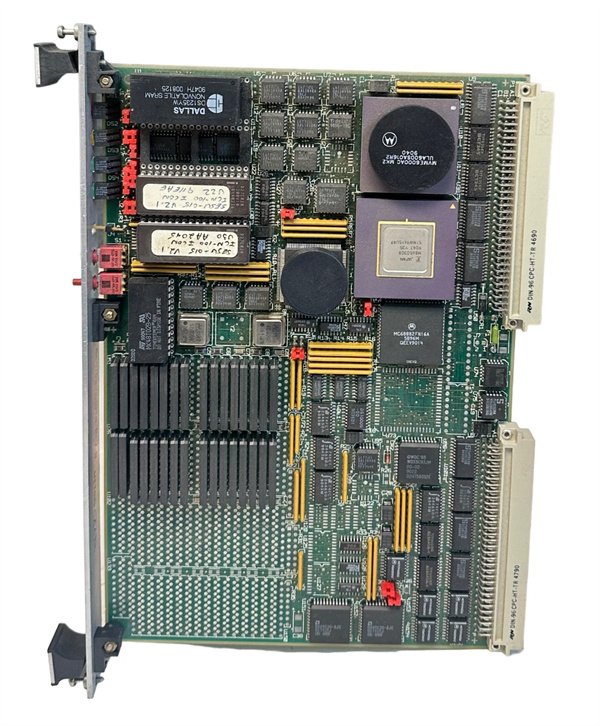
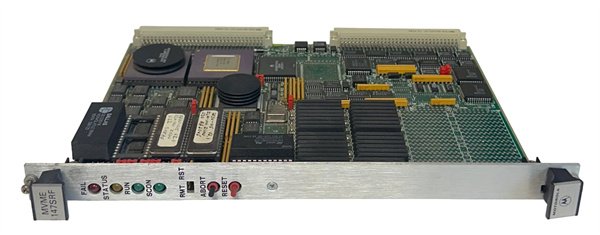
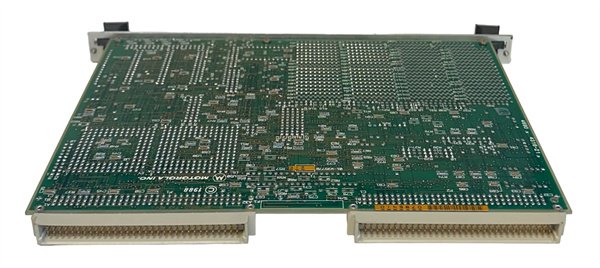
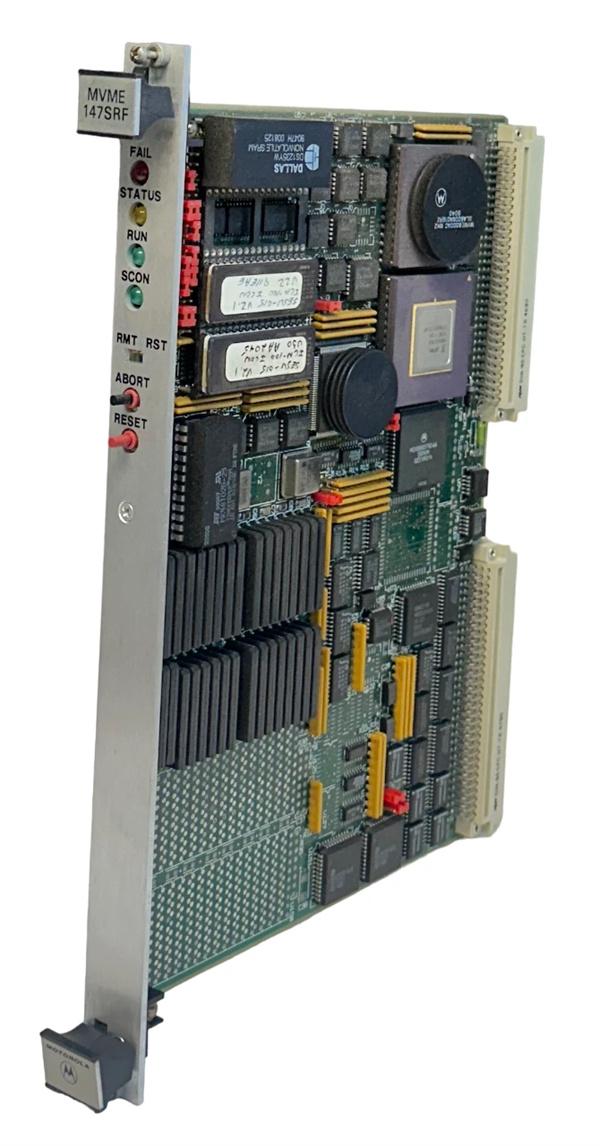
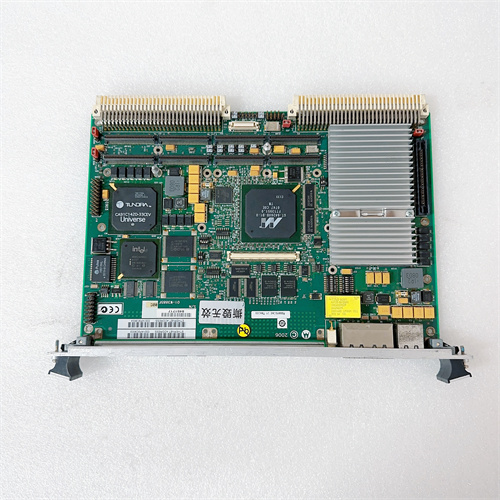
Motorola MVME-147SRF Single-Board Computer
Manufacturer:Motorola
Product Number:Motorola MVME-147SRF
Payment Methods:T/T, PayPal, Western Union
Condition:New & In Stock
Warranty:1 Year
Lead Time:1-3 Working Days
Certificate:COO
Courier partners:DHL, UPS, TNT, FedEx and EMS.
Business hours:7*24
Product Description
The Motorola MVME-147SRF is an entry-level legacy industrial VMEbus Single-Board Computer (SBC) from Motorola (now integrated into Emerson’s portfolio), a compact, ultra-low-power model in the MVME-147 series—engineered for ultra-light-duty automation tasks where basic computing and legacy software compatibility are the core needs. Unlike mid-legacy models like the Motorola MVME162-043 (66 MHz 68k) or entry-tier PowerPC SBCs, the Motorola MVME-147SRF targets applications relying on 1980s–1990s OS-9 v1.x software, such as standalone monitoring of small legacy pumps, low-frequency data logging for rural utility meters (daily readings), and auxiliary control of vintage industrial fans or valves.
In automation systems, the Motorola MVME-147SRF acts as a “minimal legacy processing node”: it collects data from 2–5 simple analog/digital sensors (via legacy modules like Motorola MVME-710 8-bit digital input cards or 16-bit PMC I/O cards), processes it using its 16 MHz MC68020 processor, and sends basic on/off commands to ultra-low-current actuators (e.g., 0.1 A indicator lamps, small relay switches). Its lack of Ethernet limits connectivity to local serial HMIs (e.g., 1990s CRT terminals), while the 3U compact form factor makes it ideal for space-constrained enclosures—such as the control boxes of small water pumps or vintage HVAC units. This makes the Motorola MVME-147SRF an irreplaceable choice for preserving operation of ultra-light-duty legacy equipment, where upgrades to modern SBCs are impractical due to space, power, or software constraints.
Detailed Parameter Table
| Parameter name | Parameter value |
| Product model | Motorola MVME-147SRF |
| Manufacturer | Motorola (now part of Emerson Industrial Automation) |
| Product category | Entry-Level Legacy Industrial VMEbus Single-Board Computer (SBC) |
| Processor | Motorola MC68020 RISC processor, 16 MHz (32-bit data/address bus, with 8 KB L1 cache) |
| Memory | 4 MB DRAM (non-expandable); 1 MB EPROM (boot/OS storage, non-writable) |
| Communication Interfaces | 1x RS-232 serial port (DB-9, 9600 bps max); No Ethernet; No Serial RapidIO |
| Storage Interfaces | Basic floppy disk controller (supports 3.5″ 1.44 MB floppy drives); 1x CompactFlash Slot (Type I, up to 4 GB); No IDE/USB support |
| Expansion Slots | 1x 16-bit/33 MHz low-profile PMC (PCI Mezzanine Card) slot (legacy I/O only); 1x VMEbus P1 mini-expansion connector (vintage pinout) |
| Environmental Requirements | Operating temp: 10°C to 45°C (50°F to 113°F); Storage temp: -40°C to 85°C (-40°F to 185°F); Humidity: 25%–75% (non-condensing, 25°C dew point); Vibration: 10–100 Hz, 0.3 g (rms); Shock: 20 g (peak, 1 ms) |
| Physical Size | 3U VMEbus form factor: 100 mm × 160.02 mm (3.94 in × 6.30 in); Weight: 320 g (0.71 lbs) |
| Power Consumption | Typical: 4 W (25°C, full load); Maximum: 6 W |
| Operating System Support | Motorola OS-9 v1.x (legacy 68k RTOS); No modern OS compatibility (VxWorks/Linux) |
| Diagnostic Features | Minimal Built-in Self-Test (BIST) for power only; No watchdog timer; LED indicators (power only); No memory/communication diagnostics |
Core Advantages and Technical Highlights
Ultra-Low Power for Legacy Power Systems: With a typical power consumption of 4 W (vs. 9 W for the Motorola MVME162-043), the Motorola MVME-147SRF is optimized for vintage industrial power supplies (e.g., 1980s-era 5V DC linear supplies) that cannot handle higher loads. For example, a small rural water utility with a 30-year-old well pump (powered by a 10W max vintage supply) can replace its failing SBC with the Motorola MVME-147SRF without upgrading the power system—higher-power SBCs would overload the supply and cause pump shutdowns. Its fanless design also eliminates energy waste and moving parts, matching the reliability needs of unattended legacy equipment.
Compact 3U Form Factor for Space-Constrained Enclosures: Unlike 6U mid-legacy SBCs like the Motorola MVME162-043, the Motorola MVME-147SRF uses a 3U VMEbus form factor—half the height—making it suitable for ultra-compact control cabinets. For instance, a small factory with a vintage 1990s air filtration unit (control cabinet size: 150 mm × 200 mm × 250 mm) can fit the Motorola MVME-147SRF alongside a small HMI and sensor module—larger 6U SBCs would require costly cabinet modifications. The compact size also simplifies retrofitting into legacy equipment where space was originally allocated for 3U hardware.
Legacy OS-9 v1.x Compatibility: The Motorola MVME-147SRF’s 16 MHz MC68020 processor (68k architecture) is uniquely compatible with Motorola OS-9 v1.x—an older RTOS used in 1980s–1990s ultra-light-duty equipment for which no modern SBC support exists. For example, a small textile workshop with a 35-year-old thread-winding machine (running OS-9 v1.2) can only replace its failing SBC with the Motorola MVME-147SRF—any other SBC would require rewriting the machine’s proprietary control logic (for which source code was lost in 1998). This compatibility extends the equipment’s life by 5–8 years, avoiding a $20,000+ replacement cost for a new machine.
Cost-Effective Legacy Preservation: As the most affordable legacy SBC in Motorola’s portfolio, the Motorola MVME-147SRF costs 50% less than the Motorola MVME162-043 while providing essential legacy support. This makes it a budget-friendly option for small businesses or rural utilities with limited maintenance funds. For example, a small town’s public works department (annual maintenance budget: (30,000) can purchase 10 Motorola MVME-147SRF units as backups for its fleet of legacy water meters—far cheaper than replacing the meters ()500+ each) or hiring consultants to develop new control software ($15,000+).
Typical Application Scenarios
In legacy well pump monitoring, the Motorola MVME-147SRF controls a 30-year-old 0.5 HP well pump for a rural household. It connects to 2 sensors (water level, pump current) via a Motorola MVME-710 8-bit digital input card, logging daily usage data to a 2 GB CompactFlash card. If water level drops below 1 meter, the SBC sends a signal to a Motorola MVME-712-L low-current output module to start the pump; it stops the pump when level reaches 5 meters. The Motorola MVME-147SRF’s 4 W power consumption runs on the pump’s existing 5V DC supply, and its 10°C–45°C operating range withstands the well’s outdoor enclosure temperature fluctuations—ensuring reliable water supply for the household.
For vintage HVAC auxiliary control, the Motorola MVME-147SRF manages a 1995 commercial building’s rooftop exhaust fan. It connects to a temperature sensor (via a legacy 16-bit PMC analog card) and a humidity sensor (via RS-232), activating the fan when temperature exceeds 30°C or humidity exceeds 65%. The SBC logs fan runtime hourly to a 1.44 MB floppy disk (for monthly energy reports) and communicates with a 1990s-era serial HMI for manual override. Its 3U form factor fits the fan’s compact control box, and its 0.3 g vibration resistance withstands rooftop wind vibrations—critical for maintaining indoor air quality in the building.
In low-frequency utility meter logging, the Motorola MVME-147SRF collects daily electricity usage data from 4 vintage 1990s meters in a small apartment complex. It connects to the meters via RS-232, logs data to a 4 GB CompactFlash card (enough for 10 years of readings), and allows property managers to retrieve data via a floppy disk. The SBC’s ultra-low power consumption (4 W) runs on the complex’s backup battery system during power outages, ensuring no data loss. Its legacy OS-9 v1.x compatibility means it can directly replace the complex’s 1998-era SBC without reconfiguring the meter communication protocol—saving the property manager 20+ hours of setup time.
Installation Commissioning and Maintenance Instructions
Installation preparation: Before installing the Motorola MVME-147SRF, verify the VMEbus chassis supports 3U modules and uses a vintage P1 connector (1980s–1990s pinout)—modern 3U chassis may require adapter plates. Confirm the power supply provides stable ±5V (tolerance ±10%, critical for its 16 MHz processor) using a multimeter. Gather tools: anti-static wristband (to protect the MC68020), precision Phillips screwdriver (0.25 N·m for fragile 3U chassis), serial cable tester (for RS-232), and a vintage laptop (running OS-9 v1.x) for configuration. If installing a PMC card, ensure it is 16-bit and low-profile—32-bit cards will not function. Power off the chassis, clean the VME backplane connector with a dry soft-bristle brush (avoid cotton swabs, which leave lint), then slide the Motorola MVME-147SRF into the backplane slowly (vintage 3U pins are thinner and prone to bending) until fully seated.
Maintenance suggestions: For daily upkeep, check the Motorola MVME-147SRF’s single power LED—steady green indicates normal operation (no other diagnostics, so manually verify connected sensors/actuators weekly). Clean the SBC’s exterior every 6 months with a dry, static-free cloth—avoid any liquids or compressed air (can damage the EPROM chip). Every 18 months, back up CompactFlash/floppy data to a secure server (vintage storage media degrades quickly) and inspect the VMEbus connector for corrosion (common in humid well enclosures or rooftop HVAC boxes). If the Motorola MVME-147SRF loses RS-232 connectivity, replace the serial cable (use legacy DB-9 cables, not modern USB-to-serial adapters) and reconfigure baud rate (fixed at 9600 bps) via the OS-9 terminal. Store spare units in anti-static bags in a cool, dry environment (18°C–22°C, 50%–55% humidity) to prevent EPROM/DRAM degradation.
 Loading comments...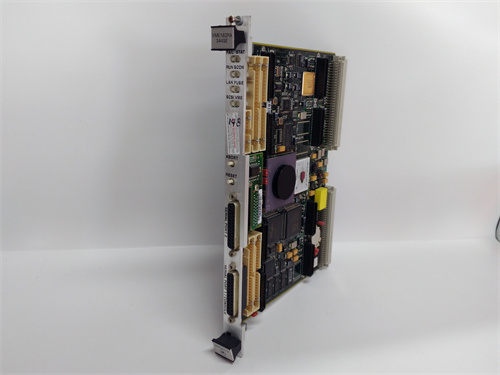
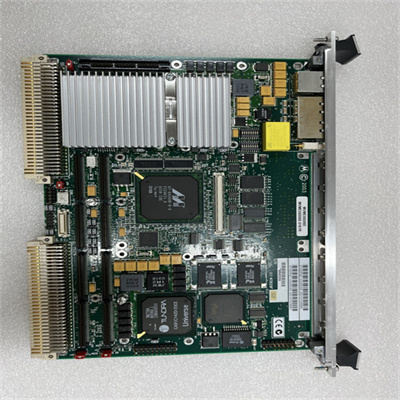
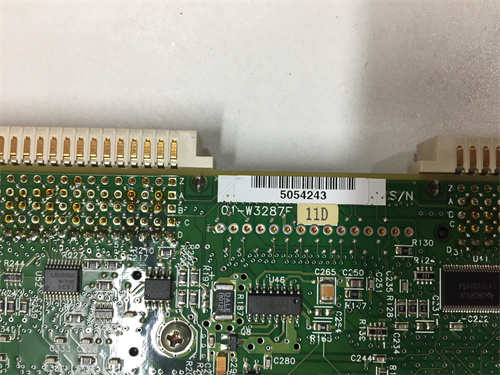
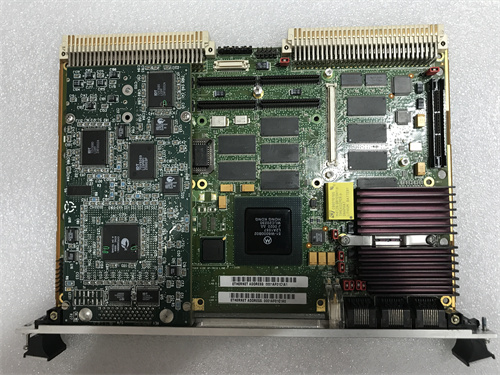
Motorola MVME-147SRF Single-Board Computer
Manufacturer:Motorola
Product Number:Motorola MVME-147SRF
Payment Methods:T/T, PayPal, Western Union
Condition:New & In Stock
Warranty:1 Year
Lead Time:1-3 Working Days
Certificate:COO
Courier partners:DHL, UPS, TNT, FedEx and EMS.
Business hours:7*24
Product Description
The Motorola MVME-147SRF is an entry-level legacy industrial VMEbus Single-Board Computer (SBC) from Motorola (now integrated into Emerson’s portfolio), a compact, ultra-low-power model in the MVME-147 series—engineered for ultra-light-duty automation tasks where basic computing and legacy software compatibility are the core needs. Unlike mid-legacy models like the Motorola MVME162-043 (66 MHz 68k) or entry-tier PowerPC SBCs, the Motorola MVME-147SRF targets applications relying on 1980s–1990s OS-9 v1.x software, such as standalone monitoring of small legacy pumps, low-frequency data logging for rural utility meters (daily readings), and auxiliary control of vintage industrial fans or valves.
In automation systems, the Motorola MVME-147SRF acts as a “minimal legacy processing node”: it collects data from 2–5 simple analog/digital sensors (via legacy modules like Motorola MVME-710 8-bit digital input cards or 16-bit PMC I/O cards), processes it using its 16 MHz MC68020 processor, and sends basic on/off commands to ultra-low-current actuators (e.g., 0.1 A indicator lamps, small relay switches). Its lack of Ethernet limits connectivity to local serial HMIs (e.g., 1990s CRT terminals), while the 3U compact form factor makes it ideal for space-constrained enclosures—such as the control boxes of small water pumps or vintage HVAC units. This makes the Motorola MVME-147SRF an irreplaceable choice for preserving operation of ultra-light-duty legacy equipment, where upgrades to modern SBCs are impractical due to space, power, or software constraints.
Detailed Parameter Table
| Parameter name | Parameter value |
| Product model | Motorola MVME-147SRF |
| Manufacturer | Motorola (now part of Emerson Industrial Automation) |
| Product category | Entry-Level Legacy Industrial VMEbus Single-Board Computer (SBC) |
| Processor | Motorola MC68020 RISC processor, 16 MHz (32-bit data/address bus, with 8 KB L1 cache) |
| Memory | 4 MB DRAM (non-expandable); 1 MB EPROM (boot/OS storage, non-writable) |
| Communication Interfaces | 1x RS-232 serial port (DB-9, 9600 bps max); No Ethernet; No Serial RapidIO |
| Storage Interfaces | Basic floppy disk controller (supports 3.5″ 1.44 MB floppy drives); 1x CompactFlash Slot (Type I, up to 4 GB); No IDE/USB support |
| Expansion Slots | 1x 16-bit/33 MHz low-profile PMC (PCI Mezzanine Card) slot (legacy I/O only); 1x VMEbus P1 mini-expansion connector (vintage pinout) |
| Environmental Requirements | Operating temp: 10°C to 45°C (50°F to 113°F); Storage temp: -40°C to 85°C (-40°F to 185°F); Humidity: 25%–75% (non-condensing, 25°C dew point); Vibration: 10–100 Hz, 0.3 g (rms); Shock: 20 g (peak, 1 ms) |
| Physical Size | 3U VMEbus form factor: 100 mm × 160.02 mm (3.94 in × 6.30 in); Weight: 320 g (0.71 lbs) |
| Power Consumption | Typical: 4 W (25°C, full load); Maximum: 6 W |
| Operating System Support | Motorola OS-9 v1.x (legacy 68k RTOS); No modern OS compatibility (VxWorks/Linux) |
| Diagnostic Features | Minimal Built-in Self-Test (BIST) for power only; No watchdog timer; LED indicators (power only); No memory/communication diagnostics |
Core Advantages and Technical Highlights
Ultra-Low Power for Legacy Power Systems: With a typical power consumption of 4 W (vs. 9 W for the Motorola MVME162-043), the Motorola MVME-147SRF is optimized for vintage industrial power supplies (e.g., 1980s-era 5V DC linear supplies) that cannot handle higher loads. For example, a small rural water utility with a 30-year-old well pump (powered by a 10W max vintage supply) can replace its failing SBC with the Motorola MVME-147SRF without upgrading the power system—higher-power SBCs would overload the supply and cause pump shutdowns. Its fanless design also eliminates energy waste and moving parts, matching the reliability needs of unattended legacy equipment.
Compact 3U Form Factor for Space-Constrained Enclosures: Unlike 6U mid-legacy SBCs like the Motorola MVME162-043, the Motorola MVME-147SRF uses a 3U VMEbus form factor—half the height—making it suitable for ultra-compact control cabinets. For instance, a small factory with a vintage 1990s air filtration unit (control cabinet size: 150 mm × 200 mm × 250 mm) can fit the Motorola MVME-147SRF alongside a small HMI and sensor module—larger 6U SBCs would require costly cabinet modifications. The compact size also simplifies retrofitting into legacy equipment where space was originally allocated for 3U hardware.
Legacy OS-9 v1.x Compatibility: The Motorola MVME-147SRF’s 16 MHz MC68020 processor (68k architecture) is uniquely compatible with Motorola OS-9 v1.x—an older RTOS used in 1980s–1990s ultra-light-duty equipment for which no modern SBC support exists. For example, a small textile workshop with a 35-year-old thread-winding machine (running OS-9 v1.2) can only replace its failing SBC with the Motorola MVME-147SRF—any other SBC would require rewriting the machine’s proprietary control logic (for which source code was lost in 1998). This compatibility extends the equipment’s life by 5–8 years, avoiding a $20,000+ replacement cost for a new machine.
Cost-Effective Legacy Preservation: As the most affordable legacy SBC in Motorola’s portfolio, the Motorola MVME-147SRF costs 50% less than the Motorola MVME162-043 while providing essential legacy support. This makes it a budget-friendly option for small businesses or rural utilities with limited maintenance funds. For example, a small town’s public works department (annual maintenance budget: (30,000) can purchase 10 Motorola MVME-147SRF units as backups for its fleet of legacy water meters—far cheaper than replacing the meters ()500+ each) or hiring consultants to develop new control software ($15,000+).
Typical Application Scenarios
In legacy well pump monitoring, the Motorola MVME-147SRF controls a 30-year-old 0.5 HP well pump for a rural household. It connects to 2 sensors (water level, pump current) via a Motorola MVME-710 8-bit digital input card, logging daily usage data to a 2 GB CompactFlash card. If water level drops below 1 meter, the SBC sends a signal to a Motorola MVME-712-L low-current output module to start the pump; it stops the pump when level reaches 5 meters. The Motorola MVME-147SRF’s 4 W power consumption runs on the pump’s existing 5V DC supply, and its 10°C–45°C operating range withstands the well’s outdoor enclosure temperature fluctuations—ensuring reliable water supply for the household.
For vintage HVAC auxiliary control, the Motorola MVME-147SRF manages a 1995 commercial building’s rooftop exhaust fan. It connects to a temperature sensor (via a legacy 16-bit PMC analog card) and a humidity sensor (via RS-232), activating the fan when temperature exceeds 30°C or humidity exceeds 65%. The SBC logs fan runtime hourly to a 1.44 MB floppy disk (for monthly energy reports) and communicates with a 1990s-era serial HMI for manual override. Its 3U form factor fits the fan’s compact control box, and its 0.3 g vibration resistance withstands rooftop wind vibrations—critical for maintaining indoor air quality in the building.
In low-frequency utility meter logging, the Motorola MVME-147SRF collects daily electricity usage data from 4 vintage 1990s meters in a small apartment complex. It connects to the meters via RS-232, logs data to a 4 GB CompactFlash card (enough for 10 years of readings), and allows property managers to retrieve data via a floppy disk. The SBC’s ultra-low power consumption (4 W) runs on the complex’s backup battery system during power outages, ensuring no data loss. Its legacy OS-9 v1.x compatibility means it can directly replace the complex’s 1998-era SBC without reconfiguring the meter communication protocol—saving the property manager 20+ hours of setup time.
Installation Commissioning and Maintenance Instructions
Installation preparation: Before installing the Motorola MVME-147SRF, verify the VMEbus chassis supports 3U modules and uses a vintage P1 connector (1980s–1990s pinout)—modern 3U chassis may require adapter plates. Confirm the power supply provides stable ±5V (tolerance ±10%, critical for its 16 MHz processor) using a multimeter. Gather tools: anti-static wristband (to protect the MC68020), precision Phillips screwdriver (0.25 N·m for fragile 3U chassis), serial cable tester (for RS-232), and a vintage laptop (running OS-9 v1.x) for configuration. If installing a PMC card, ensure it is 16-bit and low-profile—32-bit cards will not function. Power off the chassis, clean the VME backplane connector with a dry soft-bristle brush (avoid cotton swabs, which leave lint), then slide the Motorola MVME-147SRF into the backplane slowly (vintage 3U pins are thinner and prone to bending) until fully seated.
Maintenance suggestions: For daily upkeep, check the Motorola MVME-147SRF’s single power LED—steady green indicates normal operation (no other diagnostics, so manually verify connected sensors/actuators weekly). Clean the SBC’s exterior every 6 months with a dry, static-free cloth—avoid any liquids or compressed air (can damage the EPROM chip). Every 18 months, back up CompactFlash/floppy data to a secure server (vintage storage media degrades quickly) and inspect the VMEbus connector for corrosion (common in humid well enclosures or rooftop HVAC boxes). If the Motorola MVME-147SRF loses RS-232 connectivity, replace the serial cable (use legacy DB-9 cables, not modern USB-to-serial adapters) and reconfigure baud rate (fixed at 9600 bps) via the OS-9 terminal. Store spare units in anti-static bags in a cool, dry environment (18°C–22°C, 50%–55% humidity) to prevent EPROM/DRAM degradation.

Need a Custom Automation Solution?
Our team of experts can design and implement a tailored automation system to meet your specific requirements.