
Our Products
Comprehensive industrial automation solutions for global industries
Contact us
If you are interested in our products and want to know more details,please Contact us,we will reply you as soon as we can.
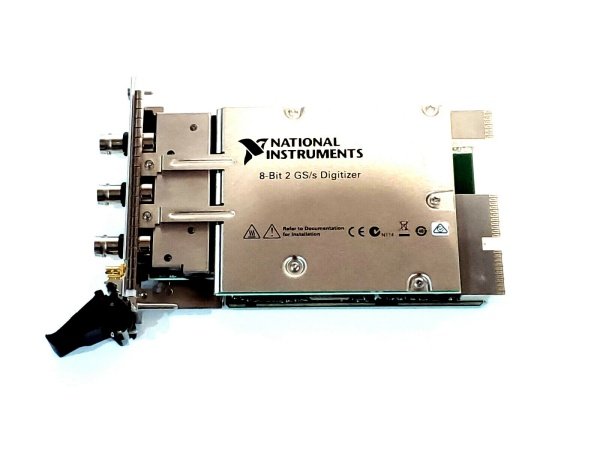
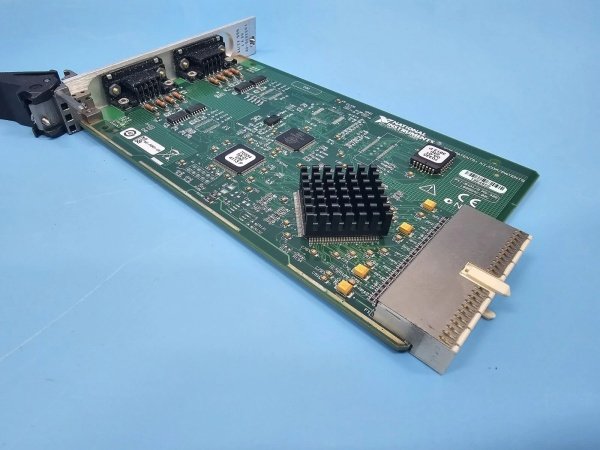
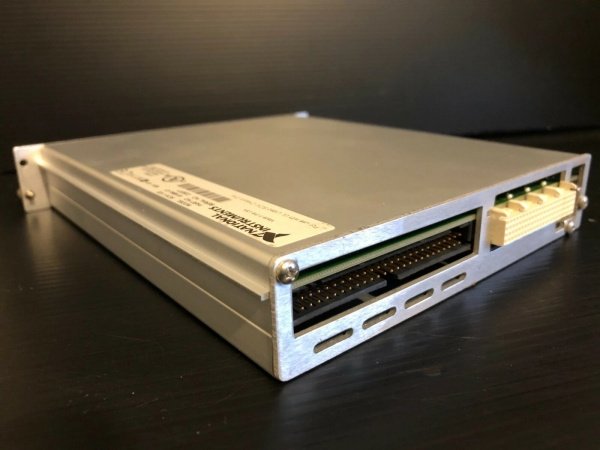
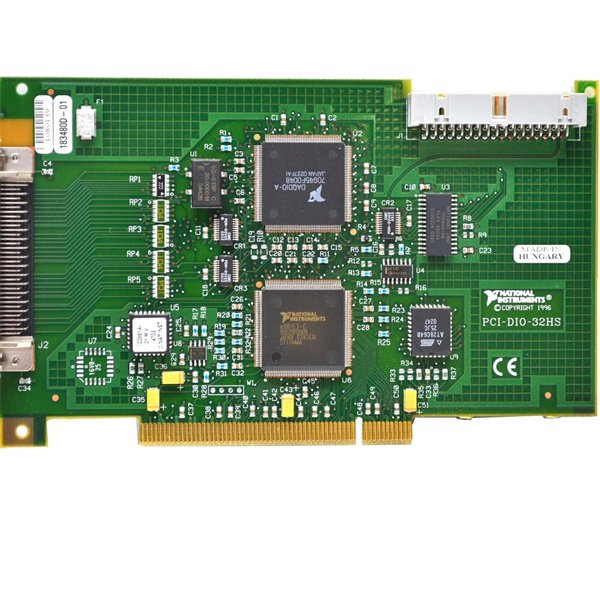
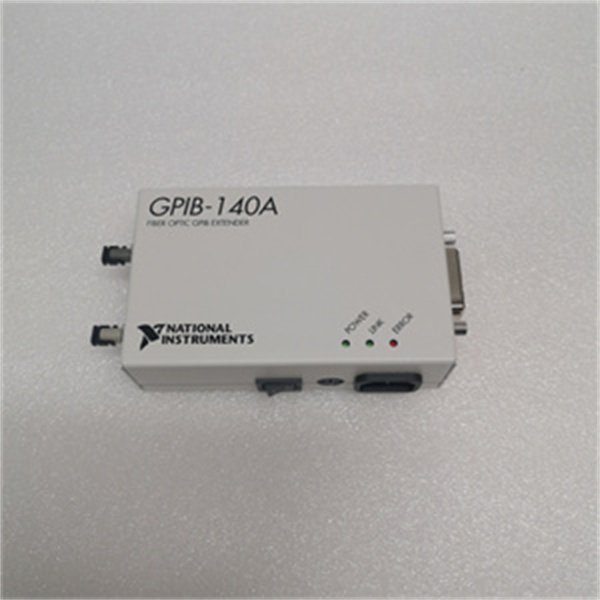
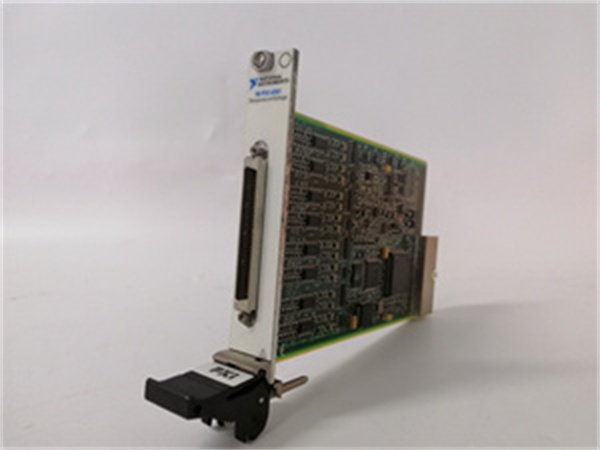
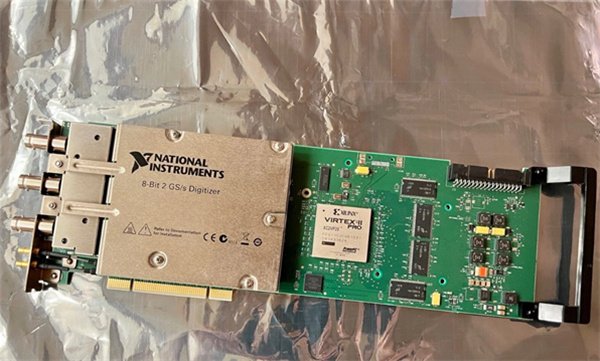
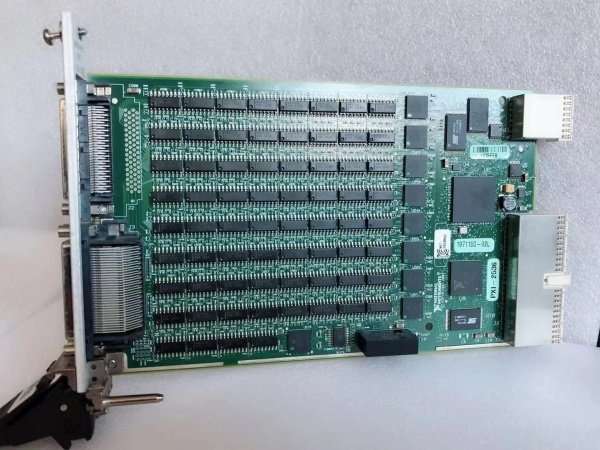
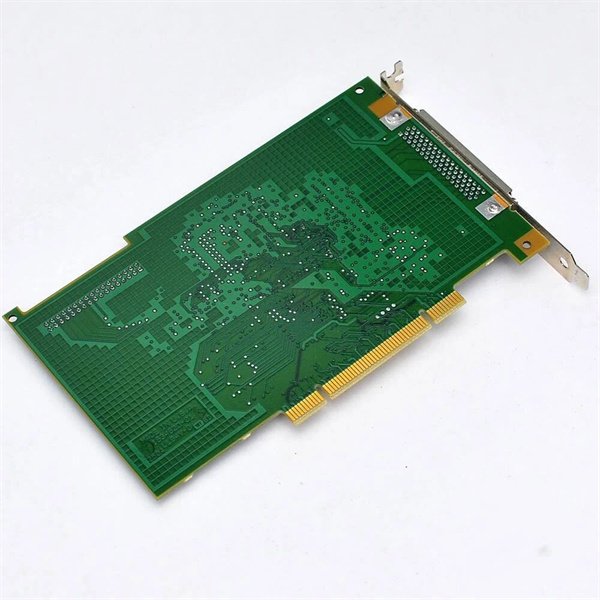
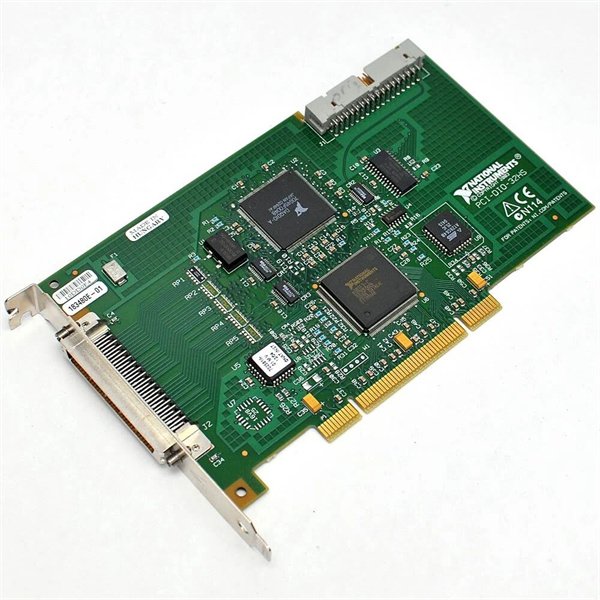
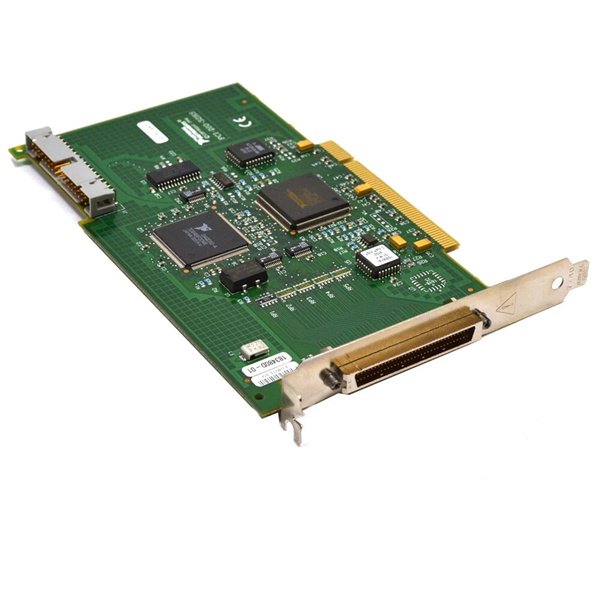
NI PCI-DIO-32HS High-Speed Digital I/O Card
Manufacturer:NI
Product Number:NI PCI-DIO-32HS
Payment Methods:T/T, PayPal, Western Union
Condition:New & In Stock
Warranty:1 Year
Lead Time:1-3 Working Days
Certificate:COO
Courier partners:DHL, UPS, TNT, FedEx and EMS.
Business hours:7*24
Product Description
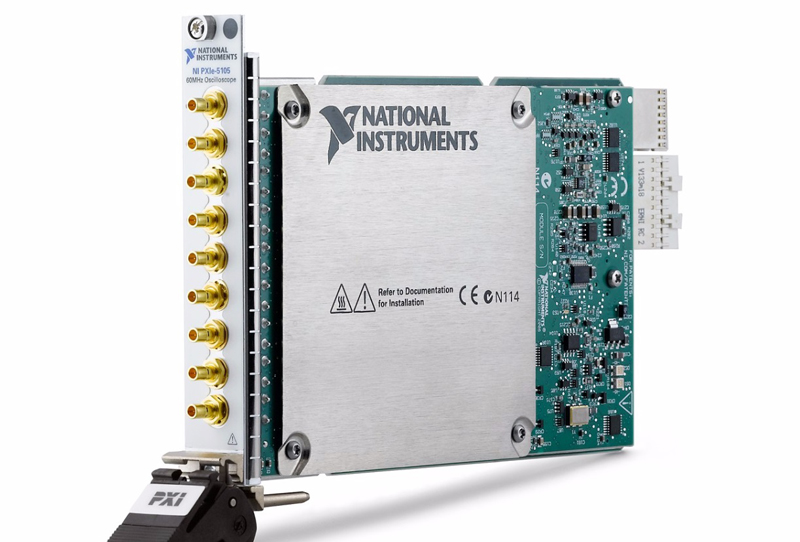
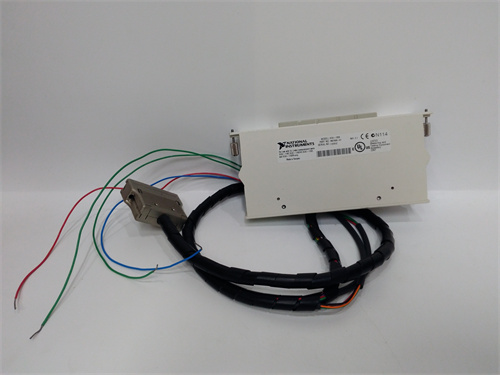
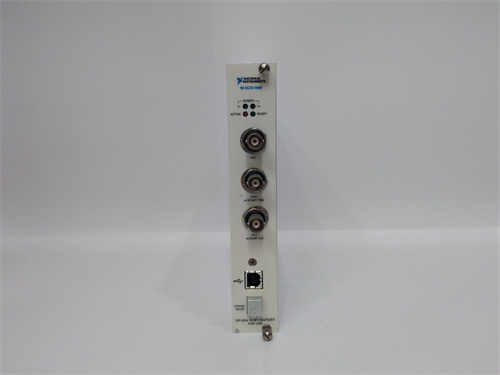
The NI PCI-DIO-32HS is a high-speed digital I/O card developed by National Instruments (NI), belonging to NI’s High-Speed Digital product series—engineered exclusively for fast, reliable digital signal generation and acquisition. Unlike multifunctional DAQ cards such as the NI PCI-DAS160216 (which splits resources between analog and digital tasks), the NI PCI-DIO-32HS is purpose-built for digital workflows: it delivers 32 configurable I/O lines operating at up to 80 MHz, making it indispensable for applications like high-speed pattern testing, real-time industrial control, and digital communication protocol validation.
In automation systems, the NI PCI-DIO-32HS acts as a “digital signal backbone” for high-throughput operations. For example, in a semiconductor chip test setup, it uses 16 lines to generate test patterns (80 MHz) for chip inputs and 16 lines to capture output responses—scatter-gather DMA ensures data is transferred to the host PC at 132 MB/s, eliminating bottlenecks that would slow down testing. Its RTSI bus support also synchronizes with NI PCI-6259 DAQ cards, enabling the NI PCI-DIO-32HS to trigger analog measurements at precise digital signal transitions—critical for validating mixed-signal chips.
Compared to the NI PCI-DAS160216’s digital I/O (limited to lower speeds), the NI PCI-DIO-32HS’s 80 MHz switching frequency and sub-5 ns channel skew ensure precise timing for time-sensitive tasks. This specialization makes it a top choice for industries like aerospace (digital avionics testing) and automotive (high-speed sensor data logging), where digital signal integrity directly impacts product performance.
Detailed parameter table
| Parameter name | Parameter value |
| Product model | NI PCI-DIO-32HS |
| Manufacturer | National Instruments (NI) |
| Product category | High-Speed Digital I/O Card (PCI Interface) |
| Electrical performance | 32 bidirectional digital I/O lines (configurable as input/output per line); Logic levels: 5 V TTL/CMOS; Sink/source current: 24 mA per line; Maximum switching frequency: 80 MHz; Pulse width generation: As low as 12.5 ns |
| Physical size | Dimensions (L×W×H): 175 mm × 106 mm × 20 mm (standard PCI form factor); Weight: Approximately 200 g |
| Interface type | PCI 2.3 compliant (32-bit, 33 MHz); Dual 68-pin SCSI-II connectors (for digital signal I/O); RTSI bus connector (8-line, for multi-device synchronization); 10-pin header (external trigger input) |
| Communication protocol | PCI bus for data transfer; Compatible with NI-DAQmx driver (primary) and Traditional NI-DAQ (legacy); Supports scatter-gather DMA (direct memory access) for high-throughput data; Supports register-level programming and SCPI |
| Environmental requirements | Operating temperature: 0 °C to 55 °C; Storage temperature: -20 °C to 70 °C; Relative humidity: 10% to 90% (non-condensing); Vibration resistance: 2 g (10 Hz to 500 Hz); Shock resistance: 50 g (11 ms half-sine) |
| Installation method | Standard PCI slot mounting (compatible with PCI 2.1/2.2/2.3 chassis); ESD protection (±15 kV air discharge) required during installation; Powered by PCI bus (no external power supply) |
| Performance indicators | Data transfer rate: Up to 132 MB/s (PCI bus limit); Channel-to-channel skew: < 5 ns; Setup time: 10 ns; Hold time: 5 ns; Onboard FIFO buffer: 8 kB (for data preloading); Trigger modes: Edge (rising/falling), level (high/low) |
| Power requirements | Typical power consumption: 8 W (PCI bus); Peak power consumption: 12 W (during 80 MHz full-channel operation) |
| Compatibility |
Supported OS: Windows 7/10/11 (32-bit/64-bit); Compatible software: NI LabVIEW (v2010+), LabWindows/CVI, C/C++,.NET, Python (via NI-DAQmx API); Integrates with NI TestStand for automated digital testing |
Core advantages and technical highlights
80 MHz High-Speed Operation for Time-Sensitive Tasks: The NI PCI-DIO-32HS’s 80 MHz maximum switching frequency is 800× faster than the NI PCI-DAS160216’s typical digital I/O speed—enabling it to handle high-throughput digital workflows. For instance, in a high-speed data logging system for industrial sensors, the NI PCI-DIO-32HS captures 32 channels of digital sensor data at 80 MHz (80 million samples per second), ensuring no data loss during rapid sensor state changes (e.g., 12.5 ns pulse detection). This speed is critical for applications like engine control unit (ECU) testing, where digital signals from 32 sensors must be logged at microsecond intervals to analyze transient behavior.
32 Configurable I/O Lines with Flexible Triggering: The NI PCI-DIO-32HS offers 32 bidirectional lines (configurable per line as input or output), providing greater flexibility than the NI PCI-DAS160216’s fixed 8-input/8-output digital lines. Users can reconfigure lines on the fly via NI-DAQmx—for example, in a test bench for consumer electronics, 16 lines can be set to output (generating USB 2.0 test signals) and 16 lines to input (capturing device responses) during one test, then reconfigured to 24 input/8 output for HDMI protocol testing the next. Its versatile triggering (edge/level) also lets users start/stop I/O operations based on external events (e.g., a sensor’s “ready” signal), reducing unnecessary data capture and optimizing system efficiency.
Scatter-Gather DMA for Uninterrupted Data Transfer: Unlike the NI PCI-DAS160216’s basic DMA, the NI PCI-DIO-32HS uses scatter-gather DMA to transfer non-contiguous data blocks directly to/from system memory—reducing CPU load by 70% during high-speed operations. In a digital communication test setup, for example, the NI PCI-DIO-32HS generates 80 MHz Ethernet test frames (stored in non-contiguous memory buffers) and sends them to a device under test (DUT) via scatter-gather DMA. The CPU is free to analyze DUT responses in parallel, rather than managing data transfer—cutting test time by 40% compared to software-based data handling.
Sub-5 ns Channel Skew for Precise Timing Alignment: The NI PCI-DIO-32HS’s channel-to-channel skew of < 5 ns ensures all 32 digital lines switch in near-perfect synchronization—far better than the NI PCI-DAS160216’s typical 20+ ns skew. This is critical for applications like digital logic testing, where even small timing differences can cause false test results. For example, in a field-programmable gate array (FPGA) validation setup, the NI PCI-DIO-32HS sends 32 parallel test signals to the FPGA with < 5 ns skew, ensuring the FPGA receives all signals at the same time—validating its timing closure and preventing misdiagnosis of logic errors.
Typical application scenarios
In aerospace manufacturing, the NI PCI-DIO-32HS is used for digital avionics control system testing. A test rig uses the card’s 32 digital lines to simulate 32 avionics sensors (e.g., altitude, airspeed) at 80 MHz—generating fast transient signals to mimic in-flight conditions. The NI PCI-DIO-32HS’s scatter-gather DMA logs sensor data to the host PC at 132 MB/s, while its RTSI bus synchronizes with a NI PCI-6259 DAQ card to measure the control system’s analog output (e.g., actuator voltage). This setup validates the control system’s ability to respond to rapid sensor changes (e.g., a 100 µs altitude drop) within aerospace safety standards, with sub-5 ns skew ensuring sensor signals align correctly for realistic testing.
In automotive electronics, the NI PCI-DIO-32HS powers high-speed ECU (Electronic Control Unit) validation. An automotive test lab uses 16 lines of the NI PCI-DIO-32HS to generate CAN FD (Flexible Data-Rate) protocol signals (80 MHz) to the ECU, and 16 lines to capture the ECU’s digital feedback (e.g., fuel injection commands). The card’s 12.5 ns pulse width generation simulates faulty sensor signals (e.g., a 25 ns glitch in the crankshaft position sensor), testing the ECU’s error-handling capabilities. LabVIEW integration lets engineers automate 1,000+ test cases, with the NI PCI-DIO-32HS’s high speed reducing ECU validation time from 48 hours (with the NI PCI-DAS160216) to 8 hours—accelerating time-to-market for new vehicle models.
In academic research, the NI PCI-DIO-32HS supports high-speed digital logic experiments. A university’s electrical engineering lab uses the card to teach students about digital communication protocols (e.g., Ethernet, SPI). Students program the NI PCI-DIO-32HS via LabVIEW to generate 80 MHz SPI signals, then use the card’s input lines to capture and analyze the signals—learning about timing skew, data integrity, and protocol validation. The card’s 32 configurable lines let students experiment with different protocol configurations (e.g., 8-bit vs. 16-bit SPI frames), while its sub-5 ns skew provides hands-on experience with real-world digital signal challenges.
Installation, commissioning and maintenance instructions
Installation preparation: Before installing the NI PCI-DIO-32HS, power off the host PC and confirm an empty PCI 2.1/2.2/2.3 slot. Wear an ESD wristband (±15 kV) and work on a grounded bench to protect the card’s high-speed digital circuits. Insert the NI PCI-DIO-32HS firmly into the slot until the edge connector is fully seated, then secure it with a chassis screw. Connect digital devices (e.g., sensors, test fixtures) to the dual 68-pin SCSI-II connectors using shielded twisted-pair cables (50 Ω impedance-matched) to minimize EMI interference. For RTSI synchronization with other NI devices (e.g., NI PCI-6259), connect an 8-line RTSI cable. Install the latest NI-DAQmx driver, then use NI Measurement & Automation Explorer (MAX) to detect the NI PCI-DIO-32HS and run a self-test (verifying digital I/O functionality, DMA transfer, and trigger response).
Maintenance suggestions: Calibrate the NI PCI-DIO-32HS annually using a NIST-traceable digital signal generator (e.g., NI 5412) to verify timing accuracy (sub-5 ns skew) and pulse width generation (12.5 ns). Inspect the dual 68-pin connectors quarterly: clean contacts with isopropyl alcohol (99.9% purity) and a lint-free cloth to remove dust or oxidation—dirty contacts can cause signal bounce, degrading high-speed performance. If the NI PCI-DIO-32HS experiences data transfer errors, check the PCI slot for dust (clean with compressed air) or update the NI-DAQmx driver to the latest version. Avoid exposing the card to temperatures above 55 °C or humidity above 90%—extreme conditions can degrade the card’s high-speed logic gates. Replace the card’s internal configuration battery (available via NI’s spare parts program) every 5 years to retain I/O line configurations during power outages.
 Loading comments...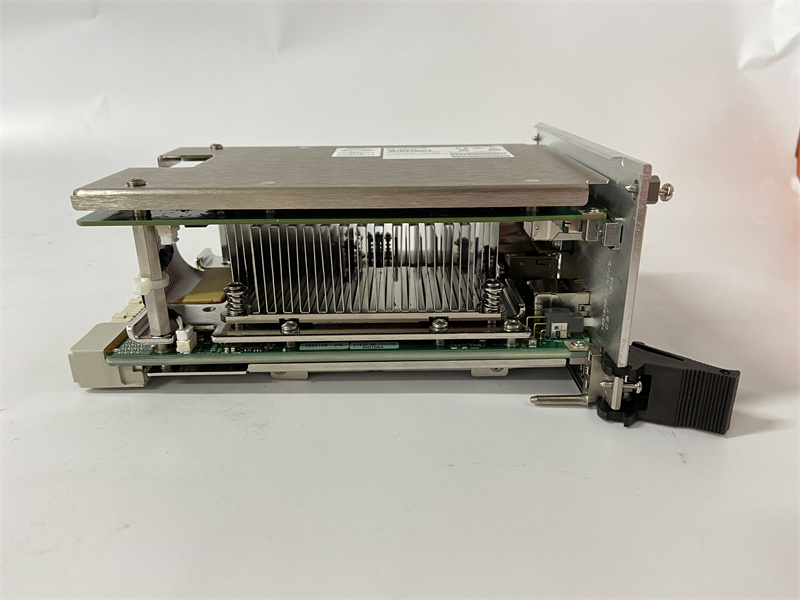
NI PCI-DIO-32HS High-Speed Digital I/O Card
Manufacturer:NI
Product Number:NI PCI-DIO-32HS
Payment Methods:T/T, PayPal, Western Union
Condition:New & In Stock
Warranty:1 Year
Lead Time:1-3 Working Days
Certificate:COO
Courier partners:DHL, UPS, TNT, FedEx and EMS.
Business hours:7*24
Product Description
The NI PCI-DIO-32HS is a high-speed digital I/O card developed by National Instruments (NI), belonging to NI’s High-Speed Digital product series—engineered exclusively for fast, reliable digital signal generation and acquisition. Unlike multifunctional DAQ cards such as the NI PCI-DAS160216 (which splits resources between analog and digital tasks), the NI PCI-DIO-32HS is purpose-built for digital workflows: it delivers 32 configurable I/O lines operating at up to 80 MHz, making it indispensable for applications like high-speed pattern testing, real-time industrial control, and digital communication protocol validation.
In automation systems, the NI PCI-DIO-32HS acts as a “digital signal backbone” for high-throughput operations. For example, in a semiconductor chip test setup, it uses 16 lines to generate test patterns (80 MHz) for chip inputs and 16 lines to capture output responses—scatter-gather DMA ensures data is transferred to the host PC at 132 MB/s, eliminating bottlenecks that would slow down testing. Its RTSI bus support also synchronizes with NI PCI-6259 DAQ cards, enabling the NI PCI-DIO-32HS to trigger analog measurements at precise digital signal transitions—critical for validating mixed-signal chips.
Compared to the NI PCI-DAS160216’s digital I/O (limited to lower speeds), the NI PCI-DIO-32HS’s 80 MHz switching frequency and sub-5 ns channel skew ensure precise timing for time-sensitive tasks. This specialization makes it a top choice for industries like aerospace (digital avionics testing) and automotive (high-speed sensor data logging), where digital signal integrity directly impacts product performance.
Detailed parameter table
| Parameter name | Parameter value |
| Product model | NI PCI-DIO-32HS |
| Manufacturer | National Instruments (NI) |
| Product category | High-Speed Digital I/O Card (PCI Interface) |
| Electrical performance | 32 bidirectional digital I/O lines (configurable as input/output per line); Logic levels: 5 V TTL/CMOS; Sink/source current: 24 mA per line; Maximum switching frequency: 80 MHz; Pulse width generation: As low as 12.5 ns |
| Physical size | Dimensions (L×W×H): 175 mm × 106 mm × 20 mm (standard PCI form factor); Weight: Approximately 200 g |
| Interface type | PCI 2.3 compliant (32-bit, 33 MHz); Dual 68-pin SCSI-II connectors (for digital signal I/O); RTSI bus connector (8-line, for multi-device synchronization); 10-pin header (external trigger input) |
| Communication protocol | PCI bus for data transfer; Compatible with NI-DAQmx driver (primary) and Traditional NI-DAQ (legacy); Supports scatter-gather DMA (direct memory access) for high-throughput data; Supports register-level programming and SCPI |
| Environmental requirements | Operating temperature: 0 °C to 55 °C; Storage temperature: -20 °C to 70 °C; Relative humidity: 10% to 90% (non-condensing); Vibration resistance: 2 g (10 Hz to 500 Hz); Shock resistance: 50 g (11 ms half-sine) |
| Installation method | Standard PCI slot mounting (compatible with PCI 2.1/2.2/2.3 chassis); ESD protection (±15 kV air discharge) required during installation; Powered by PCI bus (no external power supply) |
| Performance indicators | Data transfer rate: Up to 132 MB/s (PCI bus limit); Channel-to-channel skew: < 5 ns; Setup time: 10 ns; Hold time: 5 ns; Onboard FIFO buffer: 8 kB (for data preloading); Trigger modes: Edge (rising/falling), level (high/low) |
| Power requirements | Typical power consumption: 8 W (PCI bus); Peak power consumption: 12 W (during 80 MHz full-channel operation) |
| Compatibility |
Supported OS: Windows 7/10/11 (32-bit/64-bit); Compatible software: NI LabVIEW (v2010+), LabWindows/CVI, C/C++,.NET, Python (via NI-DAQmx API); Integrates with NI TestStand for automated digital testing |
Core advantages and technical highlights
80 MHz High-Speed Operation for Time-Sensitive Tasks: The NI PCI-DIO-32HS’s 80 MHz maximum switching frequency is 800× faster than the NI PCI-DAS160216’s typical digital I/O speed—enabling it to handle high-throughput digital workflows. For instance, in a high-speed data logging system for industrial sensors, the NI PCI-DIO-32HS captures 32 channels of digital sensor data at 80 MHz (80 million samples per second), ensuring no data loss during rapid sensor state changes (e.g., 12.5 ns pulse detection). This speed is critical for applications like engine control unit (ECU) testing, where digital signals from 32 sensors must be logged at microsecond intervals to analyze transient behavior.
32 Configurable I/O Lines with Flexible Triggering: The NI PCI-DIO-32HS offers 32 bidirectional lines (configurable per line as input or output), providing greater flexibility than the NI PCI-DAS160216’s fixed 8-input/8-output digital lines. Users can reconfigure lines on the fly via NI-DAQmx—for example, in a test bench for consumer electronics, 16 lines can be set to output (generating USB 2.0 test signals) and 16 lines to input (capturing device responses) during one test, then reconfigured to 24 input/8 output for HDMI protocol testing the next. Its versatile triggering (edge/level) also lets users start/stop I/O operations based on external events (e.g., a sensor’s “ready” signal), reducing unnecessary data capture and optimizing system efficiency.
Scatter-Gather DMA for Uninterrupted Data Transfer: Unlike the NI PCI-DAS160216’s basic DMA, the NI PCI-DIO-32HS uses scatter-gather DMA to transfer non-contiguous data blocks directly to/from system memory—reducing CPU load by 70% during high-speed operations. In a digital communication test setup, for example, the NI PCI-DIO-32HS generates 80 MHz Ethernet test frames (stored in non-contiguous memory buffers) and sends them to a device under test (DUT) via scatter-gather DMA. The CPU is free to analyze DUT responses in parallel, rather than managing data transfer—cutting test time by 40% compared to software-based data handling.
Sub-5 ns Channel Skew for Precise Timing Alignment: The NI PCI-DIO-32HS’s channel-to-channel skew of < 5 ns ensures all 32 digital lines switch in near-perfect synchronization—far better than the NI PCI-DAS160216’s typical 20+ ns skew. This is critical for applications like digital logic testing, where even small timing differences can cause false test results. For example, in a field-programmable gate array (FPGA) validation setup, the NI PCI-DIO-32HS sends 32 parallel test signals to the FPGA with < 5 ns skew, ensuring the FPGA receives all signals at the same time—validating its timing closure and preventing misdiagnosis of logic errors.
Typical application scenarios
In aerospace manufacturing, the NI PCI-DIO-32HS is used for digital avionics control system testing. A test rig uses the card’s 32 digital lines to simulate 32 avionics sensors (e.g., altitude, airspeed) at 80 MHz—generating fast transient signals to mimic in-flight conditions. The NI PCI-DIO-32HS’s scatter-gather DMA logs sensor data to the host PC at 132 MB/s, while its RTSI bus synchronizes with a NI PCI-6259 DAQ card to measure the control system’s analog output (e.g., actuator voltage). This setup validates the control system’s ability to respond to rapid sensor changes (e.g., a 100 µs altitude drop) within aerospace safety standards, with sub-5 ns skew ensuring sensor signals align correctly for realistic testing.
In automotive electronics, the NI PCI-DIO-32HS powers high-speed ECU (Electronic Control Unit) validation. An automotive test lab uses 16 lines of the NI PCI-DIO-32HS to generate CAN FD (Flexible Data-Rate) protocol signals (80 MHz) to the ECU, and 16 lines to capture the ECU’s digital feedback (e.g., fuel injection commands). The card’s 12.5 ns pulse width generation simulates faulty sensor signals (e.g., a 25 ns glitch in the crankshaft position sensor), testing the ECU’s error-handling capabilities. LabVIEW integration lets engineers automate 1,000+ test cases, with the NI PCI-DIO-32HS’s high speed reducing ECU validation time from 48 hours (with the NI PCI-DAS160216) to 8 hours—accelerating time-to-market for new vehicle models.
In academic research, the NI PCI-DIO-32HS supports high-speed digital logic experiments. A university’s electrical engineering lab uses the card to teach students about digital communication protocols (e.g., Ethernet, SPI). Students program the NI PCI-DIO-32HS via LabVIEW to generate 80 MHz SPI signals, then use the card’s input lines to capture and analyze the signals—learning about timing skew, data integrity, and protocol validation. The card’s 32 configurable lines let students experiment with different protocol configurations (e.g., 8-bit vs. 16-bit SPI frames), while its sub-5 ns skew provides hands-on experience with real-world digital signal challenges.
Installation, commissioning and maintenance instructions
Installation preparation: Before installing the NI PCI-DIO-32HS, power off the host PC and confirm an empty PCI 2.1/2.2/2.3 slot. Wear an ESD wristband (±15 kV) and work on a grounded bench to protect the card’s high-speed digital circuits. Insert the NI PCI-DIO-32HS firmly into the slot until the edge connector is fully seated, then secure it with a chassis screw. Connect digital devices (e.g., sensors, test fixtures) to the dual 68-pin SCSI-II connectors using shielded twisted-pair cables (50 Ω impedance-matched) to minimize EMI interference. For RTSI synchronization with other NI devices (e.g., NI PCI-6259), connect an 8-line RTSI cable. Install the latest NI-DAQmx driver, then use NI Measurement & Automation Explorer (MAX) to detect the NI PCI-DIO-32HS and run a self-test (verifying digital I/O functionality, DMA transfer, and trigger response).
Maintenance suggestions: Calibrate the NI PCI-DIO-32HS annually using a NIST-traceable digital signal generator (e.g., NI 5412) to verify timing accuracy (sub-5 ns skew) and pulse width generation (12.5 ns). Inspect the dual 68-pin connectors quarterly: clean contacts with isopropyl alcohol (99.9% purity) and a lint-free cloth to remove dust or oxidation—dirty contacts can cause signal bounce, degrading high-speed performance. If the NI PCI-DIO-32HS experiences data transfer errors, check the PCI slot for dust (clean with compressed air) or update the NI-DAQmx driver to the latest version. Avoid exposing the card to temperatures above 55 °C or humidity above 90%—extreme conditions can degrade the card’s high-speed logic gates. Replace the card’s internal configuration battery (available via NI’s spare parts program) every 5 years to retain I/O line configurations during power outages.
Need a Custom Automation Solution?
Our team of experts can design and implement a tailored automation system to meet your specific requirements.