
Our Products
Comprehensive industrial automation solutions for global industries
Contact us
If you are interested in our products and want to know more details,please Contact us,we will reply you as soon as we can.
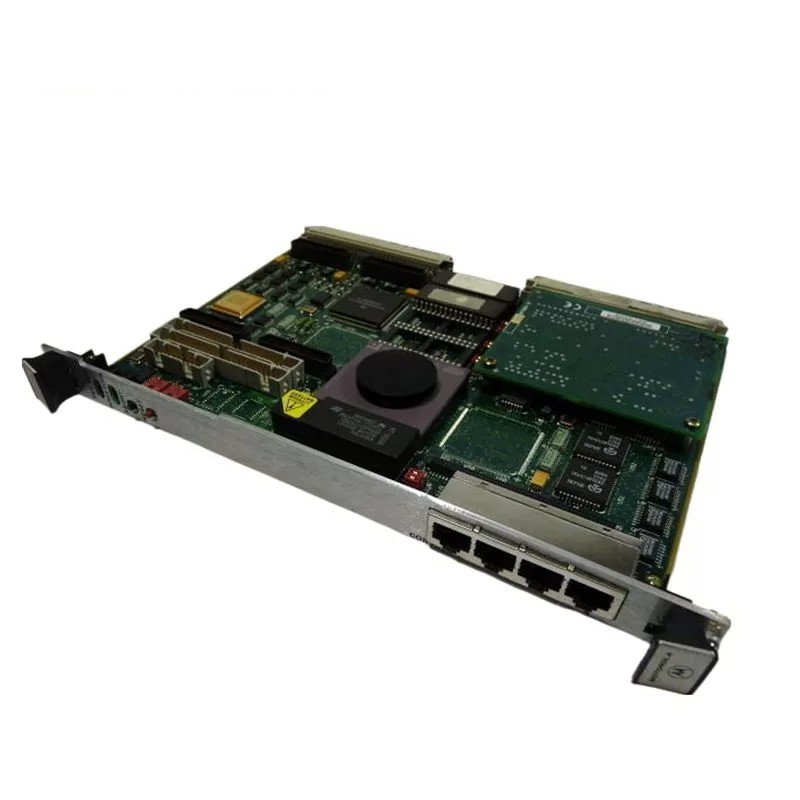
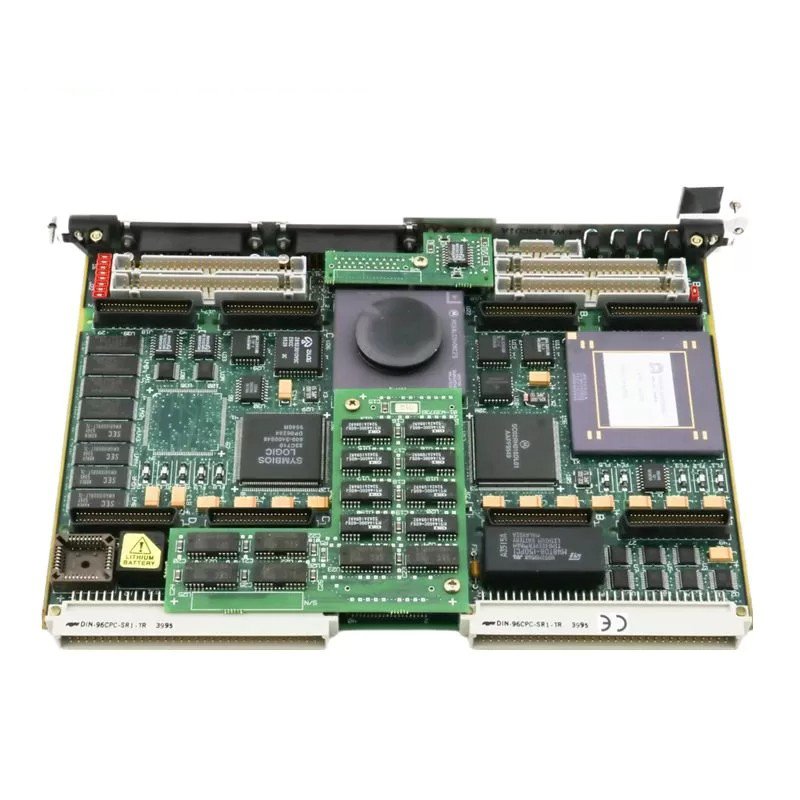
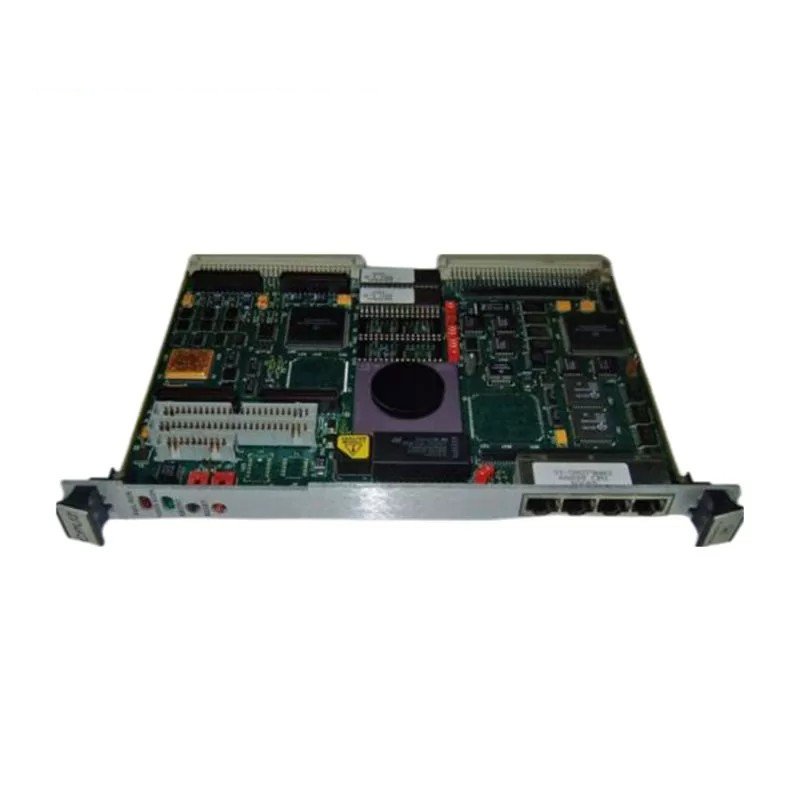
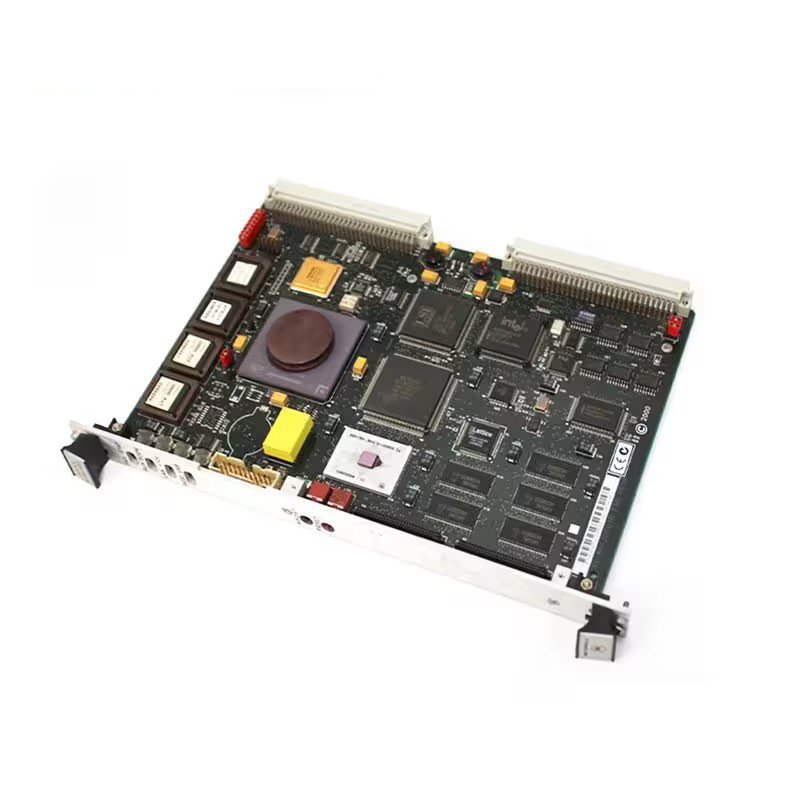
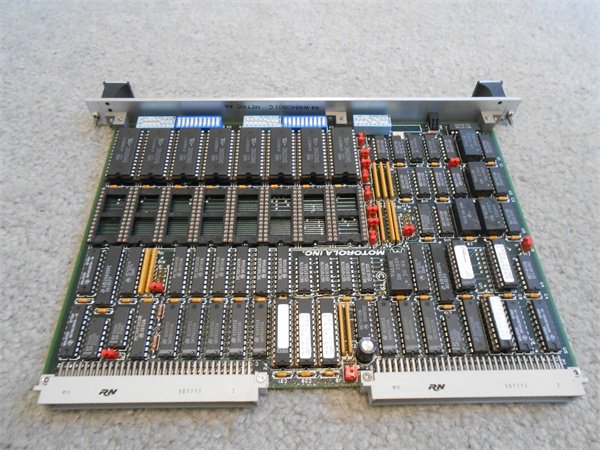
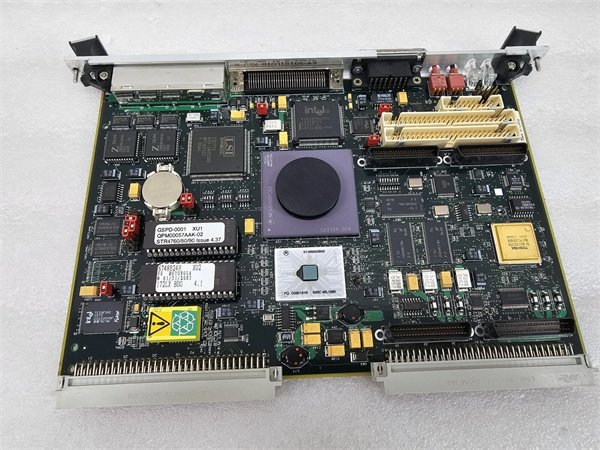
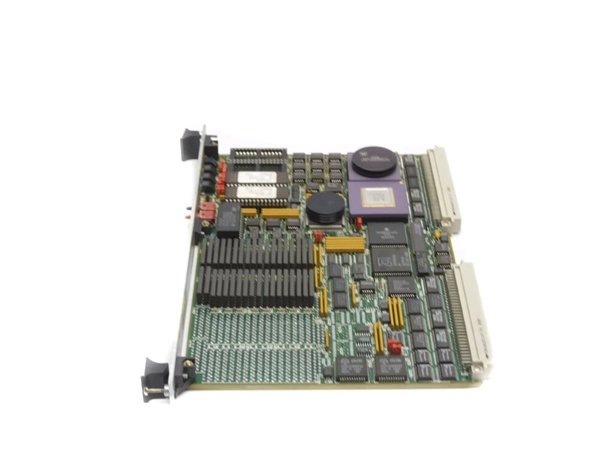
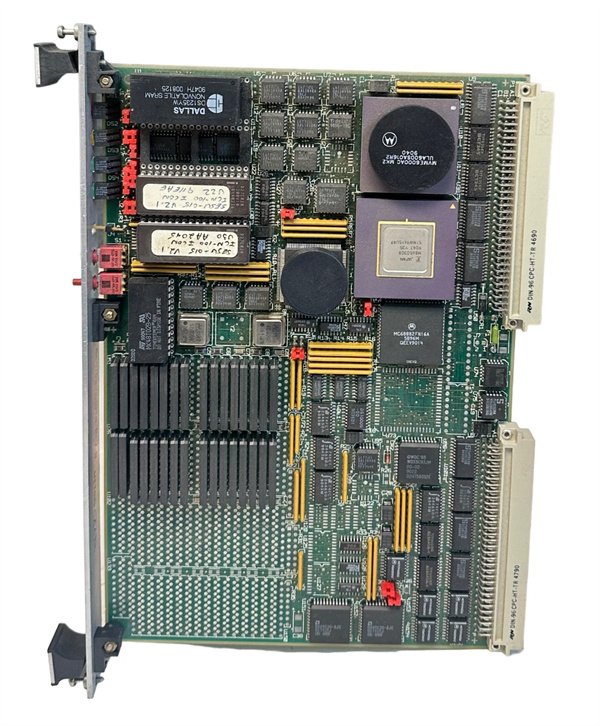
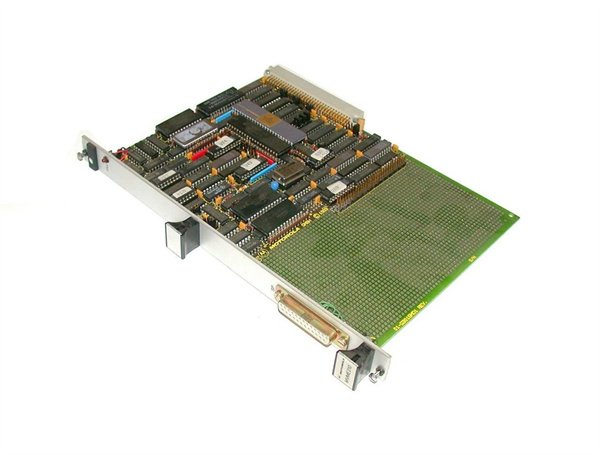
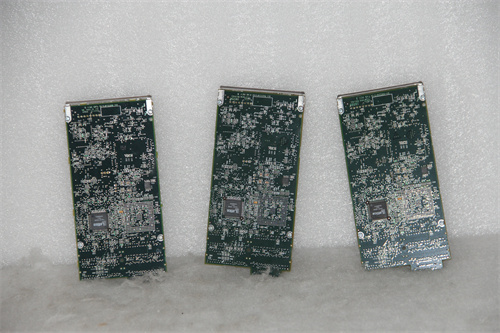
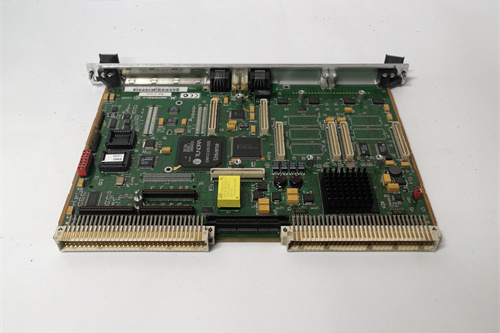
Motorola MVME310 Single-Board Computer
Manufacturer: Motorola (Emerson)
Product Number: MVME310
Category: Entry-Level VMEbus Single-Board Computer
Form Factor: VMEbus
Era: 1980s
Application: Basic industrial control functionality at a lower cost than later MVME167 series
Product Description
The Motorola MVME310 is an entry-level VMEbus single-board computer (SBC) developed by Motorola in the 1980s—engineered to deliver basic industrial control functionality at a lower cost than the later Motorola MVME167 series. Unlike the more powerful Motorola MVME167-033A (with MC68030 CPU and expanded memory), Motorola MVME310 targets small-scale, budget-constrained applications: simple sensor monitoring (e.g., temperature/pressure), basic machine control (e.g., on/off valve actuation), and legacy small-system retrofits where advanced features like Ethernet or FPU are unnecessary.
A key value of Motorola MVME310 is its role as a “foundational SBC” for ultra-simple industrial tasks. For users operating 1980s-era small factories, rural utility pump stations, or vintage test equipment, Motorola MVME310 provides reliable control without the expense of the MVME167 series. Its compact 3U form factor fits into space-constrained cabinets (e.g., solar-powered remote stations), while its compatibility with the Motorola MVME350 I/O module allows optional expansion (e.g., adding SCSI storage or extra serial ports) for growing needs. Even today, Motorola MVME310 remains in service because replacing the systems it powers—like a 1990s-era conveyor belt controller—would cost 10x more than maintaining this legacy SBC with specialized support.
Detailed parameter table
| Parameter name | Parameter value |
| Product model | Motorola MVME310 |
| Manufacturer | Motorola (now supported under Emerson’s industrial portfolio) |
| Product category | Entry-Level VMEbus Single-Board Computer (SBC) for Basic Industrial Control |
| Processor Architecture | Motorola MC68020 16 MHz CISC CPU; no floating-point coprocessor (FPU); 16/32-bit data handling |
| Memory Configuration | 2 MB base DRAM (expandable to 8 MB via single SIMM slot); 256 KB EPROM (firmware/OS); 32 KB SRAM with 5-year lithium battery backup |
| VMEbus Compliance | VMEbus Revision C; 16/32-bit address/data bus (slave-only operation); maximum transfer rate: 8 MB/s |
| I/O Interfaces | 1x RS-232 serial port (DB9, 9600–38.4 kbps); 1x parallel port (Centronics, basic peripheral support); No Ethernet/SCSI/VGA ports (cost-optimized) |
| Power Requirements | +5 VDC @ 1.2 A (main power); +12 VDC @ 0.2 A; Power consumption: ~6 W (typical, 40% lower than MVME167-033A) |
| Physical Dimensions | 3U VMEbus form factor (compact PCB): 100 mm (H) × 220 mm (D); weight: ~280 g; no conformal coating (standard variant) |
| Environmental Ratings | Operating temperature: 5 °C to +50 °C (32 °F to 122 °F); Storage temperature: -40 °C to +85 °C (-40 °F to 185 °F); Shock resistance: 25 g peak (11 ms, IEC 60068-2-27); Vibration resistance: 4 g (10–2000 Hz, IEC 60068-2-6); Relative humidity: 10%–90% (non-condensing) |
| Supported Operating Systems | VxWorks 3.x (lightweight legacy kernel); OS-9/68K (basic industrial variant); Custom 8-bit RTOS for simple control loops |
| Safety & Compliance | UL 1950 (early version); CSA C22.2 No. 950; EN 60950 (retroactive compliance); FCC Class A (basic EMC); RoHS 3 (retroactive compliance) |
| Diagnostic Features | 1 LED status indicator (power/fault: green = normal, red = fault); No built-in self-test (BIST); Manual diagnostic via serial terminal |
| Compatible Modules |
Motorola MVME350 (I/O expansion); National Instruments VME-6500 (digital I/O); Phoenix Contact VME power modules |
Core advantages and technical highlights
Cost-Optimized for Budget-Constrained Small Systems: Motorola MVME310 is 30% less expensive than the entry-level Motorola MVME167-033A, making it ideal for small businesses or rural utilities with limited budgets. A 1989 small-scale plastic injection molding shop uses Motorola MVME310 to control a single extruder: the SBC monitors a temperature sensor (via serial port) and triggers a relay (via parallel port) to adjust heating elements. The shop avoids the MVME167-033A’s $400 premium (for unused FPU and memory) and fits the SBC into its $800 annual equipment budget—critical for a business operating on thin margins.
Ultra-Low 6 W Power Draw for Energy-Sensitive Setups: With a power consumption of ~6 W (40% lower than the Motorola MVME167-033A), Motorola MVME310 is ideal for solar-powered or battery-backed remote systems. A rural water district deploys Motorola MVME310 in a remote well pump station: powered by a 20 W solar panel and 12 Ah battery, the SBC runs continuously for 10 days without sunlight—double the runtime of the MVME167-033A. This eliminates the need for frequent battery replacements (costing $150 per visit) and ensures reliable pump control in off-grid locations.
Compact 3U Design for Space-Constrained Cabinets: Unlike the 6U Motorola MVME167 series, Motorola MVME310 uses a compact 3U form factor, fitting into narrow cabinets or small enclosures. A 1990s-era laboratory uses the SBC in a portable environmental test chamber: the 3U size allows the SBC to be mounted alongside a small VME I/O module (for humidity sensors) in a cabinet smaller than a briefcase—space too tight for the 6U MVME167-033A. This portability enables the lab to conduct on-site testing at client facilities, expanding its service offerings and generating $20k annually in new revenue.
Compatibility with Motorola MVME350 for Optional Expansion: Motorola MVME310 works seamlessly with the Motorola MVME350 I/O module, allowing users to add peripherals (SCSI storage, extra serial ports) as needs grow—without replacing the SBC. A small electronics manufacturer starts with Motorola MVME310 to control a simple assembly line, then adds a Motorola MVME350 to connect a SCSI hard drive (for data logging) and a second serial port (for a barcode scanner). This phased expansion saves the manufacturer $1,200 vs. upgrading to the MVME167 series outright, while still meeting evolving production needs.
Typical application scenarios
In rural utility control, a small county uses Motorola MVME310 to monitor a network of 10 remote water well pumps. Each SBC is mounted in a 3U VME chassis (paired with a basic digital I/O module) and powered by a 20 W solar panel. Motorola MVME310 polls a pressure sensor (via serial port) every 500 ms and logs data to its 256 KB EPROM; if pressure drops below a threshold, it triggers a local alarm (via parallel port). The county avoids the MVME167-033A’s higher cost, deploying 10 MVME310 units for $3k total (vs. $5k for 10 MVME167 units). For sites needing more features (e.g., data storage), the county adds Motorola MVME350 modules, ensuring scalability without full system replacement.
In vintage laboratory testing, a museum of industrial technology uses Motorola MVME310 to operate a 1985-era material stress test machine. The SBC runs a custom 8-bit RTOS that controls the machine’s hydraulic pressure (via parallel port) and logs test data (via serial port) to a tape drive. Its 3U size fits into the machine’s original control cabinet, preserving historical accuracy, while its low power draw (6 W) matches the machine’s vintage power supply. The MVME167 series would be overkill here—too large and powerful for the machine’s simple control needs—making Motorola MVME310 the only viable option for maintaining the exhibit.
Installation, commissioning and maintenance instructions
Installation preparation: Before installing Motorola MVME310, power off the 3U VMEbus chassis and wear an ESD wristband. Ensure the chassis supports VMEbus Revision C and has a free slot (2-slot chassis recommended for pairing with Motorola MVME350). Gather tools: basic screwdriver (no torque tool needed for compact mounting), RS-232 serial cable (DB9-DB9), and a multimeter (verify power: +5 VDC ±10%, +12 VDC ±15%). For solar-powered systems, pair with a 12 VDC-to-5 VDC converter (e.g., Phoenix Contact MINI-PS-12-5) to match battery voltage. When using with Motorola MVME350, set the MVME310’s VME address to 0x08 (to avoid conflicts with the module’s default 0x10 address).
Maintenance suggestions: Conduct annual maintenance on Motorola MVME310 (simple design requires minimal upkeep): 1) Check the single LED—green = normal, red = power or memory issue; 2) Wipe dust from the PCB with a dry cloth (compressed air may damage compact components); 3) Test battery-backed SRAM by powering off for 24 hours (replace lithium battery every 4–5 years with Emerson part number 50001459-014). For troubleshooting, use a serial terminal (9600 baud) to send manual diagnostic commands; if the SBC fails to respond, check power connections first (most common issue). When expanding with Motorola MVME350, verify VME address settings to ensure communication between the two modules.
 Loading comments...

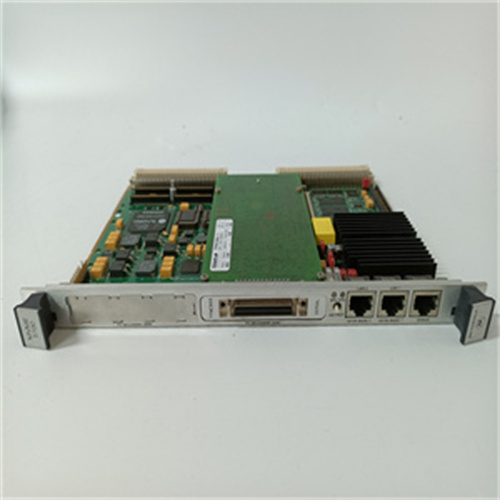
Motorola MVME310 Single-Board Computer
Manufacturer: Motorola (Emerson)
Product Number: MVME310
Category: Entry-Level VMEbus Single-Board Computer
Form Factor: VMEbus
Era: 1980s
Application: Basic industrial control functionality at a lower cost than later MVME167 series
Product Description
The Motorola MVME310 is an entry-level VMEbus single-board computer (SBC) developed by Motorola in the 1980s—engineered to deliver basic industrial control functionality at a lower cost than the later Motorola MVME167 series. Unlike the more powerful Motorola MVME167-033A (with MC68030 CPU and expanded memory), Motorola MVME310 targets small-scale, budget-constrained applications: simple sensor monitoring (e.g., temperature/pressure), basic machine control (e.g., on/off valve actuation), and legacy small-system retrofits where advanced features like Ethernet or FPU are unnecessary.
A key value of Motorola MVME310 is its role as a “foundational SBC” for ultra-simple industrial tasks. For users operating 1980s-era small factories, rural utility pump stations, or vintage test equipment, Motorola MVME310 provides reliable control without the expense of the MVME167 series. Its compact 3U form factor fits into space-constrained cabinets (e.g., solar-powered remote stations), while its compatibility with the Motorola MVME350 I/O module allows optional expansion (e.g., adding SCSI storage or extra serial ports) for growing needs. Even today, Motorola MVME310 remains in service because replacing the systems it powers—like a 1990s-era conveyor belt controller—would cost 10x more than maintaining this legacy SBC with specialized support.
Detailed parameter table
| Parameter name | Parameter value |
| Product model | Motorola MVME310 |
| Manufacturer | Motorola (now supported under Emerson’s industrial portfolio) |
| Product category | Entry-Level VMEbus Single-Board Computer (SBC) for Basic Industrial Control |
| Processor Architecture | Motorola MC68020 16 MHz CISC CPU; no floating-point coprocessor (FPU); 16/32-bit data handling |
| Memory Configuration | 2 MB base DRAM (expandable to 8 MB via single SIMM slot); 256 KB EPROM (firmware/OS); 32 KB SRAM with 5-year lithium battery backup |
| VMEbus Compliance | VMEbus Revision C; 16/32-bit address/data bus (slave-only operation); maximum transfer rate: 8 MB/s |
| I/O Interfaces | 1x RS-232 serial port (DB9, 9600–38.4 kbps); 1x parallel port (Centronics, basic peripheral support); No Ethernet/SCSI/VGA ports (cost-optimized) |
| Power Requirements | +5 VDC @ 1.2 A (main power); +12 VDC @ 0.2 A; Power consumption: ~6 W (typical, 40% lower than MVME167-033A) |
| Physical Dimensions | 3U VMEbus form factor (compact PCB): 100 mm (H) × 220 mm (D); weight: ~280 g; no conformal coating (standard variant) |
| Environmental Ratings | Operating temperature: 5 °C to +50 °C (32 °F to 122 °F); Storage temperature: -40 °C to +85 °C (-40 °F to 185 °F); Shock resistance: 25 g peak (11 ms, IEC 60068-2-27); Vibration resistance: 4 g (10–2000 Hz, IEC 60068-2-6); Relative humidity: 10%–90% (non-condensing) |
| Supported Operating Systems | VxWorks 3.x (lightweight legacy kernel); OS-9/68K (basic industrial variant); Custom 8-bit RTOS for simple control loops |
| Safety & Compliance | UL 1950 (early version); CSA C22.2 No. 950; EN 60950 (retroactive compliance); FCC Class A (basic EMC); RoHS 3 (retroactive compliance) |
| Diagnostic Features | 1 LED status indicator (power/fault: green = normal, red = fault); No built-in self-test (BIST); Manual diagnostic via serial terminal |
| Compatible Modules |
Motorola MVME350 (I/O expansion); National Instruments VME-6500 (digital I/O); Phoenix Contact VME power modules |
Core advantages and technical highlights
Cost-Optimized for Budget-Constrained Small Systems: Motorola MVME310 is 30% less expensive than the entry-level Motorola MVME167-033A, making it ideal for small businesses or rural utilities with limited budgets. A 1989 small-scale plastic injection molding shop uses Motorola MVME310 to control a single extruder: the SBC monitors a temperature sensor (via serial port) and triggers a relay (via parallel port) to adjust heating elements. The shop avoids the MVME167-033A’s $400 premium (for unused FPU and memory) and fits the SBC into its $800 annual equipment budget—critical for a business operating on thin margins.
Ultra-Low 6 W Power Draw for Energy-Sensitive Setups: With a power consumption of ~6 W (40% lower than the Motorola MVME167-033A), Motorola MVME310 is ideal for solar-powered or battery-backed remote systems. A rural water district deploys Motorola MVME310 in a remote well pump station: powered by a 20 W solar panel and 12 Ah battery, the SBC runs continuously for 10 days without sunlight—double the runtime of the MVME167-033A. This eliminates the need for frequent battery replacements (costing $150 per visit) and ensures reliable pump control in off-grid locations.
Compact 3U Design for Space-Constrained Cabinets: Unlike the 6U Motorola MVME167 series, Motorola MVME310 uses a compact 3U form factor, fitting into narrow cabinets or small enclosures. A 1990s-era laboratory uses the SBC in a portable environmental test chamber: the 3U size allows the SBC to be mounted alongside a small VME I/O module (for humidity sensors) in a cabinet smaller than a briefcase—space too tight for the 6U MVME167-033A. This portability enables the lab to conduct on-site testing at client facilities, expanding its service offerings and generating $20k annually in new revenue.
Compatibility with Motorola MVME350 for Optional Expansion: Motorola MVME310 works seamlessly with the Motorola MVME350 I/O module, allowing users to add peripherals (SCSI storage, extra serial ports) as needs grow—without replacing the SBC. A small electronics manufacturer starts with Motorola MVME310 to control a simple assembly line, then adds a Motorola MVME350 to connect a SCSI hard drive (for data logging) and a second serial port (for a barcode scanner). This phased expansion saves the manufacturer $1,200 vs. upgrading to the MVME167 series outright, while still meeting evolving production needs.
Typical application scenarios
In rural utility control, a small county uses Motorola MVME310 to monitor a network of 10 remote water well pumps. Each SBC is mounted in a 3U VME chassis (paired with a basic digital I/O module) and powered by a 20 W solar panel. Motorola MVME310 polls a pressure sensor (via serial port) every 500 ms and logs data to its 256 KB EPROM; if pressure drops below a threshold, it triggers a local alarm (via parallel port). The county avoids the MVME167-033A’s higher cost, deploying 10 MVME310 units for $3k total (vs. $5k for 10 MVME167 units). For sites needing more features (e.g., data storage), the county adds Motorola MVME350 modules, ensuring scalability without full system replacement.
In vintage laboratory testing, a museum of industrial technology uses Motorola MVME310 to operate a 1985-era material stress test machine. The SBC runs a custom 8-bit RTOS that controls the machine’s hydraulic pressure (via parallel port) and logs test data (via serial port) to a tape drive. Its 3U size fits into the machine’s original control cabinet, preserving historical accuracy, while its low power draw (6 W) matches the machine’s vintage power supply. The MVME167 series would be overkill here—too large and powerful for the machine’s simple control needs—making Motorola MVME310 the only viable option for maintaining the exhibit.
Installation, commissioning and maintenance instructions
Installation preparation: Before installing Motorola MVME310, power off the 3U VMEbus chassis and wear an ESD wristband. Ensure the chassis supports VMEbus Revision C and has a free slot (2-slot chassis recommended for pairing with Motorola MVME350). Gather tools: basic screwdriver (no torque tool needed for compact mounting), RS-232 serial cable (DB9-DB9), and a multimeter (verify power: +5 VDC ±10%, +12 VDC ±15%). For solar-powered systems, pair with a 12 VDC-to-5 VDC converter (e.g., Phoenix Contact MINI-PS-12-5) to match battery voltage. When using with Motorola MVME350, set the MVME310’s VME address to 0x08 (to avoid conflicts with the module’s default 0x10 address).
Maintenance suggestions: Conduct annual maintenance on Motorola MVME310 (simple design requires minimal upkeep): 1) Check the single LED—green = normal, red = power or memory issue; 2) Wipe dust from the PCB with a dry cloth (compressed air may damage compact components); 3) Test battery-backed SRAM by powering off for 24 hours (replace lithium battery every 4–5 years with Emerson part number 50001459-014). For troubleshooting, use a serial terminal (9600 baud) to send manual diagnostic commands; if the SBC fails to respond, check power connections first (most common issue). When expanding with Motorola MVME350, verify VME address settings to ensure communication between the two modules.
Need a Custom Automation Solution?
Our team of experts can design and implement a tailored automation system to meet your specific requirements.