
Our Products
Comprehensive industrial automation solutions for global industries
Contact us
If you are interested in our products and want to know more details,please Contact us,we will reply you as soon as we can.
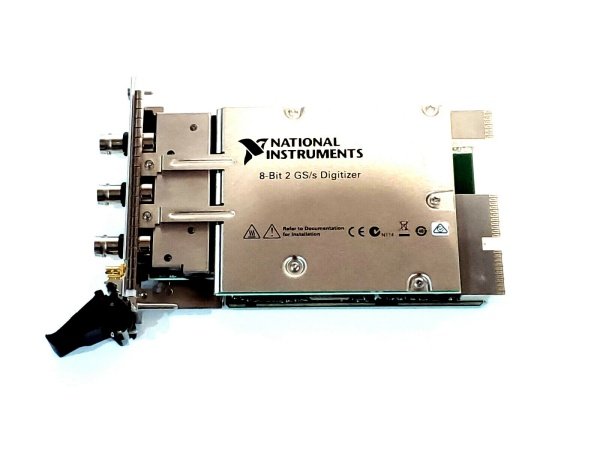
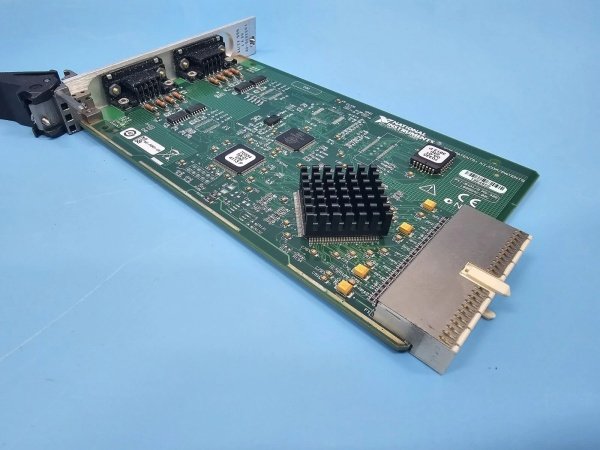
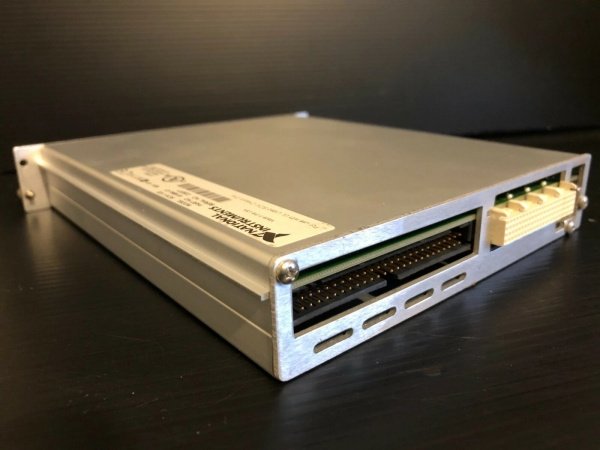
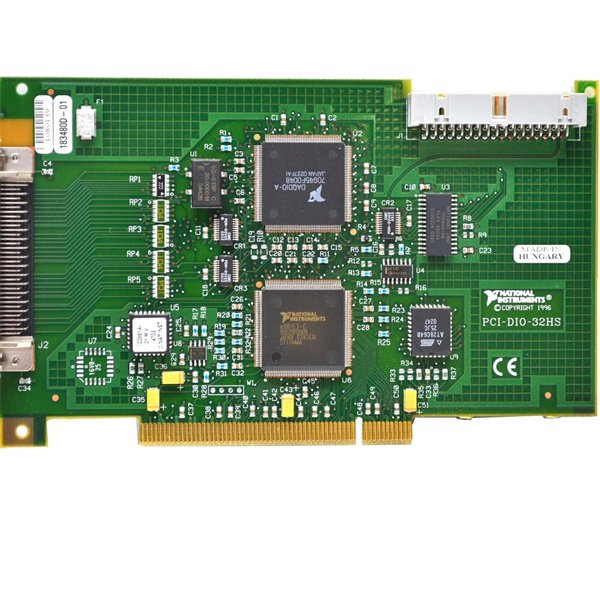
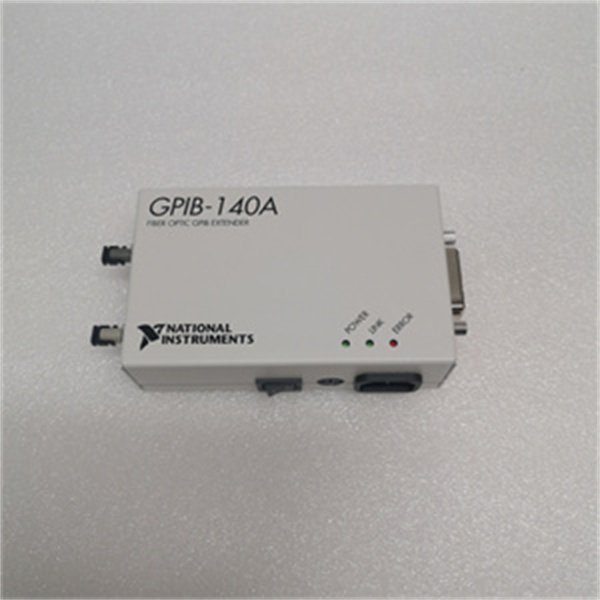
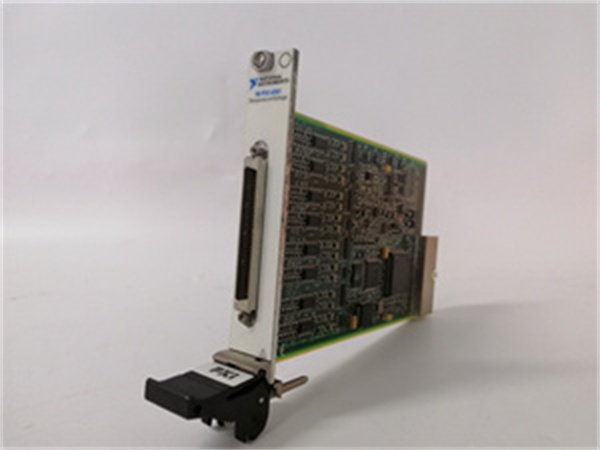
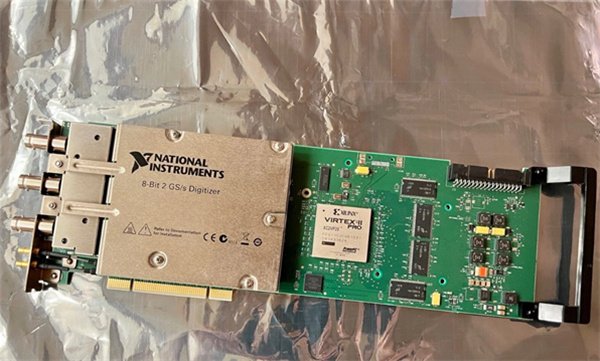
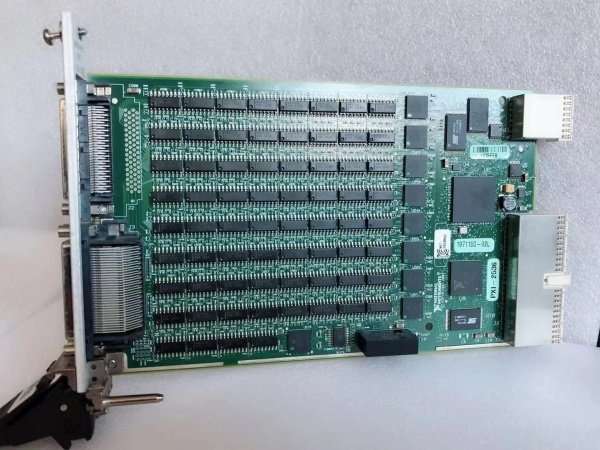
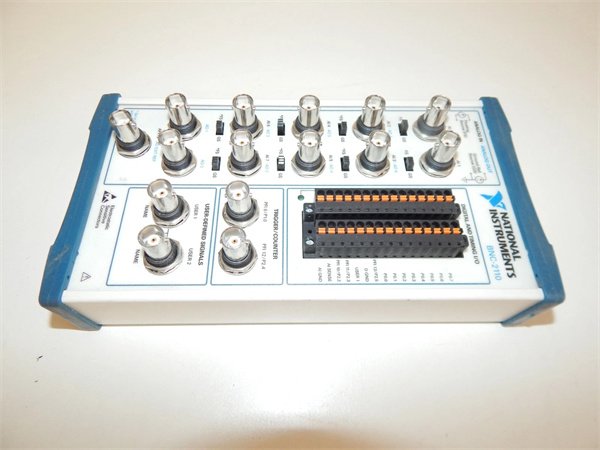
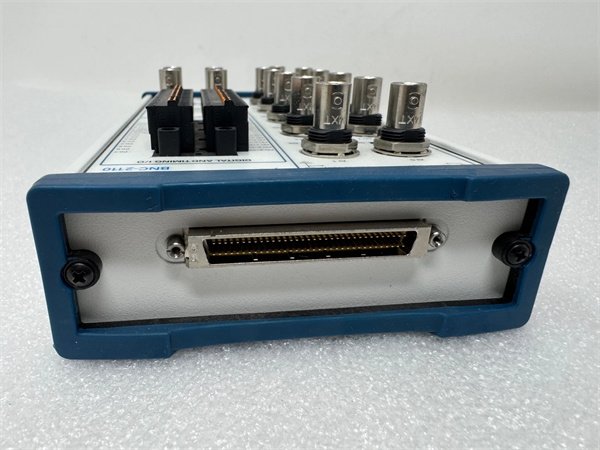
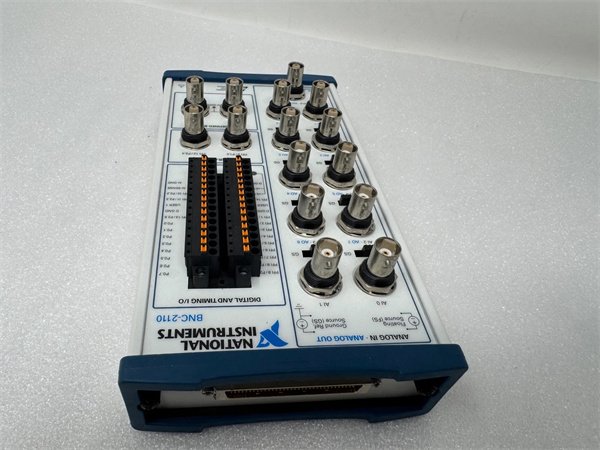
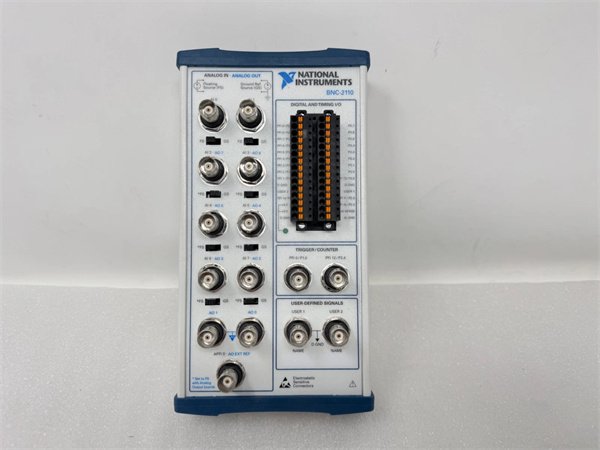
NI BNC2110 BNC Terminal Block
Manufacturer:NI
Product Number:NI BNC2110
Payment Methods:T/T, PayPal, Western Union
Condition:New & In Stock
Warranty:1 Year
Lead Time:1-3 Working Days
Certificate:COO
Courier partners:DHL, UPS, TNT, FedEx and EMS.
Business hours:7*24
Product Description
The National Instruments BNC-2110 is a versatile BNC terminal block designed to simplify signal connection and conditioning for NI data acquisition (DAQ) systems. As a critical interface between sensors, actuators, and NI DAQ devices (such as E-Series, M-Series, and S-Series models), it translates the 68-pin VHDCI connector of DAQ modules into user-friendly BNC ports—eliminating the need for custom wiring and reducing setup time.
Ideal for both laboratory and industrial environments, the BNC-2110 supports a wide range of signal types, including analog input (AI), analog output (AO), digital I/O (DIO), trigger, and clock signals. Its robust design ensures reliable signal integrity, while flexible mounting options (desktop, rack-mount, or bench-top) adapt to diverse workspace needs. Whether used to connect microphones for acoustic testing, thermocouples for temperature monitoring, or function generators for signal stimulation, the BNC-2110 serves as a central hub that streamlines DAQ system integration and enhances usability.Detailed Parameter Table
| Parameter Name | Parameter Value |
| Product Model | BNC-2110 |
| Manufacturer | National Instruments |
| Product Category | BNC Terminal Block (Signal Conditioning/DAQ Interface) |
| Connector Type | 16 BNC female connectors (analog I/O), 2 BNC female connectors (trigger), 1 BNC female connector (clock) |
| Compatible DAQ Modules | NI E-Series, M-Series, S-Series DAQ devices (via 68-pin VHDCI cable) |
| Signal Type Support | Analog input (AI), analog output (AO), digital I/O (DIO), trigger, clock signals |
| Maximum Voltage Rating | ±30 VDC (BNC connectors) |
| Maximum Current Rating | 1 A per channel (power lines), 100 mA per channel (signal lines) |
| Mounting Options | Desktop, rack-mount (with optional rack kit), or bench-top |
| Dimensions (W x H x D) | 254 mm x 102 mm x 229 mm |
| Operating Temperature | 0 °C to 55 °C |
| Storage Temperature | -20 °C to 70 °C |
| Relative Humidity | 10% to 90% non-condensing |
| Compliance Standards | CE, UL 61010-1, CAN/CSA C22.2 No. 61010-1, IEC 61010-1 |
| Included Accessories | 68-pin VHDCI-to-VHDCI cable (1 m), user manual, mounting hardware |
Core advantages and technical highlights
Versatile Signal Compatibility: The BNC-2110 supports multiple signal types—from analog voltages to digital triggers—making it a one-stop solution for mixed-signal DAQ setups. For example, in a vibration testing lab, it can simultaneously connect accelerometers (AI), a shaker controller (AO), and a tachometer (trigger) to an NI M-Series DAQ device. This eliminates the need for multiple terminal blocks, reducing system complexity and cost.
User-Friendly BNC Interface: Unlike the dense 68-pin connectors on DAQ modules, the BNC-2110’s 16 BNC ports are intuitive to use and widely compatible with standard test equipment. Engineers can quickly swap sensors or instruments without specialized tools, cutting down on setup time for iterative tests (e.g., adjusting microphone positions in audio analysis). The color-coded labels on each port also reduce wiring errors, critical for high-precision measurements.
Robust Signal Integrity: With a maximum voltage rating of ±30 VDC and protective design features, the BNC-2110 ensures signals remain stable and free from interference. Its shielded BNC connectors minimize electromagnetic noise (EMI) from nearby power sources or industrial equipment, which is essential for low-level signal measurements (e.g., microvolt-level sensor outputs in environmental monitoring). The terminal block also includes built-in overcurrent protection for power lines, safeguarding both the BNC-2110 and connected DAQ devices.
Flexible Mounting and Portability: The BNC-2110 adapts to different workspaces with ease. It can sit on a benchtop for small-scale lab tests, be rack-mounted (with an optional kit) for industrial control panels, or used as a portable unit for field measurements (e.g., on-site equipment diagnostics). This flexibility makes it suitable for both fixed test stations and mobile DAQ setups, expanding its utility across industries.
Typical application scenarios
Acoustic and Vibration Testing: In automotive NVH (Noise, Vibration, Harshness) labs, the BNC-2110 connects microphones (AI) and accelerometers to an NI S-Series DAQ device. Engineers use it to capture cabin noise and chassis vibrations during road tests, with the BNC-2110’s BNC ports enabling quick reconfiguration of sensor positions. The terminal block’s noise isolation ensures accurate data, helping identify sources of unwanted vibration (e.g., engine mounts or tire imbalance).
Industrial Process Monitoring: In manufacturing plants, the BNC-2110 interfaces with temperature sensors, pressure transducers, and flow meters (all AI signals) to monitor production lines. It connects to an NI E-Series DAQ device, which streams data to a control system for real-time process adjustment. The BNC-2110’s robust design withstands factory conditions (0 °C to 55 °C), while its overcurrent protection prevents damage from electrical surges common in industrial environments.
Educational and Research Labs: In university physics or engineering labs, the BNC-2110 is a teaching tool for introducing DAQ concepts. Students use it to connect function generators (AO), oscilloscopes (trigger), and photodiodes (AI) to an NI M-Series DAQ device, learning to measure and analyze signals like sine waves or light intensity. The intuitive BNC interface reduces the learning curve, allowing students to focus on experiment design rather than wiring.
Installation, commissioning and maintenance instructions
Installation Preparation: Before installing the BNC-2110, ensure the workspace meets its operating temperature (0 °C to 55 °C) and humidity (10% to 90% non-condensing) requirements. Tools needed include a Phillips-head screwdriver (for mounting) and a cable cutter/stripper (if trimming sensor cables). First, connect the included 68-pin VHDCI cable between the BNC-2110 and the compatible DAQ device (e.g., NI USB-6211). Secure the BNC-2110 using the included mounting hardware—either on a benchtop or in a rack (with the optional kit). Finally, connect sensors or instruments to the BNC ports, matching signal types (AI, AO, trigger) to labeled ports to avoid errors.
Maintenance Suggestions: For daily maintenance, inspect the BNC-2110’s connectors for dust, corrosion, or bent pins—clean BNC ports with compressed air or a soft brush if needed. Check the VHDCI cable for fraying or damage, as a faulty cable can cause signal loss. If signals are noisy, verify that BNC connectors are fully tightened (hand-tight only—overtightening can damage ports). For long-term reliability, recalibrate the connected DAQ device annually (per NI guidelines), as the BNC-2110’s performance depends on the DAQ device’s accuracy. Replace any damaged BNC cables or ports promptly to prevent measurement errors.
 Loading comments...
NI BNC2110 BNC Terminal Block
Manufacturer:NI
Product Number:NI BNC2110
Payment Methods:T/T, PayPal, Western Union
Condition:New & In Stock
Warranty:1 Year
Lead Time:1-3 Working Days
Certificate:COO
Courier partners:DHL, UPS, TNT, FedEx and EMS.
Business hours:7*24
Product Description
The National Instruments BNC-2110 is a versatile BNC terminal block designed to simplify signal connection and conditioning for NI data acquisition (DAQ) systems. As a critical interface between sensors, actuators, and NI DAQ devices (such as E-Series, M-Series, and S-Series models), it translates the 68-pin VHDCI connector of DAQ modules into user-friendly BNC ports—eliminating the need for custom wiring and reducing setup time.
Ideal for both laboratory and industrial environments, the BNC-2110 supports a wide range of signal types, including analog input (AI), analog output (AO), digital I/O (DIO), trigger, and clock signals. Its robust design ensures reliable signal integrity, while flexible mounting options (desktop, rack-mount, or bench-top) adapt to diverse workspace needs. Whether used to connect microphones for acoustic testing, thermocouples for temperature monitoring, or function generators for signal stimulation, the BNC-2110 serves as a central hub that streamlines DAQ system integration and enhances usability.Detailed Parameter Table
| Parameter Name | Parameter Value |
| Product Model | BNC-2110 |
| Manufacturer | National Instruments |
| Product Category | BNC Terminal Block (Signal Conditioning/DAQ Interface) |
| Connector Type | 16 BNC female connectors (analog I/O), 2 BNC female connectors (trigger), 1 BNC female connector (clock) |
| Compatible DAQ Modules | NI E-Series, M-Series, S-Series DAQ devices (via 68-pin VHDCI cable) |
| Signal Type Support | Analog input (AI), analog output (AO), digital I/O (DIO), trigger, clock signals |
| Maximum Voltage Rating | ±30 VDC (BNC connectors) |
| Maximum Current Rating | 1 A per channel (power lines), 100 mA per channel (signal lines) |
| Mounting Options | Desktop, rack-mount (with optional rack kit), or bench-top |
| Dimensions (W x H x D) | 254 mm x 102 mm x 229 mm |
| Operating Temperature | 0 °C to 55 °C |
| Storage Temperature | -20 °C to 70 °C |
| Relative Humidity | 10% to 90% non-condensing |
| Compliance Standards | CE, UL 61010-1, CAN/CSA C22.2 No. 61010-1, IEC 61010-1 |
| Included Accessories | 68-pin VHDCI-to-VHDCI cable (1 m), user manual, mounting hardware |
Core advantages and technical highlights
Versatile Signal Compatibility: The BNC-2110 supports multiple signal types—from analog voltages to digital triggers—making it a one-stop solution for mixed-signal DAQ setups. For example, in a vibration testing lab, it can simultaneously connect accelerometers (AI), a shaker controller (AO), and a tachometer (trigger) to an NI M-Series DAQ device. This eliminates the need for multiple terminal blocks, reducing system complexity and cost.
User-Friendly BNC Interface: Unlike the dense 68-pin connectors on DAQ modules, the BNC-2110’s 16 BNC ports are intuitive to use and widely compatible with standard test equipment. Engineers can quickly swap sensors or instruments without specialized tools, cutting down on setup time for iterative tests (e.g., adjusting microphone positions in audio analysis). The color-coded labels on each port also reduce wiring errors, critical for high-precision measurements.
Robust Signal Integrity: With a maximum voltage rating of ±30 VDC and protective design features, the BNC-2110 ensures signals remain stable and free from interference. Its shielded BNC connectors minimize electromagnetic noise (EMI) from nearby power sources or industrial equipment, which is essential for low-level signal measurements (e.g., microvolt-level sensor outputs in environmental monitoring). The terminal block also includes built-in overcurrent protection for power lines, safeguarding both the BNC-2110 and connected DAQ devices.
Flexible Mounting and Portability: The BNC-2110 adapts to different workspaces with ease. It can sit on a benchtop for small-scale lab tests, be rack-mounted (with an optional kit) for industrial control panels, or used as a portable unit for field measurements (e.g., on-site equipment diagnostics). This flexibility makes it suitable for both fixed test stations and mobile DAQ setups, expanding its utility across industries.
Typical application scenarios
Acoustic and Vibration Testing: In automotive NVH (Noise, Vibration, Harshness) labs, the BNC-2110 connects microphones (AI) and accelerometers to an NI S-Series DAQ device. Engineers use it to capture cabin noise and chassis vibrations during road tests, with the BNC-2110’s BNC ports enabling quick reconfiguration of sensor positions. The terminal block’s noise isolation ensures accurate data, helping identify sources of unwanted vibration (e.g., engine mounts or tire imbalance).
Industrial Process Monitoring: In manufacturing plants, the BNC-2110 interfaces with temperature sensors, pressure transducers, and flow meters (all AI signals) to monitor production lines. It connects to an NI E-Series DAQ device, which streams data to a control system for real-time process adjustment. The BNC-2110’s robust design withstands factory conditions (0 °C to 55 °C), while its overcurrent protection prevents damage from electrical surges common in industrial environments.
Educational and Research Labs: In university physics or engineering labs, the BNC-2110 is a teaching tool for introducing DAQ concepts. Students use it to connect function generators (AO), oscilloscopes (trigger), and photodiodes (AI) to an NI M-Series DAQ device, learning to measure and analyze signals like sine waves or light intensity. The intuitive BNC interface reduces the learning curve, allowing students to focus on experiment design rather than wiring.
Installation, commissioning and maintenance instructions
Installation Preparation: Before installing the BNC-2110, ensure the workspace meets its operating temperature (0 °C to 55 °C) and humidity (10% to 90% non-condensing) requirements. Tools needed include a Phillips-head screwdriver (for mounting) and a cable cutter/stripper (if trimming sensor cables). First, connect the included 68-pin VHDCI cable between the BNC-2110 and the compatible DAQ device (e.g., NI USB-6211). Secure the BNC-2110 using the included mounting hardware—either on a benchtop or in a rack (with the optional kit). Finally, connect sensors or instruments to the BNC ports, matching signal types (AI, AO, trigger) to labeled ports to avoid errors.
Maintenance Suggestions: For daily maintenance, inspect the BNC-2110’s connectors for dust, corrosion, or bent pins—clean BNC ports with compressed air or a soft brush if needed. Check the VHDCI cable for fraying or damage, as a faulty cable can cause signal loss. If signals are noisy, verify that BNC connectors are fully tightened (hand-tight only—overtightening can damage ports). For long-term reliability, recalibrate the connected DAQ device annually (per NI guidelines), as the BNC-2110’s performance depends on the DAQ device’s accuracy. Replace any damaged BNC cables or ports promptly to prevent measurement errors.
Need a Custom Automation Solution?
Our team of experts can design and implement a tailored automation system to meet your specific requirements.