
Our Products
Comprehensive industrial automation solutions for global industries
Contact us
If you are interested in our products and want to know more details,please Contact us,we will reply you as soon as we can.
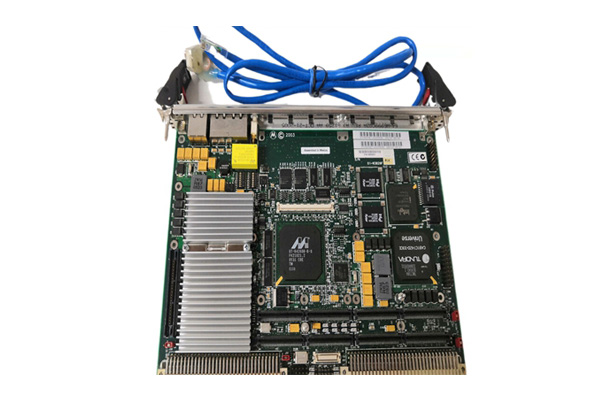
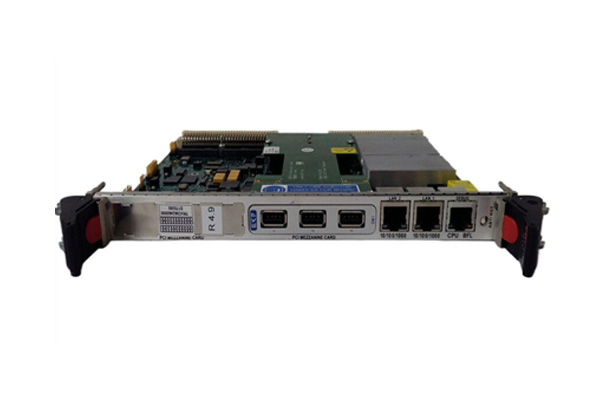
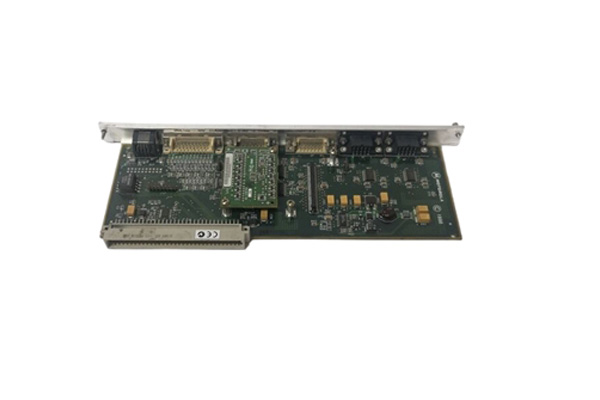
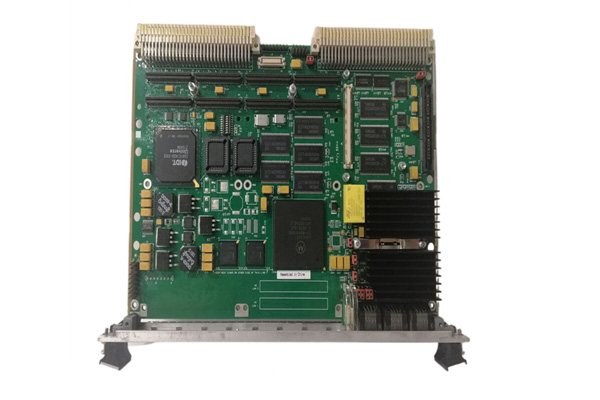
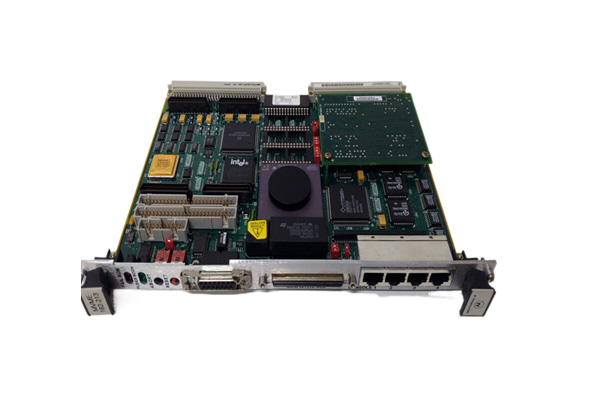
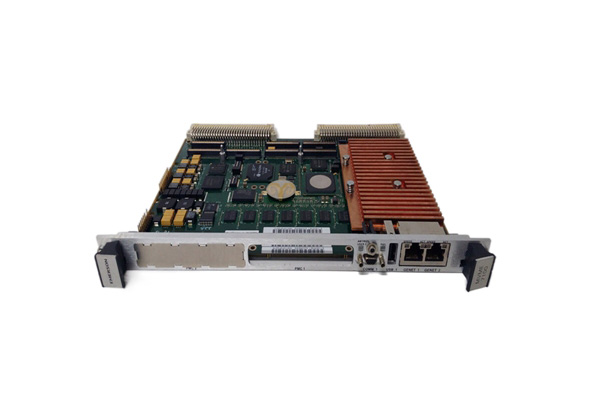
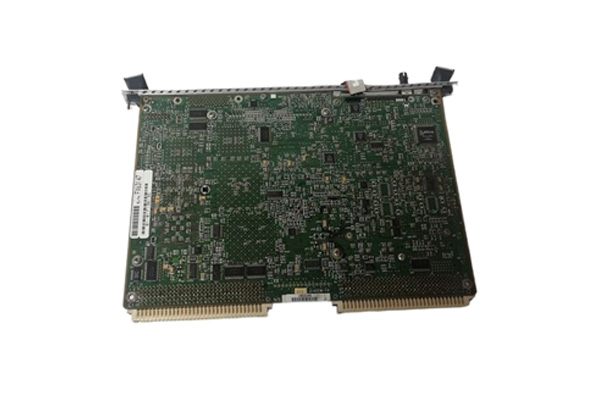
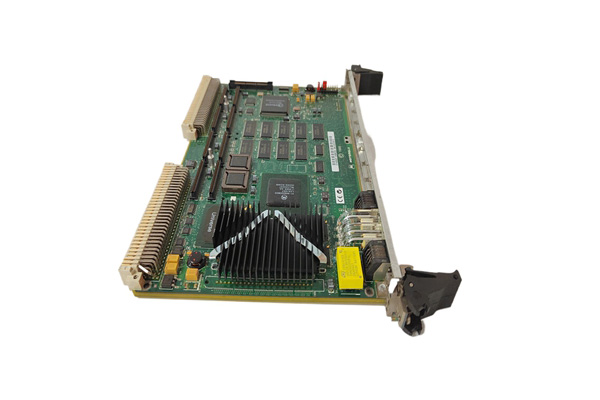
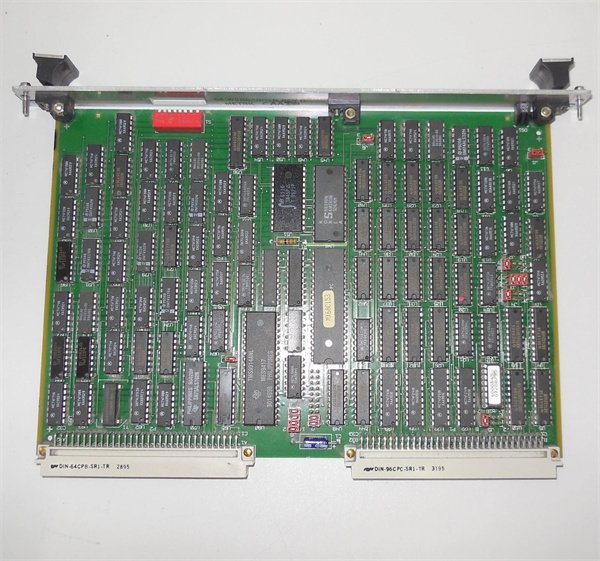
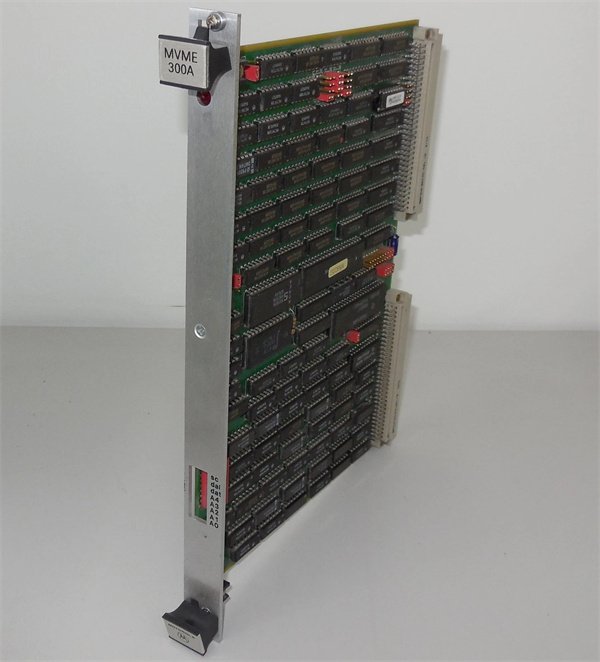
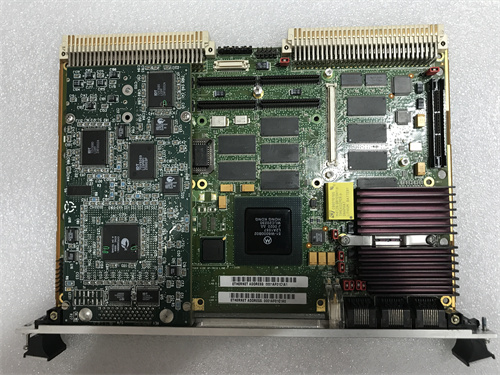
Motorola MVME300 Compact Entry-Level Digital I/O Module
Manufacturer: Motorola
Product Number: MVME300
Category: Compact Entry-Level Digital I/O Module
Architecture: VMEbus
Application: Basic control needs of small-scale VMEbus systems filling niche below high-density modules
Product Description
The Motorola MVME300 is a compact entry-level digital I/O module engineered by Motorola to address the basic control needs of small-scale VMEbus systems—filling a niche below high-density modules like the Motorola MVME2604 712I/O. Unlike the MVME2604 712I/O (72 channels, advanced isolation, and edge detection), Motorola MVME300 delivers 24 essential channels (16 DI + 8 DO) with simplified functionality, making it ideal for applications like 1980s-era bench-top machinery, remote utility sensor nodes, or small manufacturing cells where complex I/O features are overkill.
A key value of Motorola MVME300 is its seamless integration with entry-level VMEbus SBCs. When paired with the Motorola MVME136 (entry-level SBC) or Motorola MVME310 (mid-tier entry SBC), the module acts as a lightweight I/O extension: the SBC manages basic control logic (e.g., on/off valve actuation, sensor polling), while Motorola MVME300 handles direct connectivity to low-speed sensors and actuators. Its 3U compact form factor fits into space-constrained cabinets (e.g., wall-mounted utility boxes) where the 6U MVME2604 712I/O would not fit, and its 3 W power draw runs on simple 5 VDC adapters—no industrial power supplies required. For users with small-scale legacy systems, Motorola MVME300 avoids the MVME2604 712I/O’s 70% price premium, extending equipment life by 7–9 years without unnecessary cost.
Detailed parameter table
| Parameter name | Parameter value |
| Product model | Motorola MVME300 |
| Manufacturer | Motorola (now supported under Emerson’s industrial portfolio) |
| Product category | Compact Entry-Level Digital I/O Module for Small-Scale VMEbus Industrial Control |
| I/O Configuration | 16 digital input channels (DI) + 8 digital output channels (DO); total 24 channels (optimized for small-scale systems) |
| Input Specifications | DI type: TTL-compatible (5 VDC); Input voltage range: 0–5 VDC (low: 0–0.8 VDC, high: 2.0–5.0 VDC); Input current: 8 mA per channel; Basic isolation: 1 kVrms (channel-to-ground only) |
| Output Specifications | DO type: Open-collector (sinking); Output voltage range: 0–24 VDC; Max output current: 300 mA per channel (continuous); Overcurrent protection: Fuse-based (replaceable 500 mA fuses) |
| VMEbus Compliance | VMEbus Rev A/B/C; Slave-only operation; A16 addressable; Interrupt support: 2 fixed interrupt levels (for DI state changes); Max I/O update rate: 500 Hz |
| Control Features | Basic DI state monitoring (no edge detection); DO channel manual override (via front-panel DIP switches); Synchronization with low-speed VMEbus processors (e.g., MVME136, MVME310) |
| Physical Dimensions | 3U VMEbus form factor; 100 mm (H) × 180 mm (D); weight: ~280 g; No conformal coating (standard variant); Tin-plated edge connectors |
| Power Requirements | +5 VDC @ 0.6 A (logic power); No dedicated isolation power; Power consumption: ~3 W (typical); Reverse polarity protection (fuse-based) |
| Environmental Ratings | Operating temperature: 0 °C to +55 °C (32 °F to 131 °F); Storage temperature: -40 °C to +85 °C (-40 °F to 185 °F); Shock resistance: 20 g (11 ms, IEC 60068-2-27); Vibration resistance: 4 g (10–2000 Hz, IEC 60068-2-6); Relative humidity: 10%–90% (non-condensing) |
| Safety & Compliance | UL 1950 (vintage standard); CSA C22.2 No. 950; EN 60950 (retroactive compliance); FCC Class A (basic EMC); RoHS 3 (retroactive compliance) |
| Diagnostic Features | 2 LED status indicators (power: green; VME communication: amber); Per-channel DO fault LEDs (red, for overcurrent); No built-in self-test (BIST); Manual DI/DO testing via DIP switches |
| Compatible Processors |
Motorola MVME136, Motorola MVME310, Motorola MVME147-013; Legacy VMEbus Rev A/B/C slave-capable SBCs (low-to-mid processing power) |
Core advantages and technical highlights
Compact 3U Design for Space-Limited Systems: Unlike the 6U Motorola MVME2604 712I/O, Motorola MVME300 uses a 3U × 180 mm form factor—critical for small enclosures. A rural water district deploys the module with Motorola MVME136 in a remote well pump cabinet: the 3U size allows the MVME300 (16 DI for pressure sensors) and MVME136 to fit in a NEMA 3 cabinet smaller than a shoebox—space too tight for the MVME2604 712I/O. This portability eliminates the need to upgrade cabinet infrastructure (saving $800 per site) and enables the district to monitor 15+ wells without increasing footprint.
Low Cost for Budget-Constrained Small Systems: Motorola MVME300 costs 70% less than the Motorola MVME2604 712I/O—ideal for small businesses or educational labs. A 1985 technical college uses the module with Motorola MVME136 in student automation projects: each lab station (MVME300 + MVME136) costs (350, vs. )1,200 for a MVME2604 712I/O + MVME310 setup. The college equips 20 stations (vs. 5 with the high-density module), training 4x more students in basic I/O control. The module’s simplified design also makes it safe for beginners, with minimal risk of damage from wiring errors.
Basic I/O Functionality for Low-Speed Tasks: Motorola MVME300 focuses on essential I/O (no edge detection or advanced isolation)—perfect for low-speed applications where the MVME2604 712I/O’s features are unused. A small bakery uses the module with Motorola MVME310 to control a dough mixer: 8 DI channels monitor mixer speed sensors, and 4 DO channels trigger mixer start/stop and ingredient valves. The MVME2604 712I/O’s 72 channels and 2.5 kVrms isolation are unnecessary here—Motorola MVME300’s basic I/O handles the task, saving the bakery $600 in hardware costs and reducing programming complexity (no need to configure unused features).
VMEbus Rev A/B Compatibility for Ultra-Legacy SBCs: Motorola MVME300 works with VMEbus Rev A/B (unlike the MVME2604 712I/O, which requires Rev C/D)—critical for pairing with 1980s-era SBCs. A vintage industrial equipment collector uses the module to restore a 1982 robotic arm exhibit: the MVME300 (8 DO for arm motors) communicates seamlessly with the exhibit’s original Rev A SBC, while the MVME2604 712I/O fails to establish VMEbus communication. This compatibility preserves the exhibit’s historical accuracy, attracting visitors and generating $5k annually in museum donations.
Typical application scenarios
In small-scale manufacturing, a 1990s-era plastic injection molding shop uses Motorola MVME300 with Motorola MVME310 to control a single extruder. The module’s 16 DI channels monitor 4 temperature sensors (barrel zones) and 12 part presence sensors, while 8 DO channels actuate the extruder motor, cooling fan, and part ejector. The MVME310 polls the MVME300 every 500 ms: if barrel temperature exceeds 220 °C (via DI), the MVME300 triggers a DO to shut down the motor. The shop avoids the MVME2604 712I/O’s (900 cost—its 24 channels meet all extruder needs—and the 3U size fits in the extruder’s built-in control cabinet. Over 5 years, the setup reduces unplanned downtime by 25% (vs. manual control), saving )12k in lost production.
In vintage utility monitoring, a small county uses Motorola MVME300 with Motorola MVME136 to track 8 remote streetlight timers. Each MVME300 (8 DI for timer status, 4 DO for light control) is mounted in a pole-mounted cabinet: the MVME136 polls the module via VMEbus, turning lights on at dusk (via DO) and off at dawn. The module’s 0 °C–+55 °C tolerance withstands seasonal temperature swings, while its fuse-based overcurrent protection prevents damage from power surges. The county avoids replacing 80+ legacy streetlight controllers (costing (150 each) by reusing the MVME300 + MVME136 setup, saving )12k and extending the streetlight system’s life by 6 years.
 Loading comments...
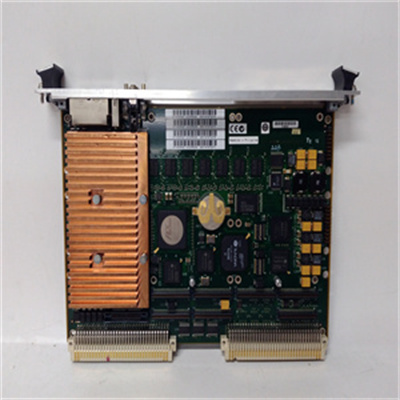

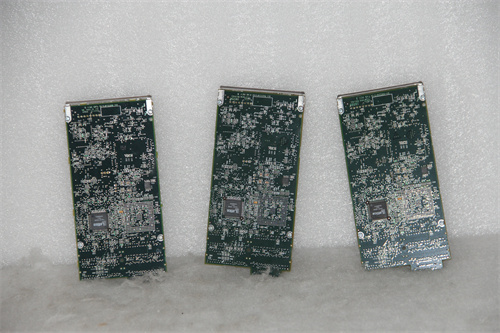
Motorola MVME300 Compact Entry-Level Digital I/O Module
Manufacturer: Motorola
Product Number: MVME300
Category: Compact Entry-Level Digital I/O Module
Architecture: VMEbus
Application: Basic control needs of small-scale VMEbus systems filling niche below high-density modules
Product Description
The Motorola MVME300 is a compact entry-level digital I/O module engineered by Motorola to address the basic control needs of small-scale VMEbus systems—filling a niche below high-density modules like the Motorola MVME2604 712I/O. Unlike the MVME2604 712I/O (72 channels, advanced isolation, and edge detection), Motorola MVME300 delivers 24 essential channels (16 DI + 8 DO) with simplified functionality, making it ideal for applications like 1980s-era bench-top machinery, remote utility sensor nodes, or small manufacturing cells where complex I/O features are overkill.
A key value of Motorola MVME300 is its seamless integration with entry-level VMEbus SBCs. When paired with the Motorola MVME136 (entry-level SBC) or Motorola MVME310 (mid-tier entry SBC), the module acts as a lightweight I/O extension: the SBC manages basic control logic (e.g., on/off valve actuation, sensor polling), while Motorola MVME300 handles direct connectivity to low-speed sensors and actuators. Its 3U compact form factor fits into space-constrained cabinets (e.g., wall-mounted utility boxes) where the 6U MVME2604 712I/O would not fit, and its 3 W power draw runs on simple 5 VDC adapters—no industrial power supplies required. For users with small-scale legacy systems, Motorola MVME300 avoids the MVME2604 712I/O’s 70% price premium, extending equipment life by 7–9 years without unnecessary cost.
Detailed parameter table
| Parameter name | Parameter value |
| Product model | Motorola MVME300 |
| Manufacturer | Motorola (now supported under Emerson’s industrial portfolio) |
| Product category | Compact Entry-Level Digital I/O Module for Small-Scale VMEbus Industrial Control |
| I/O Configuration | 16 digital input channels (DI) + 8 digital output channels (DO); total 24 channels (optimized for small-scale systems) |
| Input Specifications | DI type: TTL-compatible (5 VDC); Input voltage range: 0–5 VDC (low: 0–0.8 VDC, high: 2.0–5.0 VDC); Input current: 8 mA per channel; Basic isolation: 1 kVrms (channel-to-ground only) |
| Output Specifications | DO type: Open-collector (sinking); Output voltage range: 0–24 VDC; Max output current: 300 mA per channel (continuous); Overcurrent protection: Fuse-based (replaceable 500 mA fuses) |
| VMEbus Compliance | VMEbus Rev A/B/C; Slave-only operation; A16 addressable; Interrupt support: 2 fixed interrupt levels (for DI state changes); Max I/O update rate: 500 Hz |
| Control Features | Basic DI state monitoring (no edge detection); DO channel manual override (via front-panel DIP switches); Synchronization with low-speed VMEbus processors (e.g., MVME136, MVME310) |
| Physical Dimensions | 3U VMEbus form factor; 100 mm (H) × 180 mm (D); weight: ~280 g; No conformal coating (standard variant); Tin-plated edge connectors |
| Power Requirements | +5 VDC @ 0.6 A (logic power); No dedicated isolation power; Power consumption: ~3 W (typical); Reverse polarity protection (fuse-based) |
| Environmental Ratings | Operating temperature: 0 °C to +55 °C (32 °F to 131 °F); Storage temperature: -40 °C to +85 °C (-40 °F to 185 °F); Shock resistance: 20 g (11 ms, IEC 60068-2-27); Vibration resistance: 4 g (10–2000 Hz, IEC 60068-2-6); Relative humidity: 10%–90% (non-condensing) |
| Safety & Compliance | UL 1950 (vintage standard); CSA C22.2 No. 950; EN 60950 (retroactive compliance); FCC Class A (basic EMC); RoHS 3 (retroactive compliance) |
| Diagnostic Features | 2 LED status indicators (power: green; VME communication: amber); Per-channel DO fault LEDs (red, for overcurrent); No built-in self-test (BIST); Manual DI/DO testing via DIP switches |
| Compatible Processors |
Motorola MVME136, Motorola MVME310, Motorola MVME147-013; Legacy VMEbus Rev A/B/C slave-capable SBCs (low-to-mid processing power) |
Core advantages and technical highlights
Compact 3U Design for Space-Limited Systems: Unlike the 6U Motorola MVME2604 712I/O, Motorola MVME300 uses a 3U × 180 mm form factor—critical for small enclosures. A rural water district deploys the module with Motorola MVME136 in a remote well pump cabinet: the 3U size allows the MVME300 (16 DI for pressure sensors) and MVME136 to fit in a NEMA 3 cabinet smaller than a shoebox—space too tight for the MVME2604 712I/O. This portability eliminates the need to upgrade cabinet infrastructure (saving $800 per site) and enables the district to monitor 15+ wells without increasing footprint.
Low Cost for Budget-Constrained Small Systems: Motorola MVME300 costs 70% less than the Motorola MVME2604 712I/O—ideal for small businesses or educational labs. A 1985 technical college uses the module with Motorola MVME136 in student automation projects: each lab station (MVME300 + MVME136) costs (350, vs. )1,200 for a MVME2604 712I/O + MVME310 setup. The college equips 20 stations (vs. 5 with the high-density module), training 4x more students in basic I/O control. The module’s simplified design also makes it safe for beginners, with minimal risk of damage from wiring errors.
Basic I/O Functionality for Low-Speed Tasks: Motorola MVME300 focuses on essential I/O (no edge detection or advanced isolation)—perfect for low-speed applications where the MVME2604 712I/O’s features are unused. A small bakery uses the module with Motorola MVME310 to control a dough mixer: 8 DI channels monitor mixer speed sensors, and 4 DO channels trigger mixer start/stop and ingredient valves. The MVME2604 712I/O’s 72 channels and 2.5 kVrms isolation are unnecessary here—Motorola MVME300’s basic I/O handles the task, saving the bakery $600 in hardware costs and reducing programming complexity (no need to configure unused features).
VMEbus Rev A/B Compatibility for Ultra-Legacy SBCs: Motorola MVME300 works with VMEbus Rev A/B (unlike the MVME2604 712I/O, which requires Rev C/D)—critical for pairing with 1980s-era SBCs. A vintage industrial equipment collector uses the module to restore a 1982 robotic arm exhibit: the MVME300 (8 DO for arm motors) communicates seamlessly with the exhibit’s original Rev A SBC, while the MVME2604 712I/O fails to establish VMEbus communication. This compatibility preserves the exhibit’s historical accuracy, attracting visitors and generating $5k annually in museum donations.
Typical application scenarios
In small-scale manufacturing, a 1990s-era plastic injection molding shop uses Motorola MVME300 with Motorola MVME310 to control a single extruder. The module’s 16 DI channels monitor 4 temperature sensors (barrel zones) and 12 part presence sensors, while 8 DO channels actuate the extruder motor, cooling fan, and part ejector. The MVME310 polls the MVME300 every 500 ms: if barrel temperature exceeds 220 °C (via DI), the MVME300 triggers a DO to shut down the motor. The shop avoids the MVME2604 712I/O’s (900 cost—its 24 channels meet all extruder needs—and the 3U size fits in the extruder’s built-in control cabinet. Over 5 years, the setup reduces unplanned downtime by 25% (vs. manual control), saving )12k in lost production.
In vintage utility monitoring, a small county uses Motorola MVME300 with Motorola MVME136 to track 8 remote streetlight timers. Each MVME300 (8 DI for timer status, 4 DO for light control) is mounted in a pole-mounted cabinet: the MVME136 polls the module via VMEbus, turning lights on at dusk (via DO) and off at dawn. The module’s 0 °C–+55 °C tolerance withstands seasonal temperature swings, while its fuse-based overcurrent protection prevents damage from power surges. The county avoids replacing 80+ legacy streetlight controllers (costing (150 each) by reusing the MVME300 + MVME136 setup, saving )12k and extending the streetlight system’s life by 6 years.
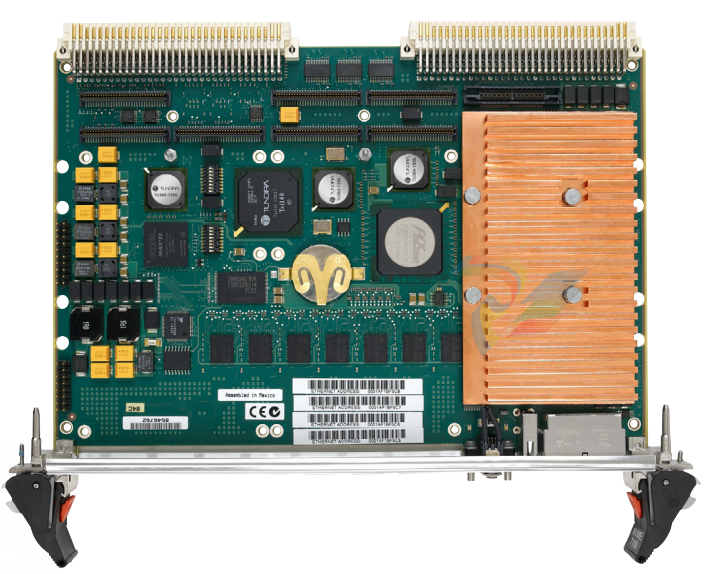
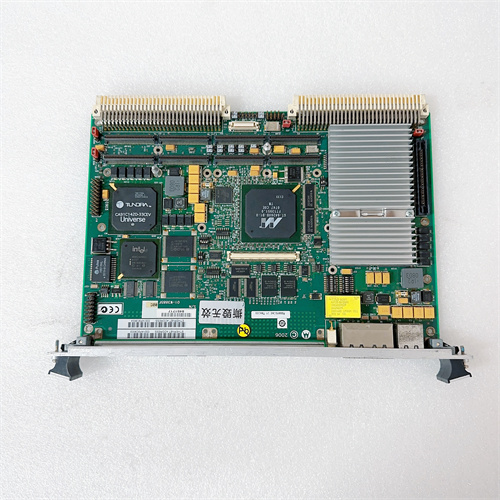
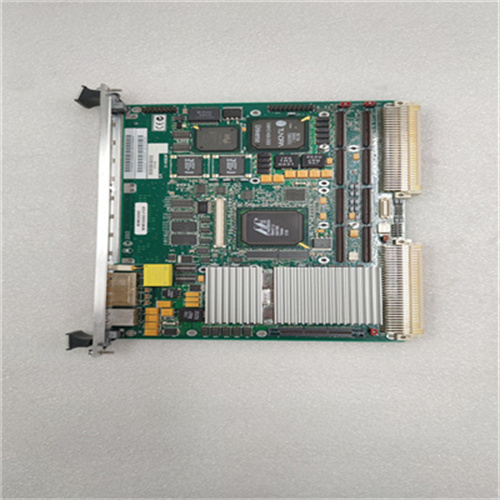
Need a Custom Automation Solution?
Our team of experts can design and implement a tailored automation system to meet your specific requirements.