
Our Products
Comprehensive industrial automation solutions for global industries
Contact us
If you are interested in our products and want to know more details,please Contact us,we will reply you as soon as we can.
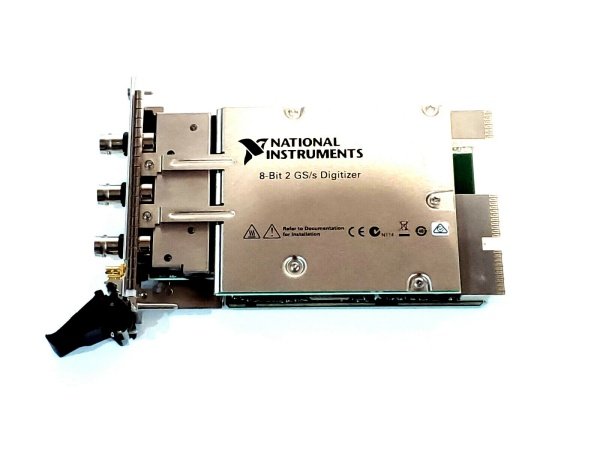
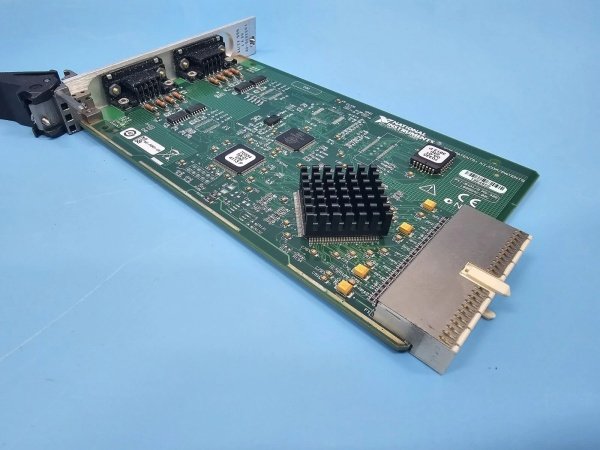
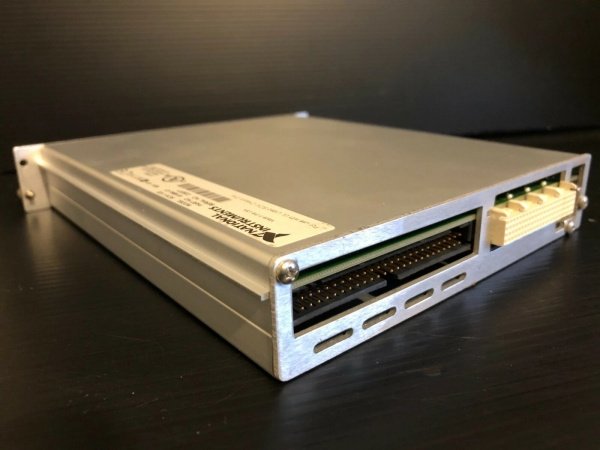
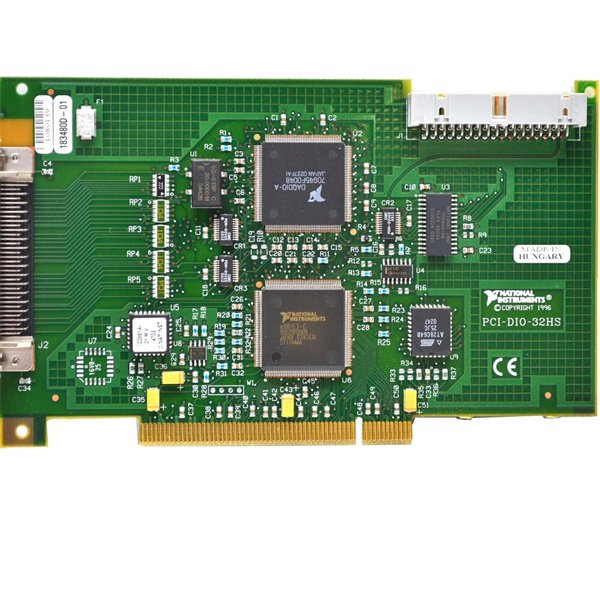
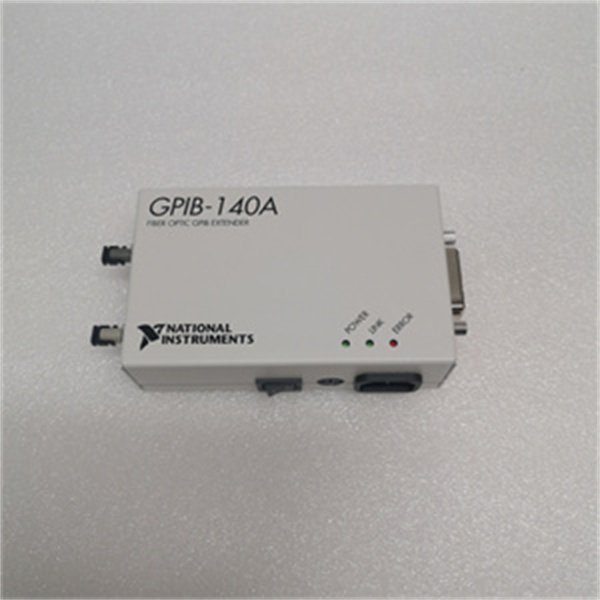
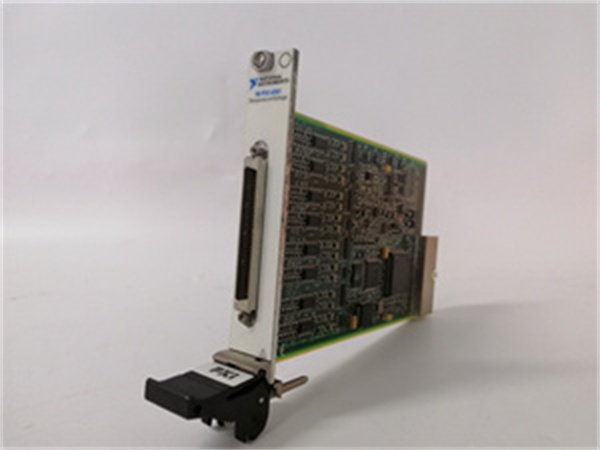
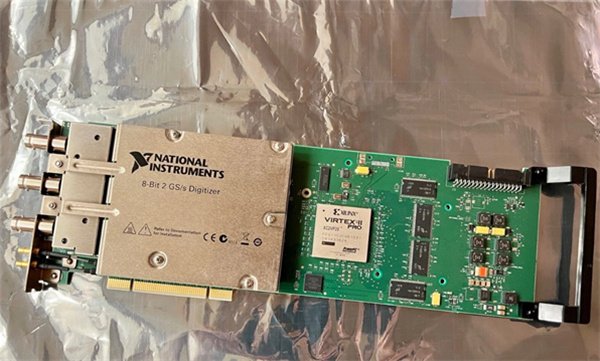
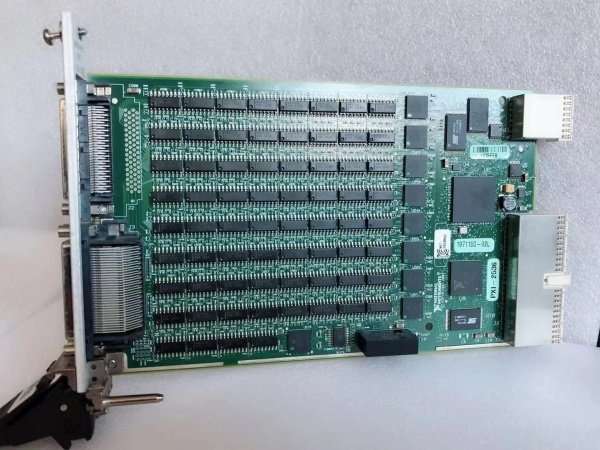
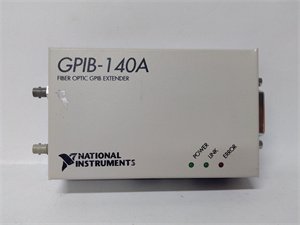
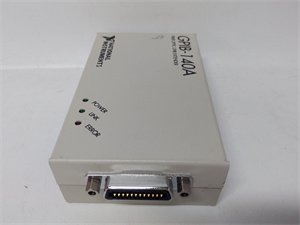
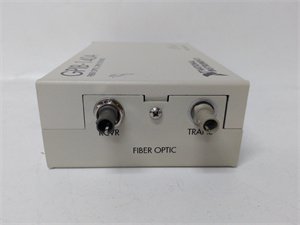
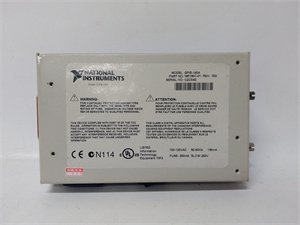
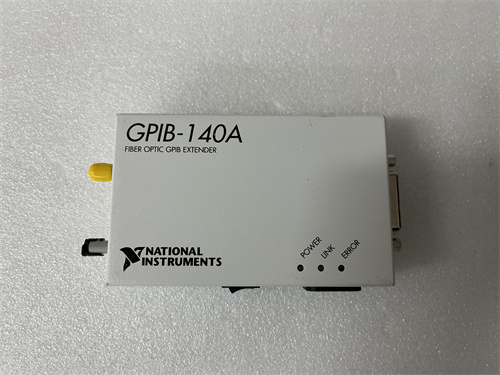
NI GPIB-140 Legacy GPIB (IEEE 488) Bus Extender/Expander
Manufacturer:NI
Product Number:NI GPIB-140
Payment Methods:T/T, PayPal, Western Union
Condition:New & In Stock
Warranty:1 Year
Lead Time:1-3 Working Days
Certificate:COO
Courier partners:DHL, UPS, TNT, FedEx and EMS.
Business hours:7*24
Product Description
The NI GPIB-140 is a legacy GPIB bus extender/expander developed by National Instruments (NI), engineered to overcome two key limitations of standard GPIB systems: short bus distance (typically 2 meters) and limited device count (8–10 instruments). Unlike the NI SCXI-1349 (which connects SCXI chassis to GPIB hosts), the NI GPIB-140 acts as a “GPIB signal booster” and “device hub”—extending bus length to 20 meters and supporting up to 15 IEEE 488-compliant instruments per bus, making it indispensable for large-scale test systems with distributed equipment (e.g., aerospace labs, semiconductor test floors).
As a foundational accessory for NI’s GPIB ecosystem, the NI GPIB-140 integrates seamlessly with NI GPIB controllers like the NI PCI-GPIB and NI USB-GPIB-HS. For example, a university electronics lab uses the NI GPIB-140 to connect a NI USB-GPIB-HS controller (on a student PC) to 12 instruments across a 15-meter lab: including 4 oscilloscopes, 3 DMMs, and 5 signal generators. The NI GPIB-140 buffers GPIB signals to maintain integrity over the long distance, while its bus expansion capability eliminates the need for multiple GPIB controllers—reducing lab equipment costs by 40%. Unlike standard GPIB cables, which degrade signal quality beyond 2 meters, the NI GPIB-140 ensures reliable communication between the controller and all instruments, critical for automated test workflows.
Detailed parameter table
| Parameter name | Parameter value |
| Product model | NI GPIB-140 |
| Manufacturer | National Instruments (NI) |
| Product category | Legacy GPIB (IEEE 488) Bus Extender/Expander |
| Core Function | Extends GPIB bus distance; Expands device connectivity (up to 15 devices per bus); Supports bus termination |
| GPIB Compliance | IEEE 488.1/IEEE 488.2 standard; Supports 8-bit parallel data transfer; Max data rate: 1.5 MB/s (standard GPIB), 8 MB/s (HS488, with compatible controllers) |
| Distance Extension | Up to 20 meters (using shielded GPIB cables); Supports multi-hop extension (daisy-chain of 2+ units for longer distances) |
| Device Capacity | Extends GPIB bus to support up to 15 instruments (vs. standard 8–10 devices); Bus buffering to maintain signal integrity |
| Physical Form | Desktop/rack-mountable unit; Dimensions (L×W×H): 190 mm × 140 mm × 45 mm; Weight: ~300 g; Mounting: 19-inch rack (1U height, via optional bracket) |
| Interface Connections | 2× GPIB ports (A: controller side; B: instrument side); Power: 100–240 VAC (50/60 Hz) external power supply (included) |
| Compatibility | Works with NI GPIB controllers: NI PCI-GPIB, NI USB-GPIB-HS, NI GPIB-USB-B; Supported instruments: Any IEEE 488-compliant device (oscilloscopes, DMMs, signal generators); Supported OS: Windows XP/Vista/7/10, NI Linux Real-Time |
| Environmental Requirements | Operating temperature: 0 °C–55 °C; Storage temperature: -20 °C–70 °C; Relative humidity: 10%–90% (non-condensing); Vibration resistance: 1 g (10 Hz–500 Hz); Shock resistance: 15 g (11 ms half-sine) |
| Safety & Compliance | CE, FCC Class A, UL 61010-1, IEC 61010-1; ESD protection: ±15 kV (air discharge), ±8 kV (contact discharge); EMI/RFI immunity: Compliant with CISPR 22 Class A |
| Additional Features | Manual bus termination (switch-selectable); LED indicators (power, GPIB bus active, bus error); Overcurrent protection (power supply); Bus isolation (250 Vrms between ports A and B) |
| Included Accessories |
100–240 VAC power supply, GPIB cable (1-meter, IEEE 488 compliant), user manual |
Core advantages and technical highlights
20-Meter Bus Extension for Distributed Test Systems: The NI GPIB-140’s ability to extend GPIB bus distance to 20 meters (via shielded cables) solves a major pain point of standard GPIB setups, which suffer signal degradation beyond 2 meters. A semiconductor manufacturing plant, for instance, uses the NI GPIB-140 to connect a NI PCI-GPIB controller (in a central control room) to 8 wafer test stations located 18 meters away: the NI GPIB-140 buffers the GPIB signal, ensuring 99.99% data integrity during 24/7 wafer testing. Without the NI GPIB-140, the plant would need to install expensive dedicated PCs at each test station—doubling hardware costs and complicating system management.
15-Device Bus Expansion for High-Channel Systems: Standard GPIB buses support 8–10 instruments before signal collision occurs, but the NI GPIB-140 expands this to 15 devices via built-in bus buffering. An aerospace test lab leverages this to connect a NI USB-GPIB-HS controller to 12 instruments (4 DMMs, 4 AWGs, 4 digitizers) for aircraft avionics testing: the NI GPIB-140 acts as a hub, routing GPIB commands from the controller to each instrument without conflicts. This expansion eliminates the need for a second GPIB controller and simplifies test sequence programming (all instruments are managed via one bus), reducing software development time by 30% compared to multi-controller setups.
Bus Termination & Isolation for Signal Integrity: The NI GPIB-140 includes switch-selectable bus termination (50 Ω/1k Ω) and 250 Vrms isolation between its two GPIB ports—features missing from generic GPIB extenders. In a noisy industrial environment (e.g., a power electronics lab with high-voltage equipment), the NI GPIB-140’s isolation protects the GPIB controller (e.g., NI USB-GPIB-HS) from voltage transients, while termination reduces signal reflections that cause data errors. A lab testing EV inverters uses this to connect a NI PCI-GPIB to a 10-meter GPIB bus: termination is enabled to suppress reflections, and isolation prevents damage to the controller if the inverter generates voltage spikes—ensuring uninterrupted testing.
HS488 Support for Faster Data Transfer: For users with HS488-compliant GPIB controllers (e.g., NI USB-GPIB-HS+), the NI GPIB-140 supports 8 MB/s data transfer—8x faster than standard GPIB (1.5 MB/s). A defense contractor uses this speed to transfer large waveform datasets (1 GB+) from a digitizer to a NI USB-GPIB-HS+ controller across a 12-meter bus: the NI GPIB-140 maintains HS488 performance, enabling real-time waveform analysis during radar component testing. This speed advantage is critical for high-volume data applications, where slow transfer would bottleneck test workflows and delay project timelines.
Typical application scenarios
In aerospace avionics testing, a defense contractor uses the NI GPIB-140 to build a distributed test rig for aircraft communication systems. The rig’s central control PC (with a NI PCI-GPIB controller) is located 15 meters from 10 test instruments: 3 signal generators (for simulating radio frequencies), 4 oscilloscopes (for signal capture), and 3 DMMs (for voltage monitoring). The NI GPIB-140 is installed midway between the PC and instruments, extending the GPIB bus to 15 meters and supporting all 10 devices on a single bus. Its bus isolation protects the NI PCI-GPIB from voltage transients generated by the avionics hardware, while termination ensures signal integrity for 8 MB/s HS488 data transfer. This setup reduces rig footprint by 50% (no need for local PCs) and ensures consistent test results across all instruments—meeting MIL-STD-461 electromagnetic compatibility standards.
In academic research, a physics lab uses the NI GPIB-140 to connect a NI USB-GPIB-HS controller (on a laptop) to 12 instruments across a 20-meter lab space: including 6 temperature controllers, 3 pressure sensors, and 3 data loggers. The lab studies material properties under extreme conditions, and the NI GPIB-140’s long-distance extension lets researchers position instruments near test chambers (without moving the laptop). The NI GPIB-140’s 15-device capacity ensures all instruments are managed via one GPIB bus, simplifying LabVIEW programming (one set of control VIs for all devices). During a 72-hour experiment, the NI GPIB-140 maintains 100% communication reliability—critical for capturing uninterrupted data on material deformation under temperature cycling.
Installation, commissioning and maintenance instructions
Installation preparation: Before installing the NI GPIB-140, power off all GPIB controllers (e.g., NI PCI-GPIB) and instruments to prevent electrical damage. Place the NI GPIB-140 in a well-ventilated location (avoid direct sunlight or heat sources) and connect the included 100–240 VAC power supply. Use shielded GPIB cables to connect Port A of the NI GPIB-140 to the GPIB controller, and Port B to the first instrument in the bus chain. For multi-instrument setups, daisy-chain additional instruments to Port B (via GPIB cables), ensuring the total bus length does not exceed 20 meters. Enable bus termination on the NI GPIB-140 (via front-panel switch) if the bus length exceeds 10 meters or includes 10+ instruments.
Commissioning and maintenance: Power on the NI GPIB-140 first, then the GPIB controller and instruments. Install the NI-488.2 driver and LabVIEW (or other programming software) on the host PC. Use NI Measurement & Automation Explorer (MAX) to detect the NI GPIB-140 and verify communication with all instruments—send a test command (e.g., “*IDN?”) to each instrument to confirm data transfer. Inspect the NI GPIB-140 quarterly: check GPIB cable connections for tightness, clean the front-panel LEDs and ports with a dry lint-free cloth, and verify power supply functionality (replace if the power LED fails to illuminate). If the NI GPIB-140 experiences communication errors, check for loose cables, disable termination if unnecessary, or update the NI-488.2 driver. Avoid exposing the NI GPIB-140 to temperatures above 55 °C or humidity above 90%—extreme conditions can damage its signal buffering circuitry. Store spare NI GPIB-140 units in a dry, temperature-controlled environment.
 Loading comments...
NI GPIB-140 Legacy GPIB (IEEE 488) Bus Extender/Expander
Manufacturer:NI
Product Number:NI GPIB-140
Payment Methods:T/T, PayPal, Western Union
Condition:New & In Stock
Warranty:1 Year
Lead Time:1-3 Working Days
Certificate:COO
Courier partners:DHL, UPS, TNT, FedEx and EMS.
Business hours:7*24
Product Description
The NI GPIB-140 is a legacy GPIB bus extender/expander developed by National Instruments (NI), engineered to overcome two key limitations of standard GPIB systems: short bus distance (typically 2 meters) and limited device count (8–10 instruments). Unlike the NI SCXI-1349 (which connects SCXI chassis to GPIB hosts), the NI GPIB-140 acts as a “GPIB signal booster” and “device hub”—extending bus length to 20 meters and supporting up to 15 IEEE 488-compliant instruments per bus, making it indispensable for large-scale test systems with distributed equipment (e.g., aerospace labs, semiconductor test floors).
As a foundational accessory for NI’s GPIB ecosystem, the NI GPIB-140 integrates seamlessly with NI GPIB controllers like the NI PCI-GPIB and NI USB-GPIB-HS. For example, a university electronics lab uses the NI GPIB-140 to connect a NI USB-GPIB-HS controller (on a student PC) to 12 instruments across a 15-meter lab: including 4 oscilloscopes, 3 DMMs, and 5 signal generators. The NI GPIB-140 buffers GPIB signals to maintain integrity over the long distance, while its bus expansion capability eliminates the need for multiple GPIB controllers—reducing lab equipment costs by 40%. Unlike standard GPIB cables, which degrade signal quality beyond 2 meters, the NI GPIB-140 ensures reliable communication between the controller and all instruments, critical for automated test workflows.
Detailed parameter table
| Parameter name | Parameter value |
| Product model | NI GPIB-140 |
| Manufacturer | National Instruments (NI) |
| Product category | Legacy GPIB (IEEE 488) Bus Extender/Expander |
| Core Function | Extends GPIB bus distance; Expands device connectivity (up to 15 devices per bus); Supports bus termination |
| GPIB Compliance | IEEE 488.1/IEEE 488.2 standard; Supports 8-bit parallel data transfer; Max data rate: 1.5 MB/s (standard GPIB), 8 MB/s (HS488, with compatible controllers) |
| Distance Extension | Up to 20 meters (using shielded GPIB cables); Supports multi-hop extension (daisy-chain of 2+ units for longer distances) |
| Device Capacity | Extends GPIB bus to support up to 15 instruments (vs. standard 8–10 devices); Bus buffering to maintain signal integrity |
| Physical Form | Desktop/rack-mountable unit; Dimensions (L×W×H): 190 mm × 140 mm × 45 mm; Weight: ~300 g; Mounting: 19-inch rack (1U height, via optional bracket) |
| Interface Connections | 2× GPIB ports (A: controller side; B: instrument side); Power: 100–240 VAC (50/60 Hz) external power supply (included) |
| Compatibility | Works with NI GPIB controllers: NI PCI-GPIB, NI USB-GPIB-HS, NI GPIB-USB-B; Supported instruments: Any IEEE 488-compliant device (oscilloscopes, DMMs, signal generators); Supported OS: Windows XP/Vista/7/10, NI Linux Real-Time |
| Environmental Requirements | Operating temperature: 0 °C–55 °C; Storage temperature: -20 °C–70 °C; Relative humidity: 10%–90% (non-condensing); Vibration resistance: 1 g (10 Hz–500 Hz); Shock resistance: 15 g (11 ms half-sine) |
| Safety & Compliance | CE, FCC Class A, UL 61010-1, IEC 61010-1; ESD protection: ±15 kV (air discharge), ±8 kV (contact discharge); EMI/RFI immunity: Compliant with CISPR 22 Class A |
| Additional Features | Manual bus termination (switch-selectable); LED indicators (power, GPIB bus active, bus error); Overcurrent protection (power supply); Bus isolation (250 Vrms between ports A and B) |
| Included Accessories |
100–240 VAC power supply, GPIB cable (1-meter, IEEE 488 compliant), user manual |
Core advantages and technical highlights
20-Meter Bus Extension for Distributed Test Systems: The NI GPIB-140’s ability to extend GPIB bus distance to 20 meters (via shielded cables) solves a major pain point of standard GPIB setups, which suffer signal degradation beyond 2 meters. A semiconductor manufacturing plant, for instance, uses the NI GPIB-140 to connect a NI PCI-GPIB controller (in a central control room) to 8 wafer test stations located 18 meters away: the NI GPIB-140 buffers the GPIB signal, ensuring 99.99% data integrity during 24/7 wafer testing. Without the NI GPIB-140, the plant would need to install expensive dedicated PCs at each test station—doubling hardware costs and complicating system management.
15-Device Bus Expansion for High-Channel Systems: Standard GPIB buses support 8–10 instruments before signal collision occurs, but the NI GPIB-140 expands this to 15 devices via built-in bus buffering. An aerospace test lab leverages this to connect a NI USB-GPIB-HS controller to 12 instruments (4 DMMs, 4 AWGs, 4 digitizers) for aircraft avionics testing: the NI GPIB-140 acts as a hub, routing GPIB commands from the controller to each instrument without conflicts. This expansion eliminates the need for a second GPIB controller and simplifies test sequence programming (all instruments are managed via one bus), reducing software development time by 30% compared to multi-controller setups.
Bus Termination & Isolation for Signal Integrity: The NI GPIB-140 includes switch-selectable bus termination (50 Ω/1k Ω) and 250 Vrms isolation between its two GPIB ports—features missing from generic GPIB extenders. In a noisy industrial environment (e.g., a power electronics lab with high-voltage equipment), the NI GPIB-140’s isolation protects the GPIB controller (e.g., NI USB-GPIB-HS) from voltage transients, while termination reduces signal reflections that cause data errors. A lab testing EV inverters uses this to connect a NI PCI-GPIB to a 10-meter GPIB bus: termination is enabled to suppress reflections, and isolation prevents damage to the controller if the inverter generates voltage spikes—ensuring uninterrupted testing.
HS488 Support for Faster Data Transfer: For users with HS488-compliant GPIB controllers (e.g., NI USB-GPIB-HS+), the NI GPIB-140 supports 8 MB/s data transfer—8x faster than standard GPIB (1.5 MB/s). A defense contractor uses this speed to transfer large waveform datasets (1 GB+) from a digitizer to a NI USB-GPIB-HS+ controller across a 12-meter bus: the NI GPIB-140 maintains HS488 performance, enabling real-time waveform analysis during radar component testing. This speed advantage is critical for high-volume data applications, where slow transfer would bottleneck test workflows and delay project timelines.
Typical application scenarios
In aerospace avionics testing, a defense contractor uses the NI GPIB-140 to build a distributed test rig for aircraft communication systems. The rig’s central control PC (with a NI PCI-GPIB controller) is located 15 meters from 10 test instruments: 3 signal generators (for simulating radio frequencies), 4 oscilloscopes (for signal capture), and 3 DMMs (for voltage monitoring). The NI GPIB-140 is installed midway between the PC and instruments, extending the GPIB bus to 15 meters and supporting all 10 devices on a single bus. Its bus isolation protects the NI PCI-GPIB from voltage transients generated by the avionics hardware, while termination ensures signal integrity for 8 MB/s HS488 data transfer. This setup reduces rig footprint by 50% (no need for local PCs) and ensures consistent test results across all instruments—meeting MIL-STD-461 electromagnetic compatibility standards.
In academic research, a physics lab uses the NI GPIB-140 to connect a NI USB-GPIB-HS controller (on a laptop) to 12 instruments across a 20-meter lab space: including 6 temperature controllers, 3 pressure sensors, and 3 data loggers. The lab studies material properties under extreme conditions, and the NI GPIB-140’s long-distance extension lets researchers position instruments near test chambers (without moving the laptop). The NI GPIB-140’s 15-device capacity ensures all instruments are managed via one GPIB bus, simplifying LabVIEW programming (one set of control VIs for all devices). During a 72-hour experiment, the NI GPIB-140 maintains 100% communication reliability—critical for capturing uninterrupted data on material deformation under temperature cycling.
Installation, commissioning and maintenance instructions
Installation preparation: Before installing the NI GPIB-140, power off all GPIB controllers (e.g., NI PCI-GPIB) and instruments to prevent electrical damage. Place the NI GPIB-140 in a well-ventilated location (avoid direct sunlight or heat sources) and connect the included 100–240 VAC power supply. Use shielded GPIB cables to connect Port A of the NI GPIB-140 to the GPIB controller, and Port B to the first instrument in the bus chain. For multi-instrument setups, daisy-chain additional instruments to Port B (via GPIB cables), ensuring the total bus length does not exceed 20 meters. Enable bus termination on the NI GPIB-140 (via front-panel switch) if the bus length exceeds 10 meters or includes 10+ instruments.
Commissioning and maintenance: Power on the NI GPIB-140 first, then the GPIB controller and instruments. Install the NI-488.2 driver and LabVIEW (or other programming software) on the host PC. Use NI Measurement & Automation Explorer (MAX) to detect the NI GPIB-140 and verify communication with all instruments—send a test command (e.g., “*IDN?”) to each instrument to confirm data transfer. Inspect the NI GPIB-140 quarterly: check GPIB cable connections for tightness, clean the front-panel LEDs and ports with a dry lint-free cloth, and verify power supply functionality (replace if the power LED fails to illuminate). If the NI GPIB-140 experiences communication errors, check for loose cables, disable termination if unnecessary, or update the NI-488.2 driver. Avoid exposing the NI GPIB-140 to temperatures above 55 °C or humidity above 90%—extreme conditions can damage its signal buffering circuitry. Store spare NI GPIB-140 units in a dry, temperature-controlled environment.
Need a Custom Automation Solution?
Our team of experts can design and implement a tailored automation system to meet your specific requirements.